The TNRC6C Polyclonal Antibody (PAC048086) is a valuable tool for researchers studying TNRC6C, a protein involved in post-transcriptional gene regulation. This antibody, produced in rabbits, exhibits high reactivity with human samples and is validated for use in various applications, including Western blotting.TNRC6C, also known as GW182, is a key player in the RNA interference pathway, where it acts as a scaffold protein for the RNA-induced silencing complex (RISC). By interacting with microRNAs and target mRNAs, TNRC6C helps to regulate gene expression at the post-transcriptional level.
Its role in gene silencing makes it a target of interest in the fields of molecular biology and RNA biology.Research involving TNRC6C is relevant in understanding the mechanisms of gene regulation, RNA interference, and the development of therapeutic strategies targeting specific genes or pathways. The TNRC6C Polyclonal Antibody offers researchers a reliable tool to detect and study TNRC6C expression in various experimental settings, contributing to advancements in the understanding of gene regulation and RNA biology.
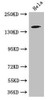
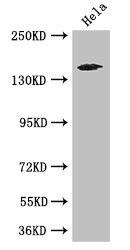
Western Blot. Positive WB detected in: Hela whole cell lysate. All lanes: TNRC6C antibody at 3.4µg/ml. Secondary. Goat polyclonal to rabbit IgG at 1/50000 dilution. Predicted band size: 176, 180 kDa. Observed band size: 176 kDa..
Immunohistochemistry of paraffin-embedded human pancreatic tissue using PACO48086 at dilution of 1:100.
Background:
Plays a role in RNA-mediated gene silencing by micro-RNAs (miRNAs). Required for miRNA-dependent translational repression of complementary mRNAs by argonaute family proteins. As scaffoldng protein associates with argonaute proteins bound to partially complementary mRNAs and simultaneously can recruit CCR4-NOT and PAN deadenylase complexes.
Function: Plays a role in RNA-mediated gene silencing by micro-RNAs (miRNAs). Required for miRNA-dependent translational repression of complementary mRNAs by argonaute family proteins. As scaffoldng protein associates with argonaute proteins bound to partially complementary mRNAs and simultaneously can recruit CCR4-NOT and PAN deadenylase complexes. Ref.8 Ref.11 Ref.12 Ref.13Subunit structure: Interacts with one or more of the argonaute family proteins AGO1, AGO2, AGO3 and AGO4. Interacts with PABPC1 and EIF4G1. Interacts with CNOT1; the interaction is direct and mediates the association with the CCR4-NOT complex. Interacts with PAN3; the interaction mediates the association with the PAN complex. Ref.7 Ref.8 Ref.9 Ref.11 Ref.12 Ref.13Domain: The silencing domain, also known as C-terminal effector domain (CED), can act in autonomous repression, including both translational inhibition and mRNA degradation.Sequence similarities: Belongs to the GW182 family.Contains 1 RRM (RNA recognition motif) domain.Contains 1 UBA domain.Sequence caution: The sequence BAB13408.2 differs from that shown. Reason: Erroneous initiation. The sequence BAB71179.1 differs from that shown. Reason: Erroneous initiation.