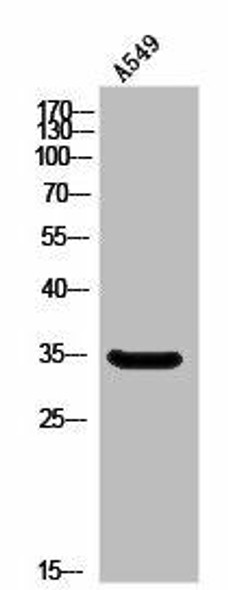
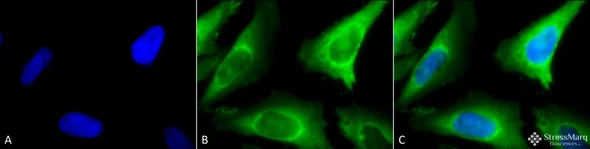
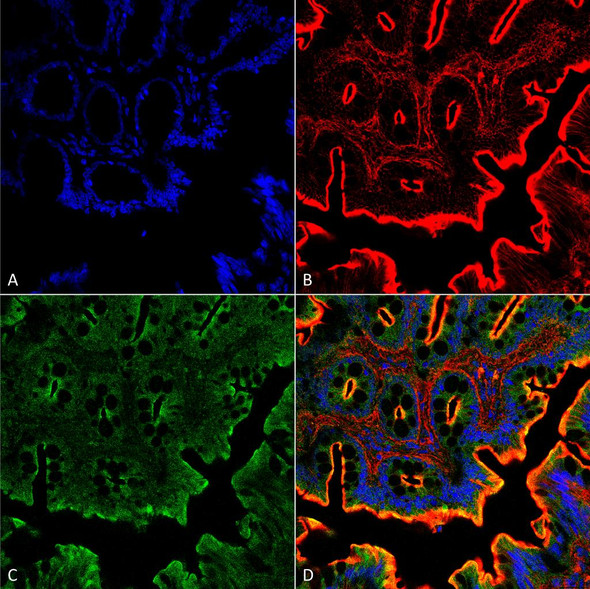
Immunocytochemistry/Immunofluorescence analysis using Mouse Anti-Dityrosine Monoclonal Antibody, Clone 10A6 (STMA00189). Tissue: Embryonic kidney epithelial cell line (HEK293). Species: Human. Fixation: 5% Formaldehyde for 5 min. Primary Antibody: Mouse Anti-Dityrosine Monoclonal Antibody (STMA00189) at 1:50 for 30-60 min at RT. Secondary Antibody: Goat Anti-Mouse Alexa Fluor 488 at 1:1500 for 30-60 min at RT.
Dityrosine Antibody [10A6] is a mouse monoclonal antibody directed against Dityrosine, offered by Assay Genie for research applications. Reported applications include WB, ICC/IF, FACS, FCM and ELISA. Reactivity is species independent. Supplied as IgG1, purified by Protein G.
Dityrosine is a stable, covalent cross-link formed between tyrosine residues in proteins under oxidative stress. It is generated by reactive oxygen species (ROS) such as hydroxyl radicals and catalyzed by peroxidases and UV radiation. As a biomarker of protein oxidation, dityrosine reflects cumulative oxidative damage in tissues. In the brain, elevated dityrosine levels are associated with protein aggregation, mitochondrial dysfunction, and neuroinflammation—features common to Alzheimer’s, Parkinson’s, and other neurodegenerative diseases. Monitoring dityrosine formation provides insight into oxidative stress burden and may aid in evaluating antioxidant therapies and disease progression in neurodegenerative research. This antibody is also available conjugated to ATTO 390, ATTO 488, ATTO 594, APC, Biotin, FITC, HRP, PerCP and RPE. Supplied in 100 µg. For research use only; not for diagnostic or therapeutic procedures.
Product Name:
Dityrosine Antibody [10A6]
Product SKU:
STMA00189
Size:
100 µg
Target:
Dityrosine
Host Species:
Mouse
Antibody Type:
Monoclonal
Clone ID:
10A6
Research Areas:
Cancer, Oxidative Stress, Protein Oxidation, Cell Signaling, Post-translational Modifications, Oxidation
Buffer:
PBS pH7.4, 50% glycerol, 0.09% sodium azide
Storage & Shipping:
Store at -20°C. Shipped on Blue Ice or 4°C. Conjugated variants should be stored according to the product label.
Format:
Liquid
Applications:
WB, ICC/IF, FACS, FCM, ELISA
Antibody Isotype:
IgG1
Purification:
Protein G Purified
Concentration:
1 mg/ml
Reactivity:
Species Independent
Recommended Dilution:
WB (1:1000); ICC/IF (1:50); FACS (1:50); FCM (1:50); ELISA (1:1000); optimal dilutions for assays should be determined by the user.
Specificity:
Specific for dityrosine modified proteins. Does not cross-react with 3,5-dibromotyrosine or bromotyrosine modified proteins.
Guarantee:
12 months from date of dispatch
Immunogen:
Synthetic Dityrosine conjugated to Keyhole Limpet Hemocyanin (KLH).
Alternative Names:
Dityrosine, Dityrosine (DT), DT, DY
References:
1. Malencik, D. A., Anderson, S. R. (2003) Amino Acids. 25(3-4):233-247. 2. Giulivi, C., Davies, K. J. A. (2001) J Biol Chem. 276, 24129-24136.