Growth hormone receptor, also known as GH receptor and GHR, is a single-pass type I membrane protein which belongs to the type I cytokine receptor family and type 1 subfamily. GHR contains one fibronectin type-III domain. Growth hormone receptor / GHR is expressed in various tissues with high expression in liver and skeletal muscle. Isoform 4 of GHR is predominantly expressed in kidney, bladder, adrenal gland and brain stem. Isoform 1 expression of GHR in placenta is predominant in chorion and decidua. Isoform 4 is highly expressed in placental villi. Isoform 2 of GHR is expressed in lung, stomach and muscle. Growth hormone receptor / GHR is a receptor for pituitary gland growth hormone. It is involved in regulating postnatal body growth. On ligand binding, it couples to the JAK2 / STAT5 pathway. Isoform 2 of GHR up-regulates the production of GHBP and acts as a negative inhibitor of GH signaling. Defects in GHR are a cause of Laron syndrome (LARS) which is a severe form of growth hormone insensitivity characterized by growth impairment, short stature, dysfunctional growth hormone receptor, and failure to generate insulin-like growth factor I in response to growth hormone. Defects in GHR may also be a cause of idiopathic short stature autosomal (ISSA) which is defined by a subnormal rate of growth.
Product Name:
Mouse GHR/GHBP Recombinant Protein (RPES3979)
Product Code:
RPES3979
Size:
100 µg
Species:
Mouse
Expressed Host:
HEK293 Cells
Synonyms:
Growth Hormone Receptor,GHBP,GHR/BP
Accession:
NP_034414.2
Sequence:
Met 1-Gln 273
Fusion tag:
C-His
Activity:
Measured by its ability to inhibit proliferation of INS-1 cells induced by human growth hormone. The ED50 for this effect is 0.6-3µg/mL in the presence of 50 ng/mL human growth hormone.
Endotoxin:
<1.0 EU per µg of the protein as determined by the LAL method.
Protein Construction:
A DNA sequence encoding the extracellular domain of mouse GHR (NP_034414.2) (Met 1-Gln 273) was fused with a polyhistidine tag at the C-terminus.
Purity:
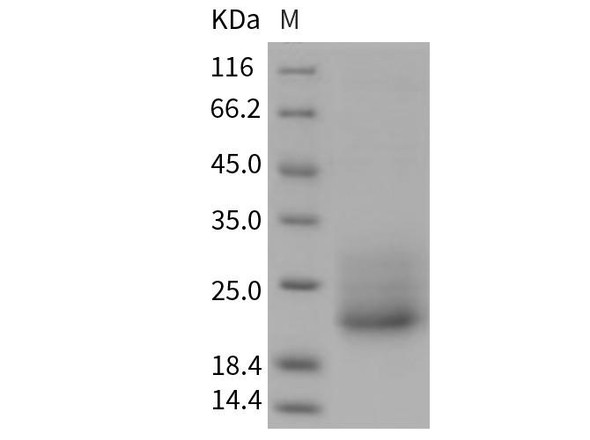
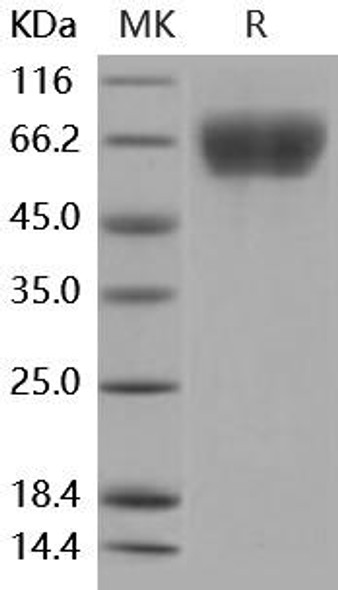
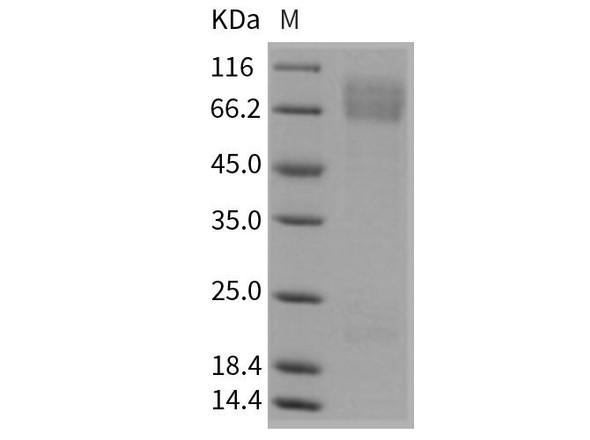
> 95 % as determined by SDS-PAGE
Mol Mass:
30.3 kDa
Formulation:
Lyophilized from sterile PBS, pH 7.4
Shipping:
This product is provided as lyophilized powder which is shipped with ice packs.
Stability and Storage:
Lyophilized proteins are stable for up to 12 months when stored at -20 to -80°C. Reconstituted protein solution can be stored at 4-8°C for 2-7 days. Aliquots of reconstituted samples are stable at < -20°C for 3 months.