Matrix metalloproteinases (MMPs) are a family of zinc-dependent endopeptidases that degrade components of the extracellular matrix (ECM) and play essential roles in various physiological processes such as morphogenesis, differentiation, angiogenesis and tissue remodeling, as well as pathological processes including inflammation, arthritis, cardiovascular diseases, pulmonary diseases and tumor invasion. Neutrophil collagenase, also known as Matrix metalloproteinase-8, MMP-8, and CLG1, is a member of the peptidase M10A family. MMP-8 may affect the metastatic behaviour of breast cancer cells through protection against lymph node metastasis, underlining the importance of anti-target identification in drug development. MMP-8 in the tumour may have a protective effect against lymph node metastasis. MMP-8 may affect the metastatic behaviour of breast cancer cells through protection against lymph node metastasis, underlining the importance of anti-target identification in drug development. MMP-8 participates in wound repair by contributing to the resolution of inflammation and open the possibility to develop new strategies for treating wound healing defects.
Product Name:
Mouse MMP8/CLG1 Recombinant Protein (RPES1758)
Product Code:
RPES1758
Size:
20 µg
Species:
Mouse
Expressed Host:
HEK293 Cells
Synonyms:
BB138268
Accession:
NP_032637.3
Sequence:
Phe 21-Ser 465
Endotoxin:
<1.0 EU per µg of the protein as determined by the LAL method.
Protein Construction:
A DNA sequence encoding the pro form of mouse MMP8 (NP_032637.3) (Phe 21-Ser 465) was expressed and purified, with an initial Met at the N-terminus.
Purity:
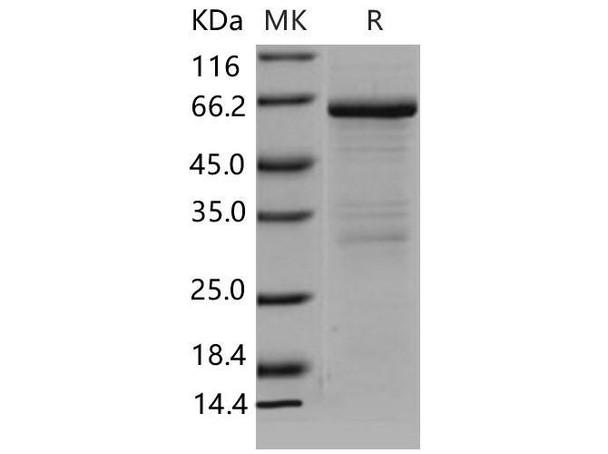
> 85 % as determined by SDS-PAGE
Mol Mass:
52 kDa
AP Mol Mass:
65 kDa
Formulation:
Lyophilized from 50 mM Tris, 150 mM NaCl, 10 mM CaCl2, 0.05% Brij 35, pH 7.5
Shipping:
This product is provided as lyophilized powder which is shipped with ice packs.
Stability and Storage:
Lyophilized proteins are stable for up to 12 months when stored at -20 to -80°C. Reconstituted protein solution can be stored at 4-8°C for 2-7 days. Aliquots of reconstituted samples are stable at < -20°C for 3 months.