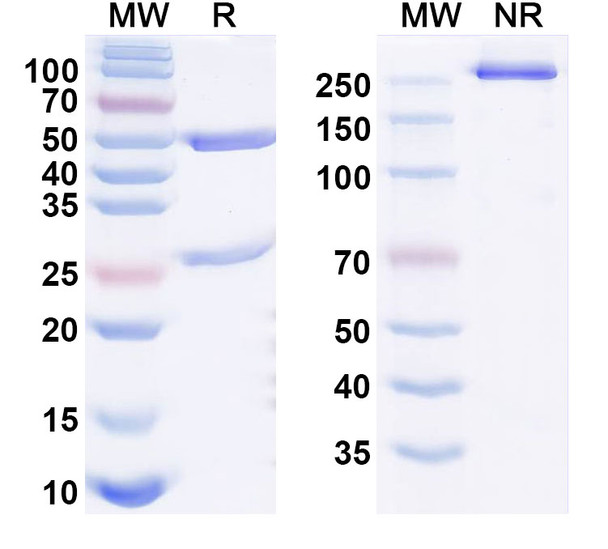
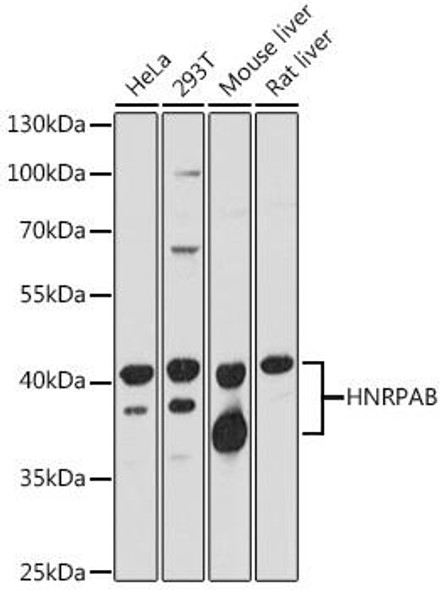
Adimanebart Antibody is a research-grade biosimilar monoclonal antibody targeting MUSK. It is a human IgG1, lambda2 antibody. Reactivity: Human. Supplied as a liquid. Applications: ELISA, flow cytometry, functional assays and in vivo research. Endotoxin: < 10 EU/mg. Purity: >95% as determined by SDS-PAGE. For research use only.
Muscle, skeletal receptor tyrosine-protein kinase (MUSK) is a ~97 kDa protein. Receptor tyrosine kinase which plays a central role in the formation and the maintenance of the neuromuscular junction (NMJ), the synapse between the motor neuron and the skeletal muscle. Recruitment of AGRIN by LRP4 to the MUSK signaling complex induces phosphorylation and activation of MUSK, the kinase of the complex. The activation of MUSK in myotubes regulates the formation of NMJs through the regulation of different processes including the specific expression of genes in subsynaptic nuclei, the reorganization of the actin cytoskeleton and the clustering of the acetylcholine receptors (AChR) in the postsynaptic membrane. May regulate AChR phosphorylation and clustering through activation of ABL1 and Src family kinases which in turn regulate MUSK. DVL1 and PAK1 that form a ternary complex with MUSK are also important for MUSK-dependent regulation of AChR clustering.
Product Name:
Adimanebart Antibody
SKU:
GXBS02488
Size:
100 µg, 1 mg
Antibody Type:
Monoclonal Antibody
Target:
MUSK
Isotype:
IgG1, lambda2
Host Species:
Human
Reactivity:
Human
Applications:
ELISA, FACS, Functional assay, Research in vivo
Synonyms:
3011838-77-7
Purity:
>95% as determined by SDS-PAGE.
Endotoxin Level:
< 10 EU/mg
State of Matter:
Liquid
Regulatory Status:
For research use only. Not suitable for clinical or therapeutic use.
Storage and Handling:
Store at 2 to 8°C for frequent use. Store at -20 to -80°C for twelve months from the date of receipt.