The AMPKalpha2 Polyclonal Antibody (CAB0791) is a high-quality antibody developed for reliable detection and analysis of target proteins. This antibody is raised in rabbits and is highly specific to human samples, making it a reliable choice for Western blot applications. By binding to AMPK-2, this antibody enables precise detection and analysis of AMPK activity in various cell types, providing valuable insights into metabolic pathways and cellular signaling.AMPK is known to play a crucial role in maintaining cellular energy balance, making it a potential target for therapeutic interventions in metabolic disorders such as diabetes and obesity.
This antibody is validated for use in WB, IF/ICC, ELISA applications and has demonstrated reactivity against Human, Rat samples.
Product Name:
AMPKalpha2 Polyclonal Antibody
SKU:
CAB0791
Size:
20μL, 100μL
Reactivity:
Human, Rat
Conjugate:
Unconjugated
Immunogen:
Recombinant protein (or fragment).This information is considered to be commercially sensitive.
Recommended starting concentration is 1 μg/mL. Please optimize the concentration based on your specific assay requirements.
Synonyms:
AMPK, AMPK2, PRKAA, AMPKa2, AMPKα2
Positive Sample:
K-562
Cellular Localization:
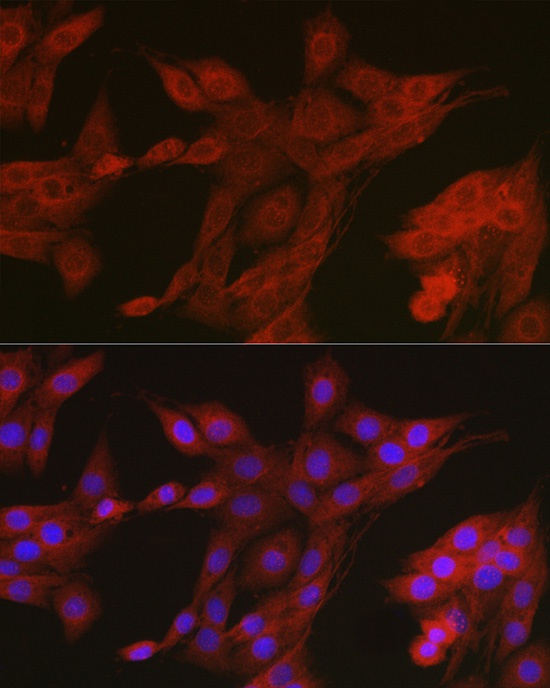
Cytoplasm, Nucleus.
Calculated MW:
62kDa
Observed MW:
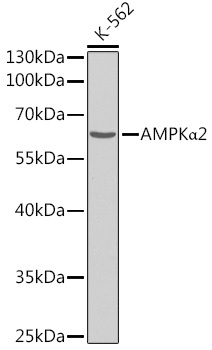
62kDa
The protein encoded by this gene is a catalytic subunit of the AMP-activated protein kinase (AMPK). AMPK is a heterotrimer consisting of an alpha catalytic subunit, and non-catalytic beta and gamma subunits. AMPK is an important energy-sensing enzyme that monitors cellular energy status. In response to cellular metabolic stresses, AMPK is activated, and thus phosphorylates and inactivates acetyl-CoA carboxylase (ACC) and beta-hydroxy beta-methylglutaryl-CoA reductase (HMGCR), key enzymes involved in regulating de novo biosynthesis of fatty acid and cholesterol. Studies of the mouse counterpart suggest that this catalytic subunit may control whole-body insulin sensitivity and is necessary for maintaining myocardial energy homeostasis during ischemia.
Purification Method
Affinity purification
Gene ID
5563
RRID
AB_2771820
Buffer Information
Store at -20℃. Avoid freeze / thaw cycles. Buffer: PBS containing 50% glycerol, preserved with proclin300 or sodium azide, pH 7.3.
Western blot analysis of lysates from K-562 cells, using AMPKα2 Rabbit pAb (CAB0791). Secondary antibody: HRP-conjugated Goat anti-Rabbit IgG (H+L) (CABS014) at 1:10000 dilution. Lysates/proteins: 25μg per lane. Blocking buffer: 3% nonfat dry milk in TBST.
Immunofluorescence analysis of PC-12 cells using AMPKα2 Rabbit pAb (CAB0791) at dilution of 1:100 (40x lens). Secondary antibody: Cy3-conjugated Goat anti-Rabbit IgG (H+L) (CABS007) at 1:500 dilution. Blue: DAPI for nuclear staining.