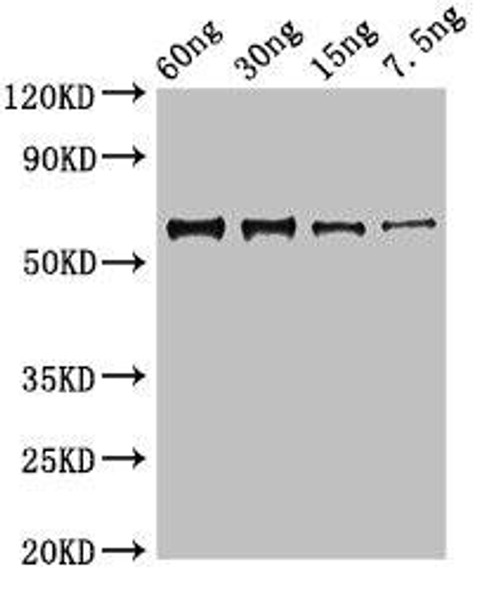
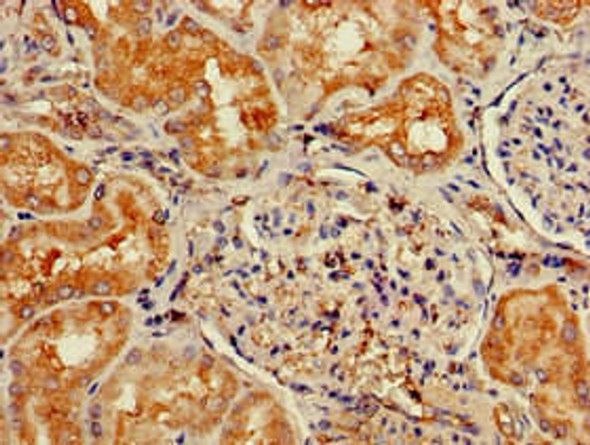
Anivovetmab Antibody is a research-grade biosimilar monoclonal antibody targeting Capsid protein VP2. It is a caninized IgG2, kappa antibody. Reactivity: Canine parvovirus type 2 (CPV2). Supplied as a liquid in 0.01M PBS pH 7.4. Applications: ELISA, flow cytometry, functional assays and in vivo research. Endotoxin: < 10 EU/mg. Purity: >95% purity as determined by SDS-PAGE. For research use only.
Capsid protein VP2 is a ~64 kDa protein. Capsid protein self-assembles to form an icosahedral capsid with a T=1 symmetry, about 22 nm in diameter, and consisting of 60 copies of two size variants of the capsid proteins, VP1 and VP2, which differ by the presence of an N-terminal extension in the minor protein VP1. The capsid encapsulates the genomic ssDNA. Capsid proteins are responsible for the attachment to host cell receptor TFRC. This attachment induces virion internalization predominantly through clathrin-endocytosis. Binding to the host receptors also induces capsid rearrangements leading to surface exposure of VP1 N-terminus, specifically its phospholipase A2-like region and nuclear localization signal(s).
Product Name:
Anivovetmab Antibody
SKU:
GXBS00802
Size:
100 µg, 1 mg
Antibody Type:
Monoclonal Antibody
Target:
Capsid protein VP2
Isotype:
IgG2, kappa
Host Species:
Canine
Reactivity:
Canine parvovirus type 2 (CPV2)
Applications:
ELISA, FACS, Functional assay, Research in vivo
Expression Host:
Mammalian cells
Synonyms:
KIND030, KIND-030, KIND030, 2370896-63-0
Recommended Dilutions:
ELISA: 1:2000-1:20000
Purity:
>95% purity as determined by SDS-PAGE.
Endotoxin Level:
< 10 EU/mg
Formulation:
0.01M PBS pH 7.4
State of Matter:
Liquid
Regulatory Status:
For research use only. Not suitable for clinical or therapeutic use.
Product Preparation:
Protein A/G purified from cell culture supernatant.
Storage and Handling:
Store at 2 to 8°C for frequent use. Store at -20 to -80°C for twelve months from the date of receipt.