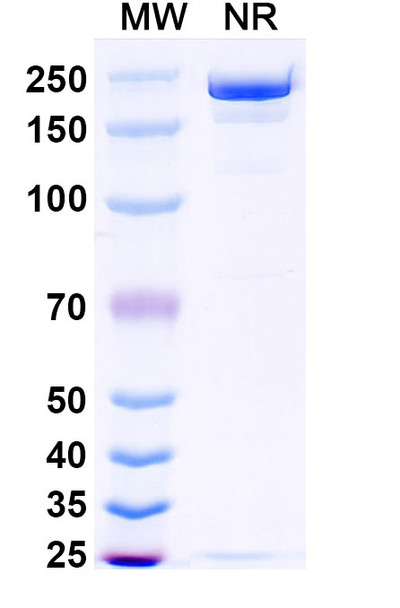
Ansuvimab Antibody is a research-grade biosimilar monoclonal antibody targeting Envelope glycoprotein. It is a humanized IgG1, kappa antibody. Reactivity: Zaire ebolavirus (ZEBOV) (Zaire Ebola virus). Supplied as a liquid in 0.01M PBS pH 7.4. Applications: ELISA, flow cytometry, functional assays and in vivo research. Endotoxin: < 10 EU/mg. Purity: >95% purity as determined by SDS-PAGE. For research use only.
Envelope glycoprotein (GP) is a ~74 kDa protein. Trimeric GP1,2 complexes form the virion surface spikes and mediate the viral entry processes, with GP1 acting as the receptor-binding subunit and GP2 as the membrane fusion subunit. At later times of infection, down-regulates the expression of various host cell surface molecules that are essential for immune surveillance and cell adhesion. Down-modulates several integrins including ITGA1, ITGA2, ITGA3, ITGA4, ITGA5, ITGA6, ITGAV and ITGB1. This decrease in cell adhesion molecules may lead to cell detachment, contributing to the disruption of blood vessel integrity and hemorrhages developed during infection (cytotoxicity) (Probable). Interacts with host TLR4 and thereby stimulates the differentiation and activation of monocytes leading to bystander death of T-lymphocytes.