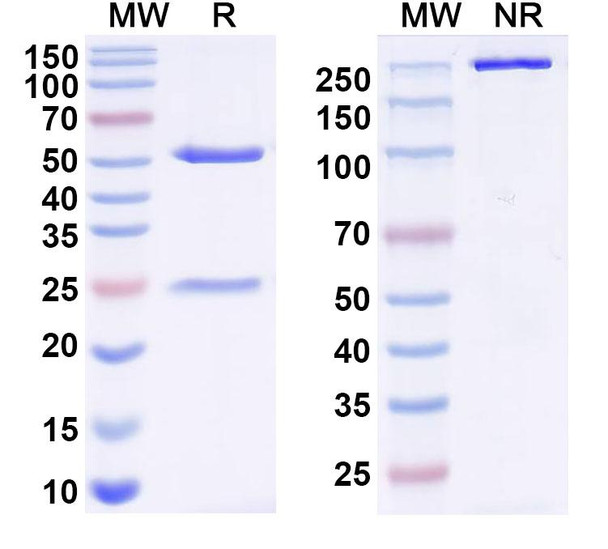
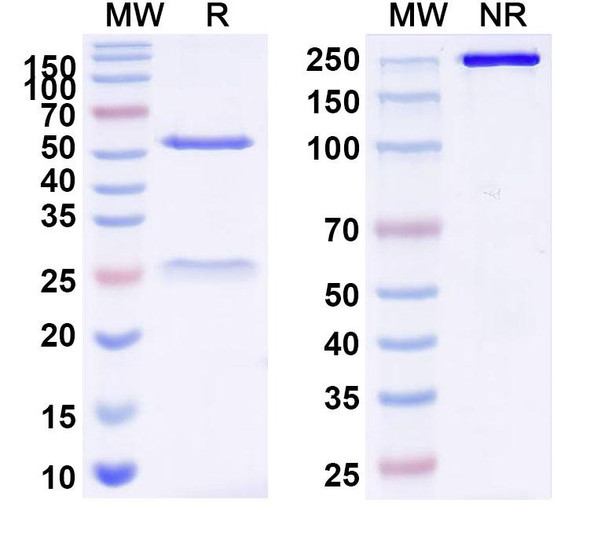
Anti-Bacillus anthracis lef/LF/Lethal factor Recombinant Monoclonal Antibody (2LF) is a recombinant monoclonal antibody targeting Bacillus anthracis lef/LF/Lethal factor (clone 2LF). It is a mouse IgG2a antibody. Reactivity: Bacillus anthracis. Supplied as a liquid in 0.01M PBS, pH 7.4. Applications: ELISA and SPR. Purity: >95% as determined by SDS-PAGE. For research use only.
Lethal factor (lef/LF) is a ~93 kDa protein. Lethal factor (LF), which constitutes one of the three proteins composing the anthrax toxin, is able to trigger rapid cell death in macrophages. Acts as a protease that cleaves the N-terminal of most dual specificity mitogen-activated protein kinase kinases (MAPKKs or MAP2Ks) (except for MAP2K5): cleavage invariably occurs within the N-terminal proline-rich region preceding the kinase domain, thus disrupting a sequence involved in directing specific protein-protein interactions necessary for the assembly of signaling complexes. Also cleaves mouse Nlrp1b: host Nlrp1b cleavage promotes ubiquitination and degradation of the N-terminal part of Nlrp1b by the proteasome, thereby releasing the cleaved C-terminal part of Nlrp1b, which polymerizes and forms the Nlrp1b inflammasome followed by host cell pyroptosis. Able to cleave mouse Nlrp1b alleles 1 and 5, while it is not able to cleave Nlrp1b alleles 2, 3 and 4. In contrast, does not cleave NLRP1 human ortholog.