100% Quality Guarantee
PhD-Level Technical Support
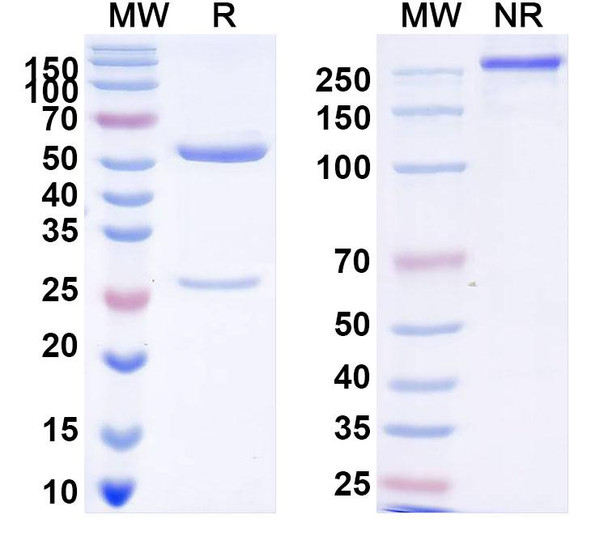
Anti-DENV-1 Envelope protein E/EDIII domain (CC loop) Recombinant Monoclonal Antibody (E111#) - SDS-PAGE
Key Features
Validated Uses - ELISA
Reactivity - Dengue virus 1 (DENV-1)
Recombinant Clone - Human recombinant, clone E111#
Starting Dilution - ELISA 1:2000-1:20000

Anti-DENV-1 Envelope protein E/EDIII domain (CC loop) Recombinant Monoclonal Antibody (E111#) (GXRM03651)

SKU GXRM03651
Product Type Antibody
Antibody Type Monoclonal
Host Species Human
Reactivity Dengue virus 1 (DENV-1)
Applications ELISA
Clone ID E111#
Isotype IgG1, kappa
$430 - $2,730

Request a formal quotation

A PDF quote with its own quote number, ready for your purchasing office to raise a PO against. Back within 4 working hours, from a PhD scientist — not an autoresponder.

  • PO-ready PDFQuote number, VAT, Incoterms
  • Volume pricing appliedDiscounts from 2 kits up
  • Valid 30 daysPrices held while you get sign-off
Anything we should know? optional

No account needed. We use your details only to prepare and send this quote. If it's urgent, say so in the box and we'll come back the same working day.

Global Shipping: 80+ Countries
White Glove Service: Available upon request
Batch Consistency: Contact Sales
Distributors: 60+ Countries

Description

Anti-DENV-1 Envelope protein E/EDIII domain (CC loop) Recombinant Monoclonal Antibody (E111#)

Anti-DENV-1 Envelope protein E/EDIII domain (CC loop) Recombinant Monoclonal Antibody (E111#) is a recombinant monoclonal antibody targeting DENV-1 Envelope protein E/EDIII domain (CC loop) (clone E111). It is a human IgG1, kappa antibody. Reactivity: Dengue virus type 1 (strain Nauru/West Pac/1974) (DENV-1). Supplied as a liquid in 0.01M PBS, pH 7.4. Applications: ELISA. Purity: >95% as determined by SDS-PAGE. For research use only.

Genome polyprotein (Envelope protein E) is a ~378 kDa protein. Capsid protein C self-assembles to form an icosahedral capsid about 30 nm in diameter. The capsid encapsulates the genomic RNA (Probable). Plays a role in virus budding by binding to the cell membrane and gathering the viral RNA into a nucleocapsid that forms the core of a mature virus particle. During virus entry, may induce genome penetration into the host cytoplasm after hemifusion induced by the surface proteins. Can migrate to the cell nucleus where it modulates host functions.

View AllClose

0 Reviews

0
Based on 0 reviews

No reviews yet. Be the first to share your experience!

View AllClose