Anti-DENV-2 Envelope protein E/DIII C-C′loop Recombinant Monoclonal Antibody (E104#)
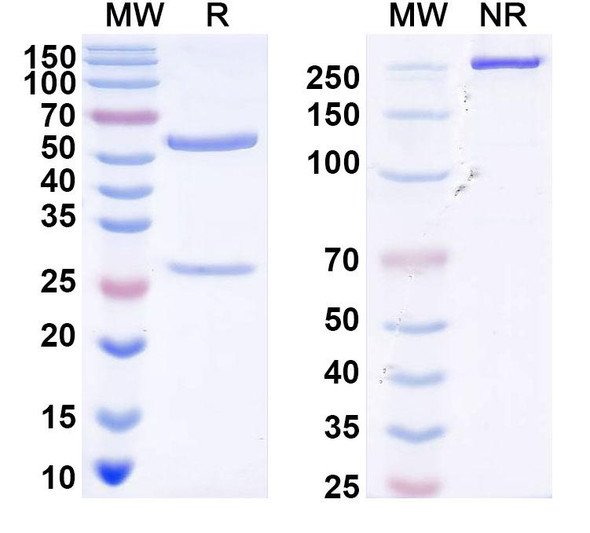
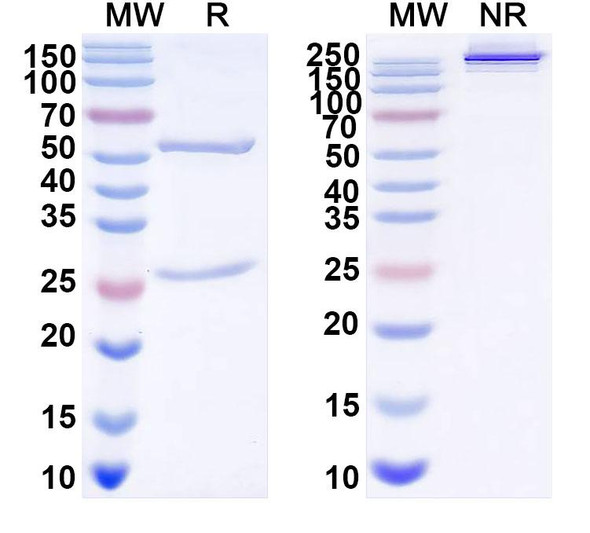
Anti-DENV-2 Envelope protein E/DIII C-C′loop Recombinant Monoclonal Antibody (E104#) is a recombinant monoclonal antibody targeting DENV-2 Envelope protein E/DIII C-C′loop (clone E104). It is a human IgG1, kappa antibody. Reactivity: Dengue virus type 2 (strain Thailand/16681/1984) (DENV-2). Supplied as a liquid in 0.01M PBS, pH 7.4. Applications: ELISA. Purity: >95% as determined by SDS-PAGE. For research use only.
Genome polyprotein (Envelope protein E) is a ~379 kDa protein. Capsid protein C self-assembles to form an icosahedral capsid about 30 nm in diameter. The capsid encapsulates the genomic RNA (Probable). Plays a role in virus budding by binding to the cell membrane and gathering the viral RNA into a nucleocapsid that forms the core of a mature virus particle. During virus entry, may induce genome penetration into the host cytoplasm after hemifusion induced by the surface proteins. Can migrate to the cell nucleus where it modulates host functions.
Product Name:
Anti-DENV-2 Envelope protein E/DIII C-C′loop Recombinant Monoclonal Antibody (E104#)
Size:
50 µg, 100 µg, 1 mg
Product SKU:
GXRM03671
Target:
Envelope protein E
Host Species:
Human
Antibody Type:
Monoclonal
Clone ID:
E104#
Reactivity:
Dengue virus 2 (DENV-2)
Buffer:
0.01M PBS pH 7.4.
Storage & Shipping:
Store at 2 to 8°C for frequent use. Store at -20 to -80°C for twelve months from the date of receipt.
Format:
Liquid
Applications:
ELISA
Recommended Dilutions:
ELISA: 1:2000-1:20000
Antibody Isotype:
IgG1, kappa
Purity:
>95% as determined by SDS-PAGE.
Purification:
Protein A/G purified from cell culture supernatant.