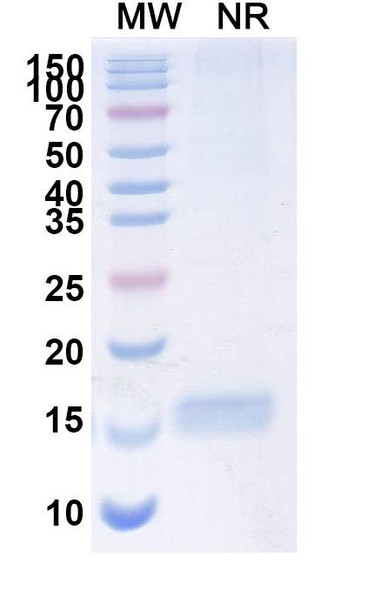
Anti-Human LGR4 Recombinant Nanobody (SAA2296) is a recombinant nanobody targeting Human LGR4 (clone SAA2296). Format: VHH-His (alpaca host). Reactivity: Human. Supplied as a liquid in 0.01M PBS pH 7.4. Applications: ELISA. Purity: >95% as determined by SDS-PAGE. For research use only.
Leucine-rich repeat-containing G-protein coupled receptor 4 (LGR4) is a ~104 kDa protein. Receptor for R-spondins that potentiates the canonical Wnt signaling pathway and is involved in the formation of various organs. Upon binding to R-spondins (RSPO1, RSPO2, RSPO3 or RSPO4), associates with phosphorylated LRP6 and frizzled receptors that are activated by extracellular Wnt receptors, triggering the canonical Wnt signaling pathway to increase expression of target genes. In contrast to classical G-protein coupled receptors, does not activate heterotrimeric G-proteins to transduce the signal. Its function as activator of the Wnt signaling pathway is required for the development of various organs, including liver, kidney, intestine, bone, reproductive tract and eye. May also act as a receptor for norrin (NDP), such results however require additional confirmation in vivo.
Product Name:
Anti-Human LGR4 Recombinant Nanobody (SAA2296)
Size:
50 µg, 100 µg, 1 mg
Product SKU:
GXRM04751
Target:
G-protein coupled receptor 48
Host Species:
Alpaca
Antibody Type:
Monoclonal
Clone ID:
SAA2296
Reactivity:
Human
Buffer:
0.01M PBS pH 7.4.
Storage & Shipping:
Store at 2 to 8°C for frequent use. Store at -20 to -80°C for twelve months from the date of receipt.