Description
Biotin Labeling Kit
The Biotin Labeling Kit (AKES126) provides the reagents needed to biotinylate antibodies and other proteins that contain primary amino groups (-NH2). The NHS-biotin reagent is pre-activated and reacts with N-terminal amines and lysine side chains to form a stable amide bond. The kit includes 10 KD filtration tubes for buffer exchange and concentration, so labeling can be performed without dialysis.
The Biotin Labeling Kit provides the reagents needed to attach biotin to proteins. Its labeling reagent, NHS-Biotin, is an N-hydroxysuccinimide ester of biotin with a molecular weight of 341.38, and it is supplied already activated so it can be used directly. The kit targets proteins that carry primary amino groups (-NH2), namely N-terminal amines and lysine side-chain amines. Because the modification is made on the protein itself, the output is a biotin-labeled protein for downstream research use.
Researchers use the kit to label antibodies and other proteins for protein labeling and conjugation applications. The manual reports successful labeling of Annexin V, protein A/G, 2019-nCov spike, NGAL, and several recombinant protein fragments. The fat-soluble NHS-Biotin is described as useful in experiments where the labeled protein must enter the cell membrane during the reaction. The kit supports both micro-labeling and large-scale labeling, so the scale of a study can be matched to the amount of protein available. Use cases are defined by the protein being labeled.
The labeling reaction occurs within a defined pH range, in which NHS-Biotin reacts with primary amino groups to form a stable amide bond. A 10 kDa filtration tube concentrates the protein, exchanges it into Labeling Buffer I, and desalts it without dialysis. In the manual's example, 13.3 µL of 10 mM NHS-Biotin is added to 1 mg of 50 kDa protein, followed by 30 min at 37°C in the dark. The reaction is stopped with 1 M Tris (pH 8.7), and unreacted reagent is removed by repeated ultrafiltration with 1× PBS. Protein concentration is determined from absorbance at 280 nm (A280), as shown in the manual's appendix examples.
The kit is intended for proteins containing primary amino groups. Samples containing free amino groups, such as Tris, amino acids, or ammonium ions, must be removed by ultrafiltration with Labeling Buffer I before labeling. NHS-Biotin is susceptible to moisture hydrolysis, so it should be stored at -20°C or -80°C with desiccant and equilibrated to room temperature before opening. Labeled protein can be stored at 2–8°C in the dark for 6 months with 0.05–0.2% ProClin 300 or 0.05% sodium azide and a stabilizer such as 0.1% BSA. This kit is for research use only.
The kit can label 0.1–1 mg of protein per reaction. The recommended molar ratio of NHS-Biotin to protein is 4:1 to 13.5:1 for proteins of 30–100 kDa, and the ratio can be adjusted by molecular weight or determined experimentally. The filtration device has a maximum volume of 0.5 mL, and loading more than 1 mg of protein can cause leakage and low recovery. Labeling success depends on protein solubility in the buffer, pH and temperature stability, purity, and the accessibility of the labeling site. The manual recommends testing a small amount of an unknown protein before committing a full sample.
| Product name: | Biotin Labeling Kit |
| SKU: | AKES126 |
| Labeling group: | NHS-Biotin |
| Applications: | Protein labeling, antibody labeling |
| Target functional group: | Primary amino groups (-NH2) |
| Protein input: | 0.1–1 mg per labeling |
| Filtration tube: | 10 KD, 0.5 mL device |
| Total procedure time: | Approximately 90 min |
| Research use: | For research use only |
- Pre-activated NHS-biotin reacts with primary amines (N-terminal and lysine side chains) to form stable amide bonds
- Includes 10 KD filtration tubes for desalting and buffer exchange without dialysis
- Labels 0.1–1 mg of protein per run
- Complete labeling workflow takes approximately 90 min, with a 30 min reaction at 37°C
- NHS-biotin is described as fat-soluble.

Within a defined pH range, the NHS ester of biotin reacts specifically with primary amino groups (N-terminal amines and lysine side chains) to form a stable amide bond, coupling biotin to the protein. Excess reagent is quenched with Tris, and unreacted label and buffer components are removed by repeated centrifugal ultrafiltration.
- Biotinylation of antibodies for downstream detection or capture assays
- Preparation of biotin-labeled proteins for streptavidin- or avidin-based pull-down and detection workflows
- Labeling of recombinant protein fragments and other amine-containing proteins
- Labeling of proteins such as Annexin V, protein A/G, 2019-nCov spike, and NGAL (results vary by protein)
| Component | Storage |
| NHS-Biotin (NHS ester) | -20°C, protect from light |
| Labeling Buffer I | 2-8°C |
| DMF | 2-8°C, protect from light |
| 1×PBS (pH 7.4) | 2-8°C |
| 1 M Tris (pH 8.7) | 2-8°C |
| 10 kDa filtration tube | Room temperature |
- Pipettor and tips (0.5–10 µL, 2–20 µL, 20–200 µL, 200–1000 µL)
- 37°C incubator
- Centrifuge with fixed-angle rotor capable of up to 12,000×g
- Protein to be labeled (1 mg per labeling run), free of primary-amine interferents such as Tris or amino acids, or removed beforehand
Purified protein (antibodies and other primary amine-containing proteins)
- Bring all reagents to room temperature for 20 min before use.
- Pre-wet the dry 10 kDa filter device by adding 500 µL Labeling Buffer I, standing for 10 min at room temperature, and discarding the buffer. Keep the filter device moist throughout labeling.
- Dissolve 0.1 mg NHS-Biotin in 30 µL DMF and stand for 10 min until fully dissolved. The resulting concentration is 10 mM; cover the tube until use.
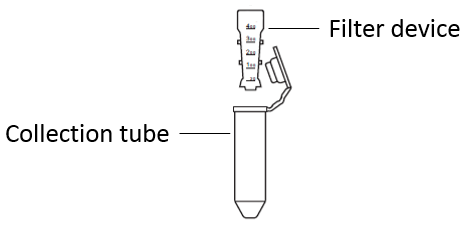
- Place the filter device in a collection tube, add 1 mg of protein, and bring the volume to 0.5 mL with Labeling Buffer I. Centrifuge at 12,000×g for 10 min and discard the liquid in the collection tube.
- Invert the filter device into a new collection tube and centrifuge at 1,000×g for 2 min to recover the protein.
- Add Labeling Buffer I to the recovered protein to bring the concentration to about 2 mg/mL. Add 0.5 mL Labeling Buffer I to the filter device and keep it on a pipette rack for later use.
- If the protein contains free amino groups (Tris, amino acids, or other interferents), repeat ultrafiltration with Labeling Buffer I to remove them fully.
Labeling reaction and purification
- Immediately add 13.3 µL of 10 mM NHS-Biotin to the protein solution for 1 mg of 50 kDa protein (molar ratio 6.65:1 in the manual's example). Mix thoroughly, seal with a lid, and incubate at 37°C for 30 min in the dark.
- Stop the reaction by adding 1 M Tris (pH 8.7) at 10 µL per 100 µg protein. Mix fully and incubate at room temperature for 10 min.
- Add an appropriate amount of 1× PBS to the reaction solution to a final volume of 0.5 mL. Transfer the solution to the prepared filter device, discarding the Labeling Buffer I from step 6 of the preparation. If the solution exceeds 0.5 mL, transfer it in portions.
- Cover the filter device, match it with the collection tube, and centrifuge at 12,000×g for 10–30 min. Discard the liquid in the collection tube, replenish 1× PBS to 500 µL in the filter device, and repeat the centrifugal ultrafiltration 2–3 times.
Labeled protein (collection and storage)
- Add 0.2 mL 1× PBS to the filter device and pipette gently. Invert the filter device into a clean collection tube and centrifuge at 1,000×g for 2 min.
- Collect the solution in the collection tube; this is the protein labeled with NHS-Biotin.
- Add 0.05–0.2% ProClin 300 or 0.05% sodium azide and a stabilizer such as 0.1% BSA. Store at 2–8°C in the dark for 6 months.
- Alternatively, add an equal volume of glycerol and store at -20°C for 6 months.
Experiment preparation
- Read the manual and bring all kit reagents to room temperature for 20 min before use. Reagents not in use should remain refrigerated.
- Pre-wet the filter device by adding 500 µL Labeling Buffer I to the dry filter device. Stand for 10 min at room temperature, then discard the buffer. Keep the filter device moist throughout labeling.
- Prepare NHS-Biotin by dissolving 0.1 mg NHS-Biotin in 30 µL DMF. Stand for 10 min until fully dissolved. The resulting solution is 10 mM; cover the tube until use.
Labeling
- Concentration and buffer exchange: place the filter device in a collection tube, add 1 mg protein and Labeling Buffer I to a final volume of 0.5 mL. Cover and centrifuge at 12,000×g for 10 min. Discard the filtrate. If the protein volume exceeds 0.5 mL, add it in portions with repeat concentration.
- Recovery and quantification: invert the filter device into a clean collection tube and centrifuge at 1000×g for 2 min to collect the protein. Adjust the protein concentration to about 2 mg/mL with Labeling Buffer I. Add 0.5 mL Labeling Buffer I to the filter device and set it aside.
- Labeling reaction: immediately add 13.3 µL of 10 mM NHS-Biotin to the protein solution. Mix gently, seal, and incubate at 37°C for 30 min in the dark.
- Blocking: add 10 µL of 1 M Tris (pH 8.7) per 100 µg protein. Mix and incubate at room temperature for 10 min.
Purification
- Ultrafiltration: add 1×PBS to the reaction solution to a final volume of 0.5 mL and transfer it to the filter device. If the volume exceeds 0.5 mL, transfer in portions after each spin. Cover, match to the collection tube, and centrifuge at 12,000×g for 10–30 min. Discard the filtrate.
- Replenish the filter device with 1×PBS to 500 µL and repeat the centrifugal ultrafiltration 2–3 times.
- Collect labeled protein: add 0.2 mL 1×PBS to the filter device and pipet gently. Invert the filter device into a new collection tube and centrifuge at 1000×g for 2 min. The solution in the collection tube is the biotin-labeled protein.
n(NHS-Biotin) = n(protein) × molar ratio Volume of 10 mM NHS-Biotin (µL) = n(NHS-Biotin) ÷ 10 mM
- n(protein) is the amount of substance of the protein, calculated as mass ÷ molecular weight. In the manual's example, 1 mg of 50 kDa protein gives n = 0.000133 when multiplied by the 6.65 molar ratio; this value is expressed in mmol.
- The molar ratio for proteins of 30–100 kDa is 4:1 to 13.5:1 with this kit. The ratio can be adjusted by molecular weight or determined experimentally.
- The 10 mM concentration is the NHS-Biotin stock prepared by dissolving 0.1 mg in 30 µL DMF. The example volume is 0.000133 mmol ÷ 10 mmol/L = 13.3 µL.
- The manual does not describe a dilution factor. Protein is adjusted to about 2 mg/mL with Labeling Buffer I before the labeling reaction.
| Unopened kit storage: | 2–8°C for 1 year |
| NHS-Biotin storage: | -20°C with desiccant, protected from light |
| Dissolved NHS-Biotin: | -20°C or -80°C for 1 week |
| Labeled protein storage (preservative): | 2–8°C, protected from light, for 6 months with 0.05–0.2% Proclin 300 or 0.05% sodium azide plus a stabilizer such as 0.1% BSA |
| Labeled protein storage (glycerol): | -20°C for 6 months when an equal volume of glycerol is added |
| Expiration: | 12 months |
| Shipping: | Ice bag |
Cautions
- For research use only. Not for use in clinical diagnostics or therapeutic procedures.
- NHS-Biotin is moisture sensitive. Equilibrate it to room temperature before opening to prevent condensation, and do not mix it with water before labeling.
- Do not exceed 1 mg protein per filter device, as overloading can cause leakage and low recovery.
- Centrifuge speed is specified in ×g, not rpm. Excessive speed can cause leakage from the filter device.
- Do not pipette directly from the filter device after ultrafiltration. Invert it into a collection tube and centrifuge to recover the sample.
- Remove free amine-containing buffer components (Tris, amino acids) from the protein before labeling.
- For unknown proteins, test labeling feasibility with a small amount of protein first. Labeling may impair protein biological function.
- Use a positive control if labeling fails or results are low.