The [KO Validated] Caspase-9 Antibody (CAB0281) is a high-quality antibody developed for reliable detection and analysis of target proteins. This antibody, produced by Assay Genie and raised in rabbits, is highly specific for human caspase-9 and is validated for use in Western blot applications. Caspase-9 is a key player in the intrinsic apoptotic pathway, acting as an initiator caspase that is activated in response to various cellular stress signals. Dysregulation of caspase-9 activity has been implicated in numerous diseases, including cancer, neurodegenerative disorders, and autoimmune conditions.
This antibody is validated for use in WB, IHC-P, IF/ICC, ELISA applications and has demonstrated reactivity against Human, Mouse, Rat samples.
Product Name:
[KO Validated] Caspase-9 Antibody
SKU:
CAB0281
Size:
20μL, 100μL
Reactivity:
Human, Mouse, Rat
Conjugate:
Unconjugated
Immunogen:
Recombinant protein (or fragment).This information is considered to be commercially sensitive.
This gene encodes a member of the cysteine-aspartic acid protease (caspase) family. Sequential activation of caspases plays a central role in the execution-phase of cell apoptosis. Caspases exist as inactive proenzymes which undergo proteolytic processing at conserved aspartic residues to produce two subunits, large and small, that dimerize to form the active enzyme. This protein can undergo autoproteolytic processing and activation by the apoptosome, a protein complex of cytochrome c and the apoptotic peptidase activating factor 1; this step is thought to be one of the earliest in the caspase activation cascade. This protein is thought to play a central role in apoptosis and to be a tumor suppressor. Alternative splicing results in multiple transcript variants.
Purification Method
Affinity purification
Gene ID
842
RRID
AB_2757093
Buffer Information
Store at -20℃. Avoid freeze / thaw cycles. Buffer: PBS containing 50% glycerol, preserved with proclin300 or sodium azide, pH 7.3.
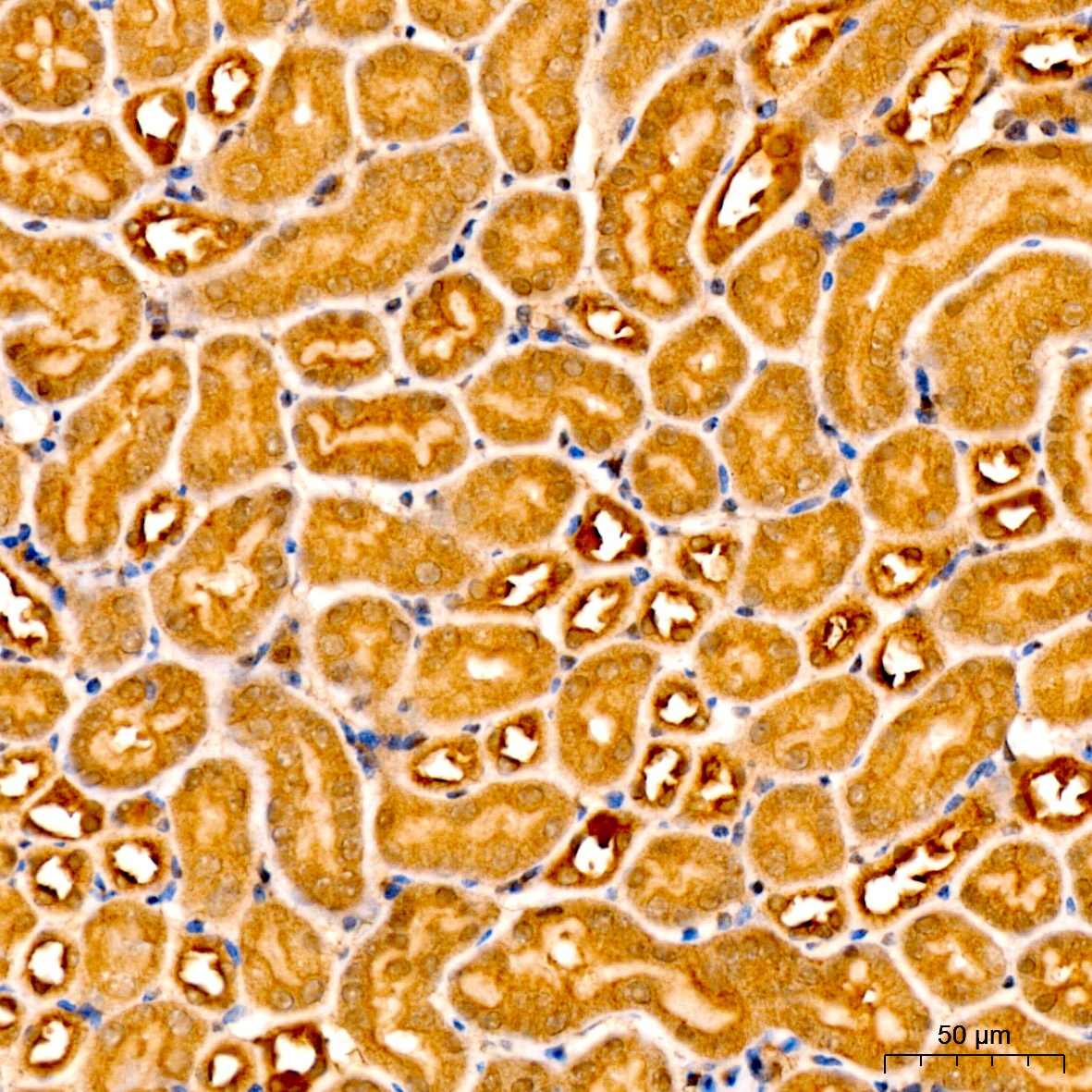
Immunohistochemistry analysis of paraffin-embedded Mouse kidney tissue using Caspase-9 Rabbit pAb (CAB0281) at a dilution of 1:300 (40x lens). High pressure antigen retrieval was performed with 0.01 M citrate buffer (pH 6.0) prior to IHC staining.
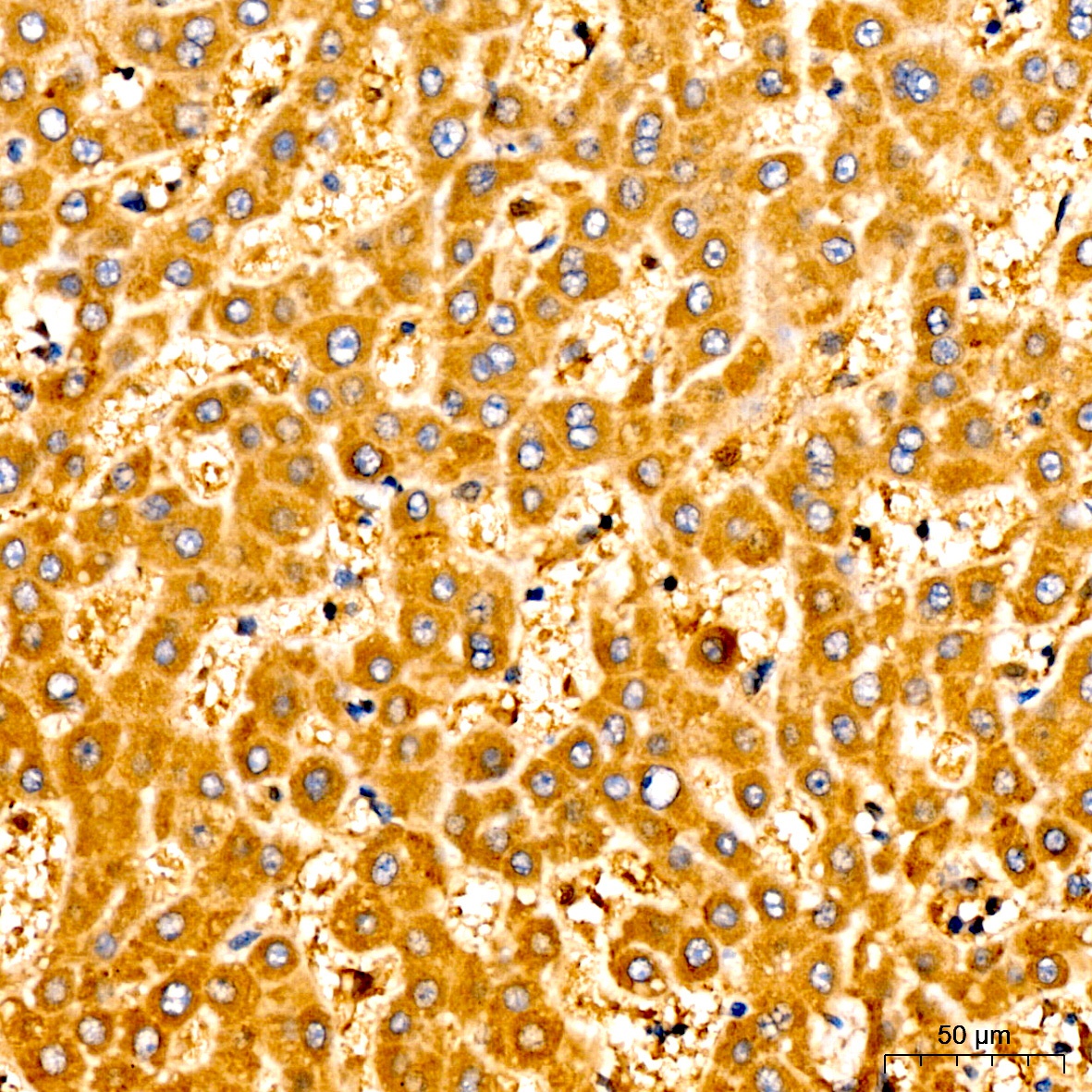
Immunohistochemistry analysis of paraffin-embedded Human liver tissue using Caspase-9 Rabbit pAb (CAB0281) at a dilution of 1:300 (40x lens). High pressure antigen retrieval was performed with 0.01 M citrate buffer (pH 6.0) prior to IHC staining.
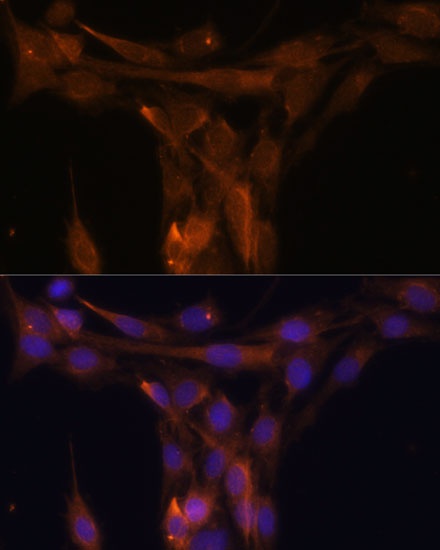
Immunofluorescence analysis of C6 cells using Caspase-9 Rabbit pAb (CAB0281) at dilution of 1:100. Secondary antibody: Cy3-conjugated Goat anti-Rabbit IgG (H+L) (CABS007) at 1:500 dilution. Blue: DAPI for nuclear staining.
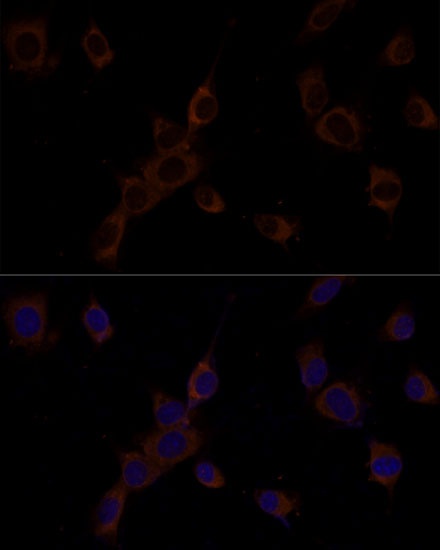
Immunofluorescence analysis of NIH/3T3 cells using Caspase-9 Rabbit pAb (CAB0281) at dilution of 1:100. Secondary antibody: Cy3-conjugated Goat anti-Rabbit IgG (H+L) (CABS007) at 1:500 dilution. Blue: DAPI for nuclear staining.