The CD85j Polyclonal Antibody (CAB22548) is a high-quality antibody developed for reliable detection and analysis of target proteins. This antibody, generated in rabbits, is highly specific for human samples and is optimized for use in Western blotting techniques. By binding to the CD85j protein, this antibody allows for the detection and analysis of CD85j in a variety of cell types, making it ideal for studies in immunology and cancer research.CD85j, also known as the leukocyte immunoglobulin-like receptor subfamily B member 5 (LILRB5), is a key player in immune modulation, regulating immune responses and inhibiting inflammation.
This antibody is validated for use in WB, IF/ICC, ELISA applications and has demonstrated reactivity against Human samples.
Product Name:
CD85j Polyclonal Antibody
SKU:
CAB22548
Size:
20μL, 100μL
Reactivity:
Human
Conjugate:
Unconjugated
Immunogen:
Recombinant protein (or fragment).This information is considered to be commercially sensitive.
Tested Applications:
WBIF/ICCELISA
Recommended Dilution:
WB
1:500 - 1:1000
IF/ICC
1:50 - 1:200
ELISA
Recommended starting concentration is 1 μg/mL. Please optimize the concentration based on your specific assay requirements.
Cytoplasm, External Side Of Plasma Membrane, Extracellular Region, Plasma Membrane.
Calculated MW:
71kDa
Observed MW:
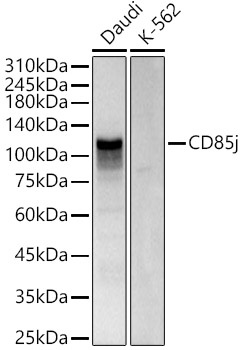
110kDa
This gene is a member of the leukocyte immunoglobulin-like receptor (LIR) family, which is found in a gene cluster at chromosomal region 19q13.4. The encoded protein belongs to the subfamily B class of LIR receptors which contain two or four extracellular immunoglobulin domains, a transmembrane domain, and two to four cytoplasmic immunoreceptor tyrosine-based inhibitory motifs (ITIMs). The receptor is expressed on immune cells where it binds to MHC class I molecules on antigen-presenting cells and transduces a negative signal that inhibits stimulation of an immune response. It is thought to control inflammatory responses and cytotoxicity to help focus the immune response and limit autoreactivity. Multiple transcript variants encoding different isoforms have been found for this gene.
Purification Method
Affinity purification
Gene ID
10859
Buffer Information
Store at -20℃. Avoid freeze / thaw cycles. Buffer: PBS containing 50% glycerol, preserved with proclin300 or sodium azide, pH 7.3.
Western blot analysis of various lysates, using CD85j Rabbit pAb (CAB22548) at 1:1000 dilution. Secondary antibody: HRP-conjugated Goat anti-Rabbit IgG (H+L) (CABS014) at 1:10000 dilution. Lysates/proteins: 25μg per lane. Blocking buffer: 3% nonfat dry milk in TBST. Detection: ECL Basic Kit (AbGn00020). Exposure time: 3s.
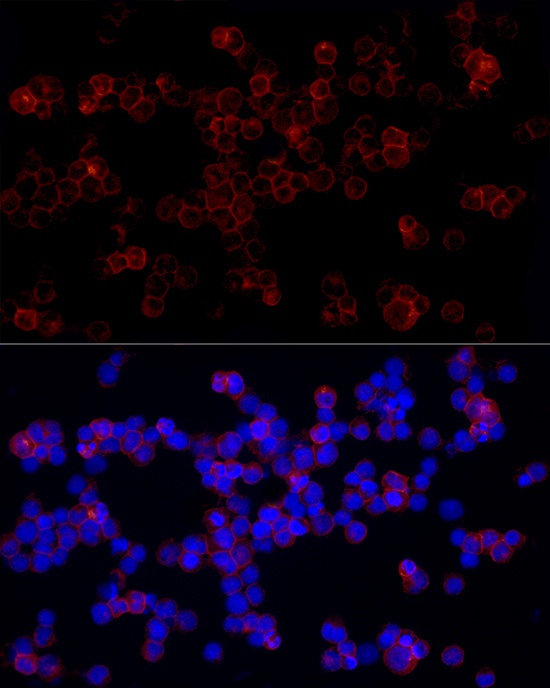
Immunofluorescence analysis of Daudi cells using CD85j Rabbit pAb (CAB22548) at dilution of 1:100 (40x lens). Secondary antibody: Cy3-conjugated Goat anti-Rabbit IgG (H+L) (CABS007) at 1:500 dilution. Blue: DAPI for nuclear staining.



![Purified Anti-Human CD85j Antibody [GHI/75] (AGEL5109)](https://cdn11.bigcommerce.com/s-h68l9z2lnx/images/stencil/590x590/products/271113/693994/purified-anti-human-cd85j-antibody-ghi75-agel5109__75434.1774511108.jpg?c=2 "Purified Anti-Human CD85j Antibody [GHI/75] (AGEL5109)")
![Anti-Human CD85j Antibody [GHI/75] -Low Endotoxin, Azide Free (AGEL5110)](https://cdn11.bigcommerce.com/s-h68l9z2lnx/images/stencil/590x590/products/271114/694439/anti-human-cd85j-antibody-ghi75-low-endotoxin-azide-free-agel5110__05741.1774512452.jpg?c=2 "Anti-Human CD85j Antibody [GHI/75] -Low Endotoxin, Azide Free (AGEL5110)")