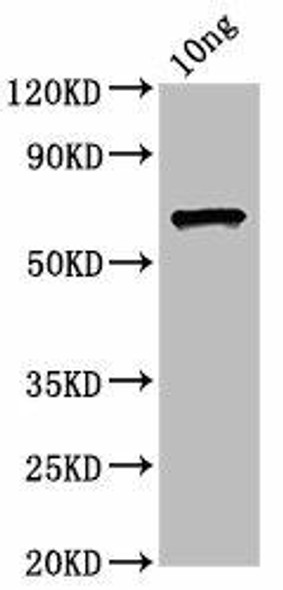
Elatatug Antibody is a research-grade biosimilar monoclonal antibody targeting CLDN18.2. It is a human IgG1, kappa antibody. Reactivity: Human. Supplied as a liquid in 0.01M PBS pH 7.4. Applications: ELISA, flow cytometry and functional assays. Endotoxin: < 10 EU/mg. Purity: >95% as determined by SDS-PAGE. For research use only.
Claudin-18 is a ~27 kDa protein. Involved in alveolar fluid homeostasis via regulation of alveolar epithelial tight junction composition and therefore ion transport and solute permeability, potentially via downstream regulation of the actin cytoskeleton organization and beta-2-adrenergic signaling. Required for lung alveolarization and maintenance of the paracellular alveolar epithelial barrier. Acts to maintain epithelial progenitor cell proliferation and organ size, via regulation of YAP1 localization away from the nucleus and thereby restriction of YAP1 target gene transcription. Acts as a negative regulator of RANKL-induced osteoclast differentiation, potentially via relocation of TJP2/ZO-2 away from the nucleus, subsequently involved in bone resorption in response to calcium deficiency. Mediates the osteoprotective effects of estrogen, potentially via acting downstream of estrogen signaling independently of RANKL signaling pathways.
Product Name:
Elatatug Antibody
SKU:
GXBS02649
Size:
100 µg, 1 mg
Antibody Type:
Monoclonal Antibody
Target:
CLDN18.2
Isotype:
IgG1, kappa
Host Species:
Human
Reactivity:
Human
Applications:
ELISA, FCM, Functional assay
Synonyms:
CAS: 3038456-00-4
Purity:
>95% as determined by SDS-PAGE.
Endotoxin Level:
< 10 EU/mg
Formulation:
0.01M PBS pH 7.4.
State of Matter:
Liquid
Regulatory Status:
For research use only.
Storage and Handling:
Store at 2 to 8°C for frequent use. Store at -20 to -80°C for twelve months from the date of receipt.