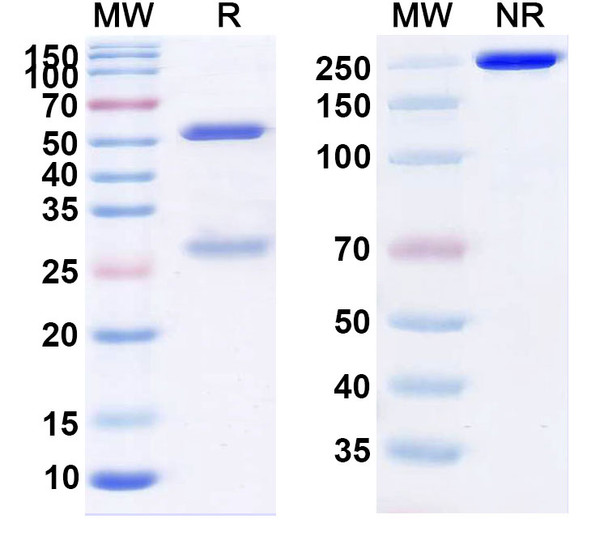
Enibarcimab Antibody is a research-grade biosimilar monoclonal antibody targeting ProAM N-terminal 20 peptide. It is a humanized IgG1-Kappa antibody. Reactivity: Human. Supplied as a liquid in 0.01M PBS pH 7.4. Applications: ELISA, flow cytometry, functional assays and in vivo research. Endotoxin: < 10 EU/mg. Purity: >95% purity as determined by SDS-PAGE. For research use only.
Pro-adrenomedullin (ADM) is a ~20 kDa protein. Adrenomedullin/ADM and proadrenomedullin N-20 terminal peptide/PAMP are peptide hormones that act as potent hypotensive and vasodilatator agents. Numerous actions have been reported most related to the physiologic control of fluid and electrolyte homeostasis. In the kidney, ADM is diuretic and natriuretic, and both ADM and PAMP inhibit aldosterone secretion by direct adrenal actions. In pituitary gland, both peptides at physiologically relevant doses inhibit basal ACTH secretion. Both peptides appear to act in brain and pituitary gland to facilitate the loss of plasma volume, actions which complement their hypotensive effects in blood vessels.
Product Name:
Enibarcimab Antibody
SKU:
GXBS00688
Size:
100 µg, 1 mg
Antibody Type:
Monoclonal Antibody
Target:
ProAM N-terminal 20 peptide
Isotype:
IgG1-Kappa
Host Species:
Human
Reactivity:
Human
Applications:
ELISA, FACS, Functional assay, Research in vivo
Expression Host:
Mammalian cells
Synonyms:
HAM-8101, 2305638-98-4
Purity:
>95% purity as determined by SDS-PAGE.
Endotoxin Level:
< 10 EU/mg
Formulation:
0.01M PBS pH 7.4
State of Matter:
Liquid
Regulatory Status:
For research use only. Not suitable for clinical or therapeutic use.
Product Preparation:
Protein A/G purified from cell culture supernatant.
Storage and Handling:
Store at 2 to 8°C for frequent use. Store at -20 to -80°C for twelve months from the date of receipt.