Description
GenieKine Recombinant Human IL-15 Protein (GKRP0010)
GenieKine Recombinant Human IL-15 Protein is expressed in E. coli. IL-15 supports the development, survival and expansion of NK cells and memory CD8+ T cells, and is used in NK and T cell expansion protocols. Supplied as a lyophilized powder with purity of >95% by SDS-PAGE and endotoxin below 0.05 EU/µg by LAL assay. Suitable for stem cell culture and organoid culture. For research use only.
This product (SKU: GKRP0010) is expressed in E. coli and is supplied unconjugated. It has a calculated molecular weight of 12.9 kDa (monomer) and an observed molecular weight of 13 kDa (reducing) on SDS-PAGE. Purity is >95% by SDS-PAGE and endotoxin is <0.05 EU/µg by the LAL method.
Key Features
| High Purity: >95% by SDS-PAGE | |
| Low Endotoxin: <0.05 EU/µg | |
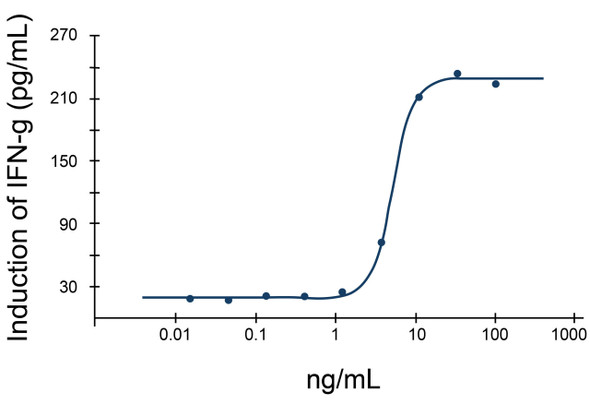
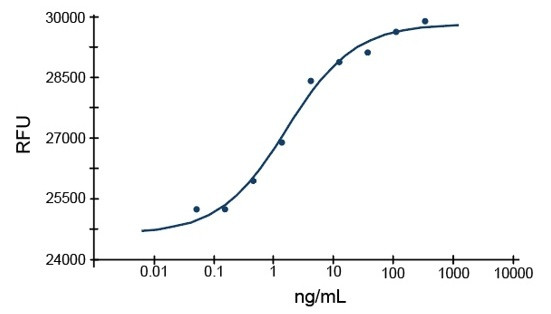
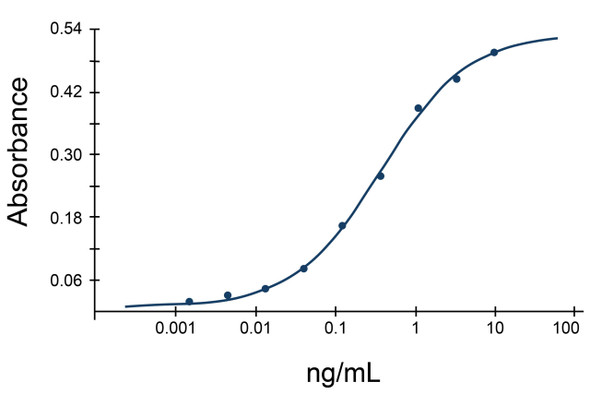
| Bioactivity Validated: ED50 <0.5 ng/mL | |
| Expressed in E. coli |
| Product Name: | GenieKine Recombinant Human IL-15 Protein |
| SKU: | GKRP0010 |
| Size: | 5 µg, 20 µg, 50 µg, 100 µg, 250 µg, 500 µg, 1 mg |
| Reactivity: | Human |
| Synonyms: | Interleukin 15, IL15, MGC9721 |
| Tag: | Unconjugated |
| Calculated MW: | 12.9 kDa (monomer) |
| Observed MW: | 13 kDa (reducing) |
| Gene ID: | 3600 |
| UniProt: | P40933 |
| Expression System: | E. coli |
| Sequence: | Asn49-Ser162, with an N-terminal Met |
| Biological Activity: | Determined by a cell proliferation assay using mouse CTLL-2 cells. The ED50 for this effect is typically <0.5 ng/mL. |
| Endotoxin: | <0.05 EU/µg of protein, as determined by the LAL method. |
| Purity: | >95% by SDS-PAGE and quantitative densitometry by Coomassie Blue staining. |
| Formulation: | Lyophilized from sterile PBS with Trehalose, pH 7.4. |
| Reconstitution: | Reconstitute at 100 µg/mL in sterile PBS. |
| Storage: | 12 months from date of receipt at -20°C to -70°C, lyophilized powder. 3 months at -20°C to -70°C under sterile conditions after reconstitution. Avoid repeated freeze-thaw cycles. |
IL-15 is a cytokine closely related to IL-2 in that it stimulates CD4+ Th cells, CD8+ Tc cells and NK cells. Notably, IL-15 is not associated with a strong Treg response and uses a variation in receptor signaling to distinguish its mechanism from IL-2. IL-15 predominately uses a cell-to-cell juxtacrine interaction involving an IL-15 responsive cell expressing the IL-2 R beta (CD122)/common gamma chain (CD132) complex and, in a process termed transpresentation, IL-15 bound to IL-15 R alpha (CD215) on the surface of second, effector cell completes the signaling interaction. In a less regulated fashion, free IL-15 is able to induce signaling through the IL-2 R beta (CD122)/common gamma chain (CD132) complex. Through these interactions IL-15 is also associated with an exercise-induced skeletal response and interstitial adipose metabolism. IL-15 is being investigated for its potential to improve the efficacy of adoptive cell therapies (ACT), such as CAR-T cell therapy and TCR-engineered T cell therapy. IL-15 is being investigated in combination with other immunotherapies, such as checkpoint inhibitors (e.g., anti-PD-1 antibodies) and other cytokines (e.g., IL-2), to enhance anti-tumor immune responses.
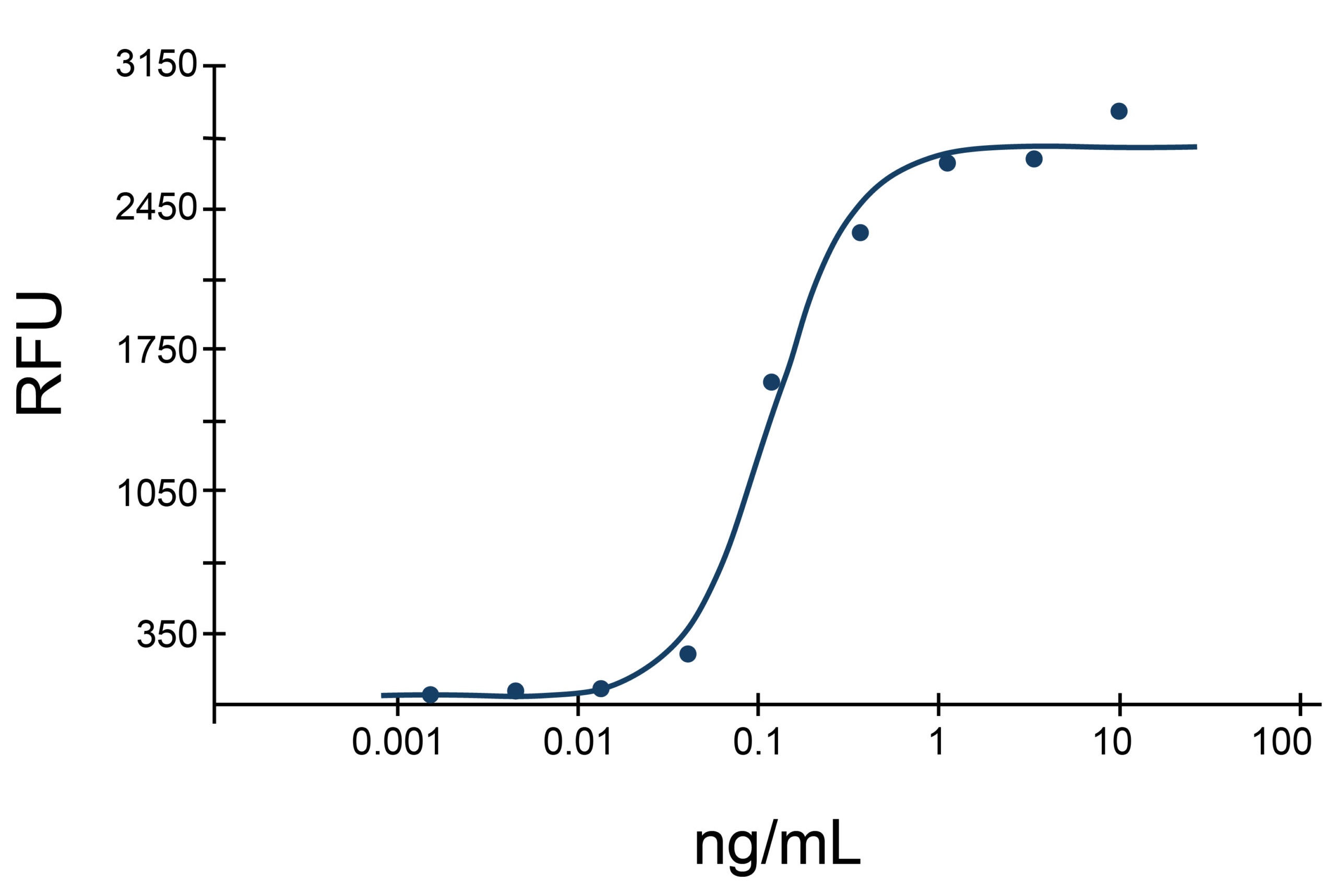 | Determined by a cell proliferation assay using mouse CTLL-2 cells. The ED50 for this effect is typically <0.5 ng/mL. |
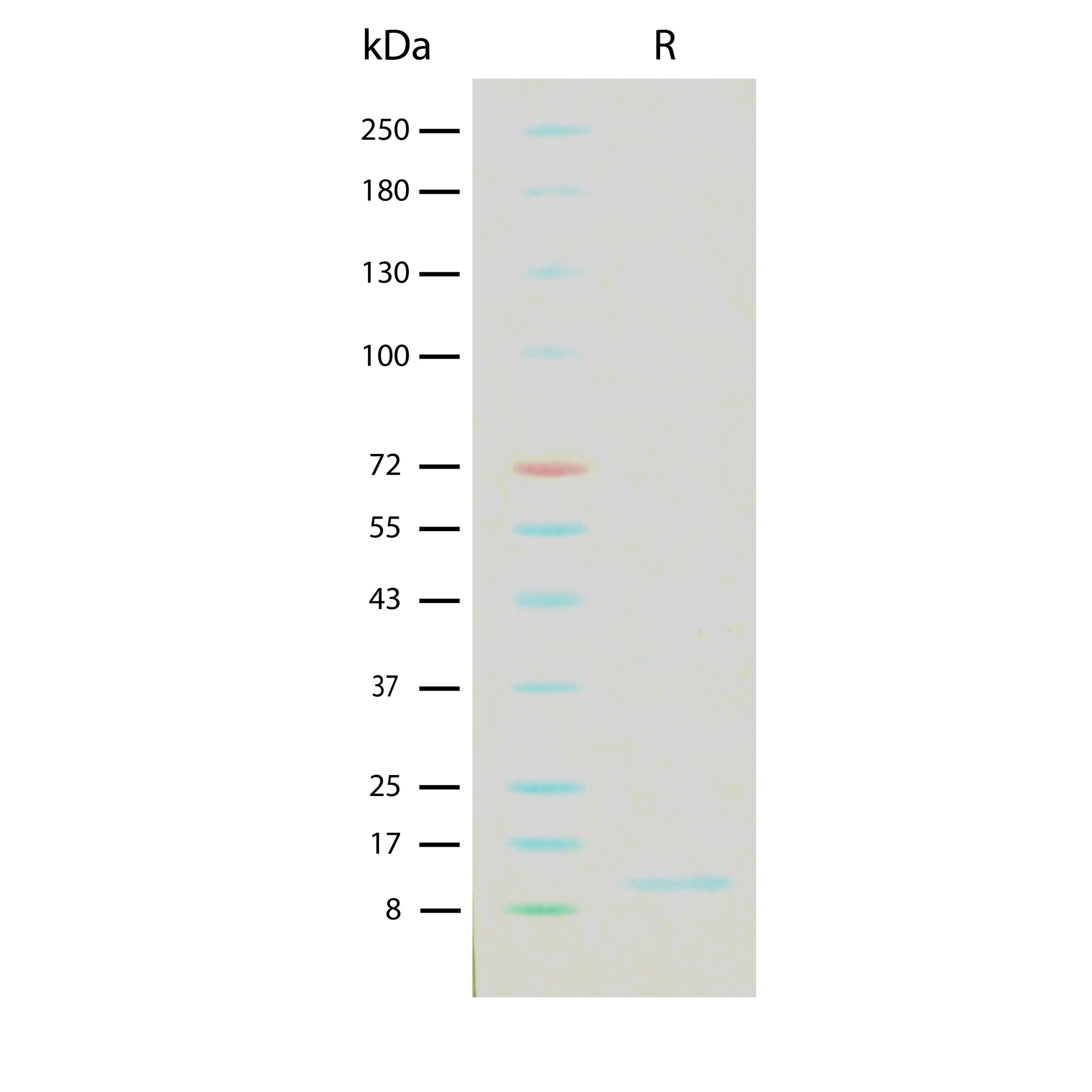 | Recombinant Human IL-15 (2 µg/lane) on SDS-PAGE under reducing (R) conditions. The gel was stained using Coomassie Blue showing a single band at 13 kDa and purity greater than 95%. |