Description
Human AKT2 Recombinant Protein (N-His)
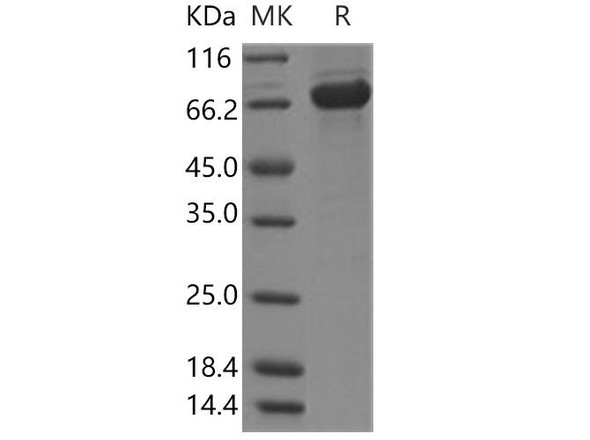
Human AKT2 Recombinant Protein (N-His) is a recombinant protein expressed in E. coli, spanning Met1-Lys146, with an N-terminal His tag. Predicted molecular weight: 19.12 kDa. Purity: >90% as determined by SDS-PAGE. Supplied lyophilized from a solution in PBS pH 7.4, 0.02% NLS, 1 mM EDTA, 4% Trehalose, 1% Mannitol. Applications: ELISA, immunogen, SDS-PAGE and Western blot. RAC-beta serine/threonine-protein kinase (AKT2) is a ~55 kDa protein. Serine/threonine kinase closely related to AKT1 and AKT3. For research use only.
All 3 enzymes, AKT1, AKT2 and AKT3, are collectively known as AKT kinase. AKT regulates many processes including metabolism, proliferation, cell survival, growth and angiogenesis, through the phosphorylation of a range of downstream substrates. Over 100 substrates have been reported so far, although for most of them, the precise AKT kinase catalyzing the reaction was not specified. AKT regulates glucose uptake by mediating insulin-induced translocation of the SLC2A4/GLUT4 glucose transporter to the cell surface.
| Product Name: | Human AKT2 Recombinant Protein (N-His) |
| SKU: | GXRP01422 |
| Size: | 50 µg, 100 µg, 1 mg |
| Species: | Human |
| Synonyms: | PKB beta, Protein kinase Akt-2, AKT2, Protein kinase B beta, RAC-beta serine/threonine-protein kinase, RAC-PK-beta |
| Tag: | N-His |
| Expression Host: | E. coli |
| Protein Length: | Met1-Lys146 |
| Calculated MW: | 19.12 kDa |
| UniProt: | P31751 |
| Applications: | ELISA, Immunogen, SDS-PAGE, WB |
| Purity: | >90% as determined by SDS-PAGE. |
| Form: | Lyophilized |
| Formulation: | Lyophilized from a solution in PBS pH 7.4, 0.02% NLS, 1 mM EDTA, 4% Trehalose, 1% Mannitol. |
| Reconstitution: | Reconstitute in sterile water for a stock solution. Adjust the volume of sterile water so that, after reconstitution, the final stock concentration matches the value indicated on the product label or datasheet. |
| Storage: | Store at 2 to 8°C for frequent use. Store at -20 to -80°C for twelve months from the date of receipt. |
| Shipping: | In general, proteins are provided as lyophilized powder/frozen liquid. They are shipped out with dry ice/blue ice unless customers require otherwise. |
| Note: | For research use only. |