Description
Human CD141/THBD Recombinant Protein (C-His)
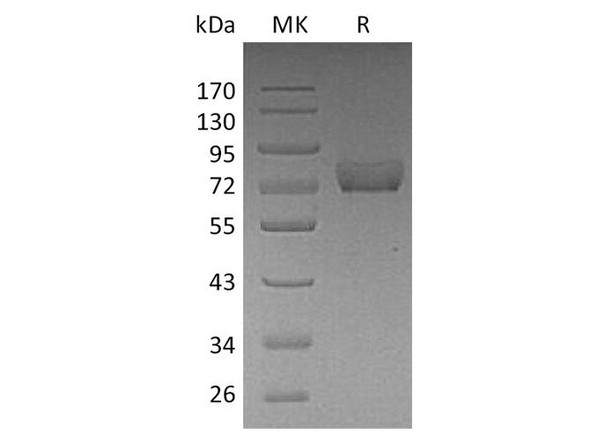
Human CD141/THBD Recombinant Protein (C-His) is a recombinant protein expressed in mammalian cells, spanning Met1-Gly516, with a C-terminal His tag. Predicted molecular weight: 54.75 kDa. Purity: >90% as determined by SDS-PAGE. Supplied lyophilized from a solution in PBS pH 7.4, 1 mM EDTA, 4% Trehalose, 1% Mannitol. Applications: ELISA, immunogen, SDS-PAGE and Western blot. Thrombomodulin (CD141/THBD) is a ~60 kDa protein. Endothelial cell receptor that plays a critical role in regulating several physiological processes including hemostasis, coagulation, fibrinolysis, inflammation, and angiogenesis. For research use only.
Acts as a cofactor for thrombin activation of protein C/PROC on the surface of vascular endothelial cells leading to initiation of the activated protein C anticoagulant pathway. Also accelerates the activation of the plasma carboxypeptidase B2/CPB2, which catalyzes removal of C-terminal basic amino acids from its substrates including kinins or anaphylatoxins leading to fibrinolysis inhibition. Plays critical protective roles in changing the cleavage specificity of protease-activated receptor 1/PAR1, inhibiting endothelial cell permeability and inflammation. Suppresses inflammation distinctly from its anticoagulant cofactor activity by sequestering HMGB1 thereby preventing it from engaging cellular receptors such as RAGE and contributing to the inflammatory response.
| Product Name: | Human CD141/THBD Recombinant Protein (C-His) |
| SKU: | GXRP00657 |
| Size: | 50 µg, 100 µg, 1 mg |
| Species: | Human |
| Synonyms: | THBD, THRM, CD141, Thrombomodulin, Fetomodulin, TM |
| Tag: | C-His |
| Expression Host: | Mammalian cells |
| Protein Length: | Met1-Gly516 |
| Calculated MW: | 54.75 kDa |
| UniProt: | P07204 |
| Applications: | ELISA, Immunogen, SDS-PAGE, WB |
| Purity: | >90% as determined by SDS-PAGE. |
| Form: | Lyophilized |
| Formulation: | Lyophilized from a solution in PBS pH 7.4, 1 mM EDTA, 4% Trehalose, 1% Mannitol. |
| Reconstitution: | Reconstitute in sterile water for a stock solution. Adjust the volume of sterile water so that, after reconstitution, the final stock concentration matches the value indicated on the product label or datasheet. |
| Storage: | Store at 2 to 8°C for frequent use. Store at -20 to -80°C for twelve months from the date of receipt. |
| Shipping: | In general, proteins are provided as lyophilized powder/frozen liquid. They are shipped out with dry ice/blue ice unless customers require otherwise. |
| Note: | For research use only. |