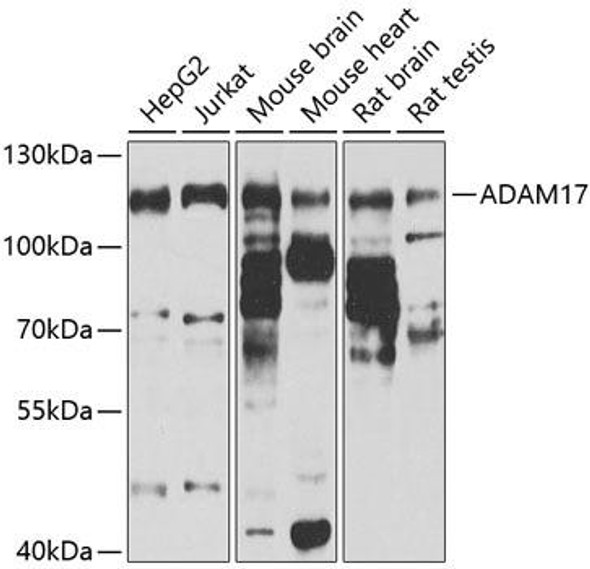
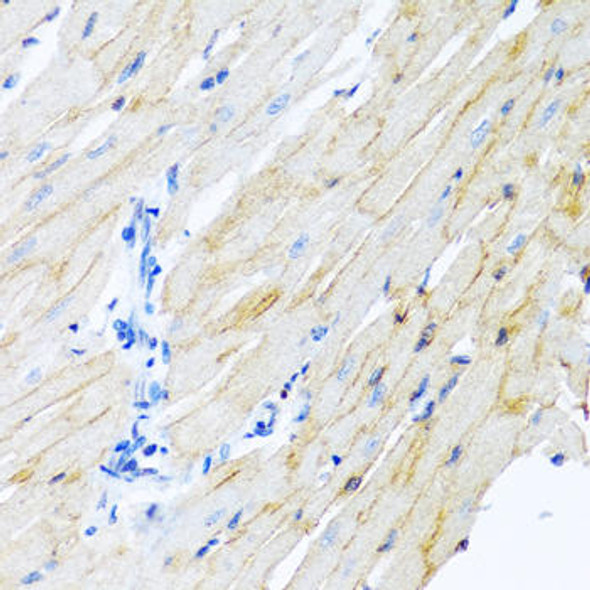
Human CD156b/ADAM17 (D8P1C1) Antibody is a research-grade biosimilar monoclonal antibody. It is a human IgG1-lambda antibody. Reactivity: Human. Supplied as a liquid in 0.01M PBS pH 7.4. Applications: ELISA, flow cytometry, functional assays and in vivo research. Endotoxin: < 10 EU/mg. Purity: >95% purity as determined by SDS-PAGE. For research use only.
Disintegrin and metalloproteinase domain-containing protein 17 (CD156b/ADAM17) is a ~93 kDa protein. Transmembrane metalloprotease which mediates the ectodomain shedding of a myriad of transmembrane proteins including adhesion proteins, growth factor precursors and cytokines important for inflammation and immunity. Cleaves the membrane-bound precursor of TNF to its mature soluble form. Responsible for the proteolytical release of soluble JAM3 from endothelial cells surface. Responsible for the proteolytic release of several other cell-surface proteins, including p75 TNF-receptor, interleukin 1 receptor type II, p55 TNF-receptor, transforming growth factor-alpha, L-selectin, growth hormone receptor, MUC1 and the amyloid precursor protein. Acts as an activator of Notch pathway by mediating cleavage of Notch, generating the membrane-associated intermediate fragment called Notch extracellular truncation (NEXT).
Product Name:
Human CD156b/ADAM17 (D8P1C1) Antibody
SKU:
GXBS00908
Size:
100 µg, 1 mg
Antibody Type:
Monoclonal Antibody
Clone:
D8P1C1
Target:
TACE
Isotype:
IgG1-lambda
Host Species:
Human
Reactivity:
Human
Applications:
ELISA, FACS, Functional assay, Research in vivo
Expression Host:
Mammalian cells
Synonyms:
D8P1C1
Biological Activity:
and tumor growth in xenograft models. 89 Zr-DFO-D8P1C1 radioimmunological PET imaging shows its substantial accumulation in ovarian tumor xenografts, serving as a platform for generating bispecific T-cell engager derivatives. D8P1C1 can be applied to research on related diseases including triple-negative breast cancer, various types of ovarian cancer, lung adenocarcinoma, glioma, and colon cancer [1] [2] [3]. . D8P1C1 (10 ug/mL; 4 h) potently inhibits EGFR phosphorylation in MDA-MB-231, HCC-827, OVCAR-3, and SKOV-3 cells [1]. D8P1C1 (0.037 ug/mL; 38 h) inhibits proliferation of triple-negative breast cancer MDA-MB-231 cells with an IC 50 of 0.037 ug/mL [2]. D8P1C1 (0.625-20 ug/mL; 38 h) inhibits proliferation of SKBR-3, HCC-827, LIM1215, U-87 MG, SKOV-3, OVCAR-3, and CAOV-3 cancer cells, with the greatest efficacy observed in HER2-overexpressing breast SKBR-3 cells [2]. D8P1C1 (7.8125-250 uM; 2 h) preferentially binds to ADAM17 expressed on MDA-MB-231, SKBR-3, HCC-827, LIM1215, U-87 MG, OVCAR-3, SKOV-3, and CAOV-3 cancer cells, with binding affinity approximately 6-fold higher than for ADAM17 on HEK293 cells [2]. . Inhibited TNFα shedding by 78%, CX3CL1 shedding by 70%, and Notch1 cleavage (measured as NICD1 release) by 15%. . Showed no significant change in total EGFR levels in most cell lines. D8P1C1 (40 mg/kg; i.p.; bi-weekly; 4 weeks) achieves 25.
Purity:
>95% purity as determined by SDS-PAGE.
Endotoxin Level:
< 10 EU/mg
Formulation:
0.01M PBS pH 7.4
State of Matter:
Liquid
Regulatory Status:
For research use only. Not suitable for clinical or therapeutic use.
Product Preparation:
Protein A/G purified from cell culture supernatant.
Storage and Handling:
Store at 2 to 8°C for frequent use. Store at -20 to -80°C for twelve months from the date of receipt.