Description
Human CD295/LEPR Recombinant Protein (N-His)
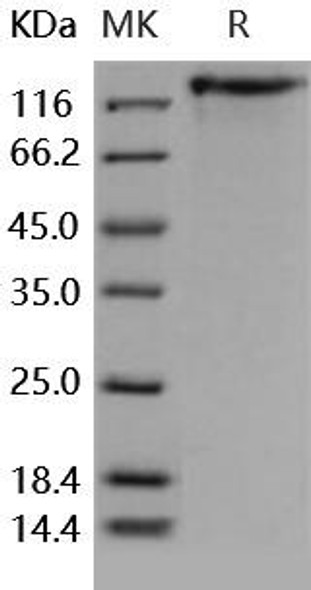
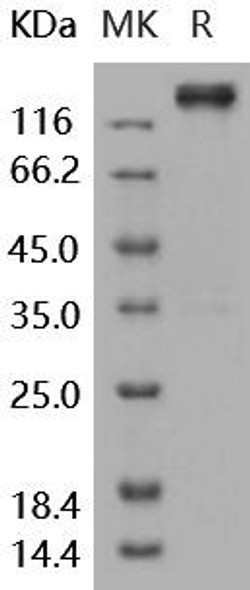
Human CD295/LEPR Recombinant Protein (N-His) is a recombinant protein expressed in E. coli, spanning Gly310-Leu538, with an N-terminal His tag. Predicted molecular weight: 28.65 kDa. Purity: >90% as determined by SDS-PAGE. Supplied lyophilized from a solution in PBS pH 7.4, 0.02% NLS, 1 mM EDTA, 4% Trehalose, 1% Mannitol. Applications: ELISA, immunogen, SDS-PAGE and Western blot. Leptin receptor (CD295/LEPR) is a ~132 kDa protein. Receptor for hormone LEP/leptin (Probable). For research use only.
On ligand binding, mediates LEP central and peripheral effects through the activation of different signaling pathways such as JAK2/STAT3 and MAPK cascade/FOS. In the hypothalamus, LEP acts as an appetite-regulating factor that induces a decrease in food intake and an increase in energy consumption by inducing anorexinogenic factors and suppressing orexigenic neuropeptides, also regulates bone mass and secretion of hypothalamo-pituitary-adrenal hormones. In the periphery, increases basal metabolism, influences reproductive function, regulates pancreatic beta-cell function and insulin secretion, is pro-angiogenic and affects innate and adaptive immunity. Control of energy homeostasis and melanocortin production (stimulation of POMC and full repression of AgRP transcription) is mediated by STAT3 signaling, whereas distinct signals regulate NPY and the control of fertility, growth and glucose homeostasis.
| Product Name: | Human CD295/LEPR Recombinant Protein (N-His) |
| SKU: | GXRP01657 |
| Size: | 50 µg, 100 µg, 1 mg |
| Species: | Human |
| Synonyms: | Leptin receptor, OB-R, LEP-R, LEPR, OB receptor, OBR, HuB219, DB, CD295 |
| Tag: | N-His |
| Expression Host: | E. coli |
| Protein Length: | Gly310-Leu538 |
| Calculated MW: | 28.65 kDa |
| UniProt: | P48357 |
| Applications: | ELISA, Immunogen, SDS-PAGE, WB |
| Purity: | >90% as determined by SDS-PAGE. |
| Form: | Lyophilized |
| Formulation: | Lyophilized from a solution in PBS pH 7.4, 0.02% NLS, 1 mM EDTA, 4% Trehalose, 1% Mannitol. |
| Reconstitution: | Reconstitute in sterile water for a stock solution. Adjust the volume of sterile water so that, after reconstitution, the final stock concentration matches the value indicated on the product label or datasheet. |
| Storage: | Store at 2 to 8°C for frequent use. Store at -20 to -80°C for twelve months from the date of receipt. |
| Shipping: | In general, proteins are provided as lyophilized powder/frozen liquid. They are shipped out with dry ice/blue ice unless customers require otherwise. |
| Note: | For research use only. |