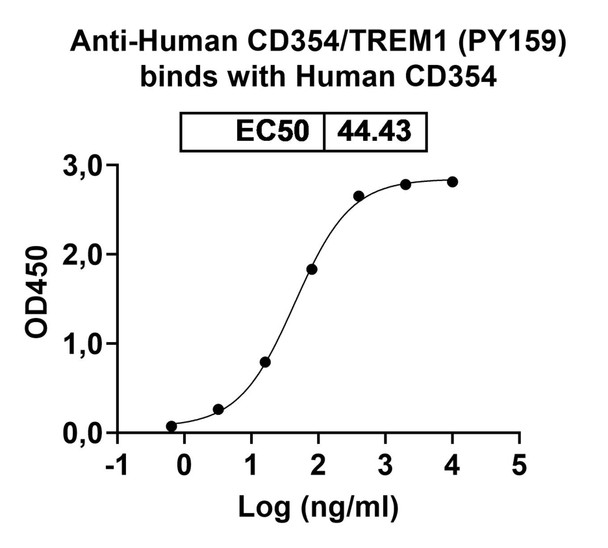
Human CD354/TREM1 (PY159) Antibody is a research-grade biosimilar monoclonal antibody. It is a human IgG1-kappa antibody. Reactivity: Human. Supplied as a liquid in 0.01M PBS pH 7.4. Applications: ELISA, flow cytometry, functional assays and in vivo research. Endotoxin: < 10 EU/mg. Purity: >95% purity as determined by SDS-PAGE. For research use only.
Triggering receptor expressed on myeloid cells 1 (CD354/TREM1) is a ~26 kDa protein. Cell surface receptor that plays important roles in innate and adaptive immunity by amplifying inflammatory responses. Upon activation by various ligands such as PGLYRP1, HMGB1 or HSP70, multimerizes and forms a complex with transmembrane adapter TYROBP/DAP12. In turn, initiates a SYK-mediated cascade of tyrosine phosphorylation, activating multiple downstream mediators such as BTK, MAPK1, MAPK3 or phospholipase C-gamma. This cascade promotes the neutrophil- and macrophage-mediated release of pro-inflammatory cytokines and/or chemokines, as well as their migration and thereby amplifies inflammatory responses that are triggered by bacterial and fungal infections. By also promoting the amplification of inflammatory signals that are initially triggered by Toll-like receptor (TLR) and NOD-like receptor engagement, plays a major role in the pathophysiology of acute and chronic inflammatory diseases of different etiologies including septic shock and atherosclerosis.
Product Name:
Human CD354/TREM1 (PY159) Antibody
SKU:
GXBS01950
Size:
100 µg, 1 mg
Antibody Type:
Monoclonal Antibody
Clone:
PY159
Target:
TREM1
Isotype:
IgG1-kappa
Host Species:
Human
Reactivity:
Human
Applications:
ELISA, FACS, Functional assay, Research in vivo
Expression Host:
Mammalian cells
Synonyms:
PY159
Biological Activity:
PY159 induceS signaling, upregulate monocyte activation markers, and stimulate proinflammatory cytokine production in human whole blood and dissociated primary tumor cells in vitro [3].
Purity:
>95% purity as determined by SDS-PAGE.
Endotoxin Level:
< 10 EU/mg
Formulation:
0.01M PBS pH 7.4
State of Matter:
Liquid
Regulatory Status:
For research use only. Not suitable for clinical or therapeutic use.
Product Preparation:
Protein A/G purified from cell culture supernatant.
Storage and Handling:
Store at 2 to 8°C for frequent use. Store at -20 to -80°C for twelve months from the date of receipt.