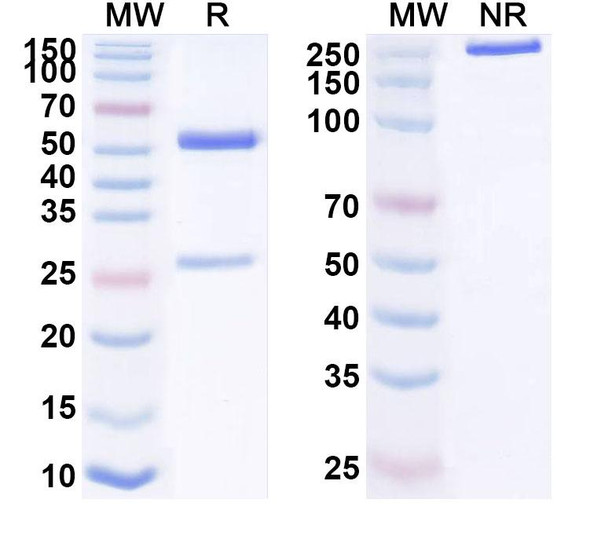
Human CX3CR1 Antibody (BI 655089) is a research-grade biosimilar monoclonal antibody targeting CX3CR1. Format: VHH-hFc. Reactivity: Human. Supplied as a liquid in 0.01M PBS pH 7.4. Applications: ELISA, flow cytometry, functional assays and in vivo research. Endotoxin: < 10 EU/mg. Purity: >95% purity as determined by SDS-PAGE. For research use only.
CX3C chemokine receptor 1 (CX3CR1) is a ~40 kDa protein. Receptor for the C-X3-C chemokine fractalkine (CX3CL1) present on many early leukocyte cells; CX3CR1-CX3CL1 signaling exerts distinct functions in different tissue compartments, such as immune response, inflammation, cell adhesion and chemotaxis. CX3CR1-CX3CL1 signaling mediates cell migratory functions. Responsible for the recruitment of natural killer (NK) cells to inflamed tissues. Acts as a regulator of inflammation process leading to atherogenesis by mediating macrophage and monocyte recruitment to inflamed atherosclerotic plaques, promoting cell survival. Involved in airway inflammation by promoting interleukin 2-producing T helper (Th2) cell survival in inflamed lung.
Product Name:
Human CX3CR1 Antibody (BI 655089)
SKU:
GXBS02178
Size:
100 µg, 1 mg
Antibody Type:
Monoclonal Antibody
Clone:
BI 655089
Target:
CX3CR1
Isotype:
VHH-hFc
Reactivity:
Human
Applications:
ELISA, FCM, Functional assay, Research in vivo
Expression Host:
Mammalian cells
Synonyms:
BI655089, BI655089, BI-655089
Purity:
>95% as determined by SDS-PAGE.
Endotoxin Level:
< 10 EU/mg
Formulation:
0.01M PBS pH 7.4.
State of Matter:
Liquid
Regulatory Status:
For research use only. Not suitable for clinical or therapeutic use.
Product Preparation:
Protein A/G purified from cell culture supernatant.
Storage and Handling:
Store at 2 to 8°C for frequent use. Store at -20 to -80°C for twelve months from the date of receipt.