Description
Human GZMB Recombinant Protein (N-His)
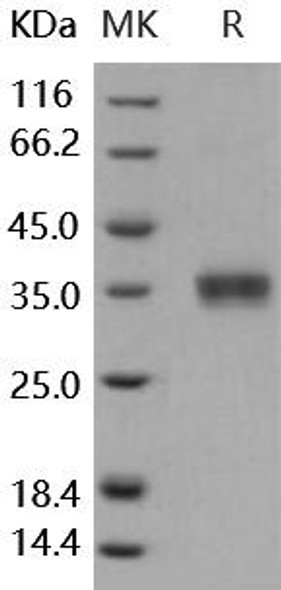
Human GZMB Recombinant Protein (N-His) is a recombinant protein expressed in E. coli, spanning Ile21-Arg246, with an N-terminal His tag. Predicted molecular weight: 27.64 kDa. Purity: >90% as determined by SDS-PAGE. Supplied lyophilized from a solution in PBS pH 7.4, 0.02% NLS, 1 mM EDTA, 4% Trehalose, 1% Mannitol. Applications: ELISA, immunogen, SDS-PAGE and Western blot. Granzyme B (GZMB) is a ~27 kDa protein. Abundant protease in the cytosolic granules of cytotoxic T-cells and NK-cells which activates caspase-independent pyroptosis when delivered into the target cell through the immunological synapse. For research use only.
It cleaves after Asp. Once delivered into the target cell, acts by catalyzing cleavage of gasdermin-E (GSDME), releasing the pore-forming moiety of GSDME, thereby triggering pyroptosis and target cell death. Seems to be linked to an activation cascade of caspases (aspartate-specific cysteine proteases) responsible for apoptosis execution. Cleaves caspase-3, -9 and -10 (CASP3, CASP9 and CASP10, respectively) to give rise to active enzymes mediating apoptosis.
| Product Name: | Human GZMB Recombinant Protein (N-His) |
| SKU: | GXRP00819 |
| Size: | 50 µg, 100 µg, 1 mg |
| Species: | Human |
| Synonyms: | Granzyme-B, Cathepsin G-like 1, Granzyme-2, GZMB, Fragmentin-2, grzmB, Human lymphocyte protein, HLP, CTLA-1, CGL1, CTSGL1, CSPB, Lymphocyte protease, T-cell serine protease 1-3E, Granzyme B, CTLA1, GRB, C11, Cytotoxic T-lymphocyte proteinase 2, SECT |
| Tag: | N-His |
| Expression Host: | E. coli |
| Protein Length: | Ile21-Arg246 |
| Calculated MW: | 27.64 kDa |
| UniProt: | P10144 |
| Applications: | ELISA, Immunogen, SDS-PAGE, WB |
| Purity: | >90% as determined by SDS-PAGE. |
| Form: | Lyophilized |
| Formulation: | Lyophilized from a solution in PBS pH 7.4, 0.02% NLS, 1 mM EDTA, 4% Trehalose, 1% Mannitol. |
| Reconstitution: | Reconstitute in sterile water for a stock solution. Adjust the volume of sterile water so that, after reconstitution, the final stock concentration matches the value indicated on the product label or datasheet. |
| Storage: | Store at 2 to 8°C for frequent use. Store at -20 to -80°C for twelve months from the date of receipt. |
| Shipping: | In general, proteins are provided as lyophilized powder/frozen liquid. They are shipped out with dry ice/blue ice unless customers require otherwise. |
| Note: | For research use only. |