Description
Human IDO1 Recombinant Protein (N-His)
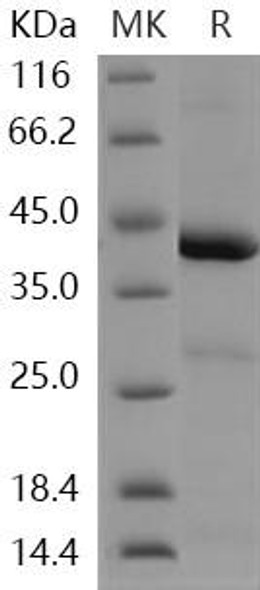
Human IDO1 Recombinant Protein (N-His) is a recombinant protein expressed in E. coli, spanning Met1-Gly403, with an N-terminal His tag. Predicted molecular weight: 47.62 kDa. Purity: >90% as determined by SDS-PAGE. Supplied lyophilized from a solution in PBS pH 7.4, 0.02% NLS, 1 mM EDTA, 4% Trehalose, 1% Mannitol. Applications: ELISA, immunogen, SDS-PAGE and Western blot. Indoleamine 2,3-dioxygenase 1 (IDO1) is a ~45 kDa protein. Catalyzes the first and rate limiting step of the catabolism of the essential amino acid tryptophan along the kynurenine pathway. For research use only.
Involved in the peripheral immune tolerance, contributing to maintain homeostasis by preventing autoimmunity or immunopathology that would result from uncontrolled and overreacting immune responses. Tryptophan shortage inhibits T lymphocytes division and accumulation of tryptophan catabolites induces T-cell apoptosis and differentiation of regulatory T-cells. Acts as a suppressor of anti-tumor immunity. Limits the growth of intracellular pathogens by depriving tryptophan.
| Product Name: | Human IDO1 Recombinant Protein (N-His) |
| SKU: | GXRP00991 |
| Size: | 50 µg, 100 µg, 1 mg |
| Species: | Human |
| Synonyms: | INDO, IDO1, Indoleamine-pyrrole 2, 3-dioxygenase, Indoleamine 2, 3-dioxygenase 1, IDO-1, IDO |
| Tag: | N-His |
| Expression Host: | E. coli |
| Protein Length: | Met1-Gly403 |
| Calculated MW: | 47.62 kDa |
| UniProt: | P14902 |
| Applications: | ELISA, Immunogen, SDS-PAGE, WB |
| Purity: | >90% as determined by SDS-PAGE. |
| Form: | Lyophilized |
| Formulation: | Lyophilized from a solution in PBS pH 7.4, 0.02% NLS, 1 mM EDTA, 4% Trehalose, 1% Mannitol. |
| Reconstitution: | Reconstitute in sterile water for a stock solution. Adjust the volume of sterile water so that, after reconstitution, the final stock concentration matches the value indicated on the product label or datasheet. |
| Storage: | Store at 2 to 8°C for frequent use. Store at -20 to -80°C for twelve months from the date of receipt. |
| Shipping: | In general, proteins are provided as lyophilized powder/frozen liquid. They are shipped out with dry ice/blue ice unless customers require otherwise. |
| Note: | For research use only. |