Description
Human IgG4 Recombinant Protein (N-His)
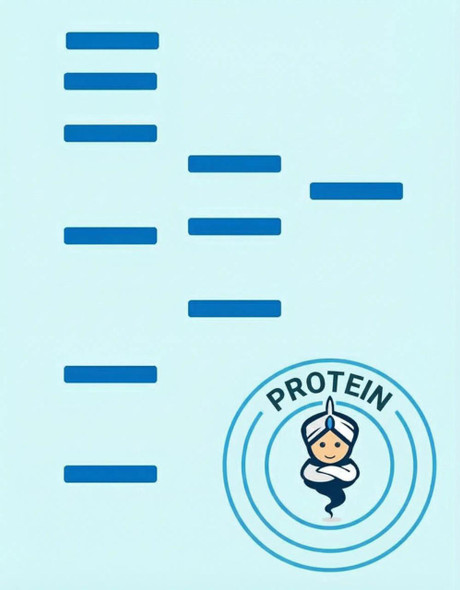
Human IgG4 Recombinant Protein (N-His) is a recombinant protein expressed in E. coli, spanning Asp95-Asp342, with an N-terminal His tag. Predicted molecular weight: 30.23 kDa. Purity: >90% as determined by SDS-PAGE. Supplied lyophilized from a solution in PBS pH 7.4, 0.02% NLS, 1 mM EDTA, 4% Trehalose, 1% Mannitol. Applications: ELISA, immunogen, SDS-PAGE and Western blot. Immunoglobulin heavy constant gamma 4 (IgG4) is a ~43 kDa protein. Constant region of immunoglobulin (Ig) heavy chains. For research use only.
Igs are membrane-bound or secreted glycoproteins produced by B lymphocytes. In the recognition phase of humoral immunity, the membrane-bound Igs serve as receptors, which upon binding to a specific antigen trigger the clonal expansion and differentiation of B lymphocytes into Ig-secreting plasma cells. Secreted Igs known as antibodies mediate the effector phase of humoral immunity by blocking the interaction of infectious antigens with cellular receptors (via the antigen-binding region) and eliciting effector mechanisms that lead to pathogen neutralization (via the constant region). The antigen-binding region is formed by the variable domain of one heavy chain paired with the variable domain of its associated light chain.
| Product Name: | Human IgG4 Recombinant Protein (N-His) |
| SKU: | GXRP07630 |
| Size: | 50 µg, 100 µg, 1 mg |
| Species: | Human |
| Synonyms: | Immunoglobulin heavy constant gamma 4, Ig gamma-4 chain C region, IGHG4 |
| Tag: | N-His |
| Expression Host: | E. coli |
| Protein Length: | Asp95-Asp342 |
| Calculated MW: | 30.23 kDa |
| UniProt: | P01861 |
| Applications: | ELISA, Immunogen, SDS-PAGE, WB |
| Purity: | >90% as determined by SDS-PAGE. |
| Form: | Lyophilized |
| Formulation: | Lyophilized from a solution in PBS pH 7.4, 0.02% NLS, 1 mM EDTA, 4% Trehalose, 1% Mannitol. |
| Reconstitution: | Reconstitute in sterile water for a stock solution. Adjust the volume of sterile water so that, after reconstitution, the final stock concentration matches the value indicated on the product label or datasheet. |
| Storage: | Store at 2 to 8°C for frequent use. Store at -20 to -80°C for twelve months from the date of receipt. |
| Shipping: | In general, proteins are provided as lyophilized powder/frozen liquid. They are shipped out with dry ice/blue ice unless customers require otherwise. |
| Note: | For research use only. |