The Human IL-17A Monoclonal Antibody FITC Conjugated (BL168) is a specialized tool for researchers studying the interleukin-17A (IL-17A) cytokine, an important mediator in inflammatory and immune responses. This antibody, conjugated to FITC for enhanced visualization, is specifically designed for use in flow cytometry and immunofluorescence applications.IL-17A is a proinflammatory cytokine produced by various immune cells, including T helper 17 (Th17) cells, that plays a key role in the pathogenesis of autoimmune and inflammatory diseases. By targeting and detecting IL-17A protein, researchers can gain valuable insights into the mechanisms underlying these conditions and develop potential therapeutic strategies.
With high specificity and sensitivity to human IL-17A, this monoclonal antibody is a valuable tool for investigating the role of IL-17A in various biological systems. Its application in flow cytometry and immunofluorescence allows for precise and detailed analysis of IL-17A expression and localization within different cell types, making it an essential component in immunology and inflammatory disease research.
Product Title:
FITC Anti-Human IL-17A Antibody [BL168]
SKU:
AGEL1856
Size:
20 Tests, 100 Tests, 200 Tests
Clone No:
BL168
Synonyms:
CTLA8; IL17;CTLA-8;IL 17A;
Host Species:
Mouse
Reactivity:
Human
Application:
ICFCM
Isotype:
Mouse IgG1, κ
Isotype Control:
FITC Mouse IgG1, κ Isotype Control[MOPC-21]
Form:
Liquid
Conjugation:
FITC
Recommended Use:
Each lot of this antibody is quality control tested by flow cytometric analysis. The amount of the reagent is suggested to be used 5 µL of antibody per test (million cells in 100 µL staining volume or per 100 µL of whole blood). Please check your vial before the experiment. Since applications vary, the appropriate dilutions must be determined for individual use.
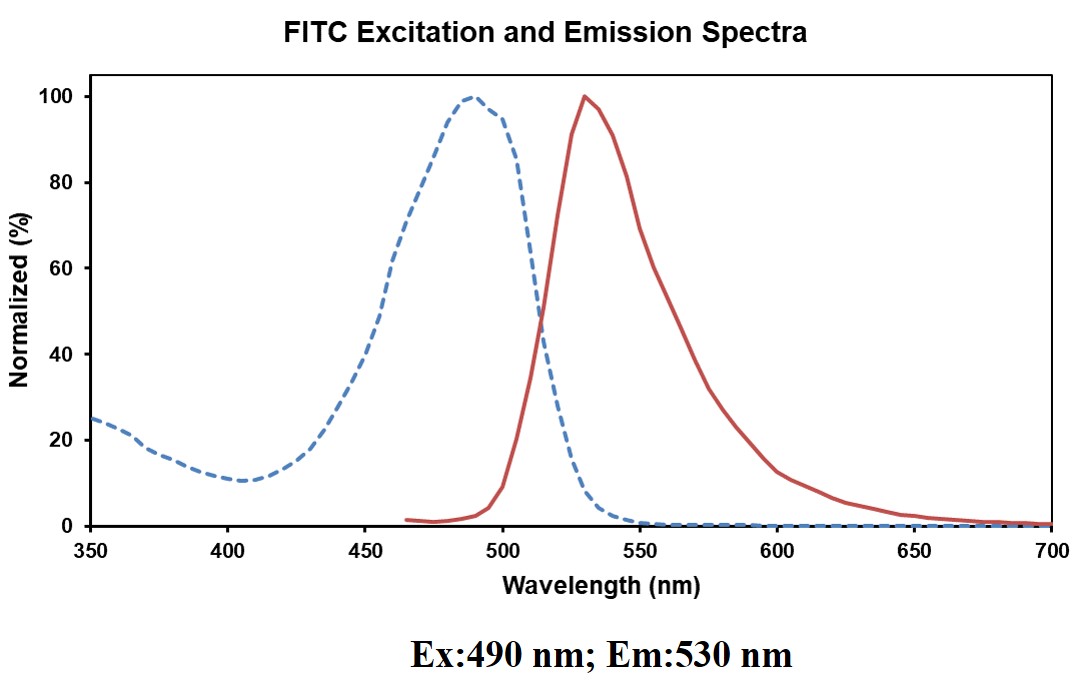
Spectrum:
Swissprot:
Q16552
Gene ID:
3605
Storage Buffer:
Phosphate buffered solution, pH 7.2, containing 0.09% stabilizer and 1% protein protectant.
Stability & Storage:
Keep as concentrated solution. Store at 2~8°C and protected from prolonged exposure to light. Do not freeze. Centrifuge before opening to ensure complete recovery of vial contents. This product is guaranteed up to one year from purchase.
Background:
IL-17A is the founding member of the IL-17 family, a group of six structurally related pro-inflammatory cytokines. IL-17A, secreted by activated CD4+ Th17 cell subpopulation, elicits multiple biological activities on a variety of cells including: the induction of IL-6, IL-8, G-CSF, and PGE2 production in epithelial, endothelial or fibroblasts; the enhancement of surface expression of ICAM-1 in fibroblasts; activation of NF-κB and costimulation of T cell proliferation. Recent studies demonstrated that, in mice, activated IL-17-secreting CD4+ helper T cells (Th17 cells) mediate an autoimmune arthritis that clinically and immunologically resembles rheumatoid arthritis (RA). Human IL-17A shows 63%, 63%, and 72% amino acid sequence identity to rat IL-17A, mouse IL-17A, and a protein encoded by the ORF13 gene of herpesvirus Saimiri (HVS), respectively.

![FITC Anti-Human IL-17A Antibody [BL168] (AGEL1856)](https://cdn11.bigcommerce.com/s-h68l9z2lnx/images/stencil/1280x1280/products/22387/607209/fitc-anti-human-il-17a-antibody-bl168-agel1856__82102.1707500458.jpg?c=2?imbypass=on "FITC Anti-Human IL-17A Antibody [BL168] (AGEL1856)")
![FITC Anti-Human IL-17A Antibody [BL168] (AGEL1856)](https://cdn11.bigcommerce.com/s-h68l9z2lnx/images/stencil/608x608/products/22387/607209/fitc-anti-human-il-17a-antibody-bl168-agel1856__82102.1707500458.jpg?c=2 "FITC Anti-Human IL-17A Antibody [BL168] (AGEL1856)")
![APC Anti-Human IL-17A Antibody [BL168] (AGEL1858)](https://cdn11.bigcommerce.com/s-h68l9z2lnx/images/stencil/590x590/products/22389/607059/apc-anti-human-il-17a-antibody-bl168-agel1858__43574.1707499988.jpg?c=2 "APC Anti-Human IL-17A Antibody [BL168] (AGEL1858)")
![PE Anti-Human IL-17A Antibody [BL168] (AGEL1857)](https://cdn11.bigcommerce.com/s-h68l9z2lnx/images/stencil/590x590/products/22388/606990/pe-anti-human-il-17a-antibody-bl168-agel1857__52252.1707499751.jpg?c=2 "PE Anti-Human IL-17A Antibody [BL168] (AGEL1857)")
![GenieFluor 700 Anti-Human IL-17A Antibody [BL168] (AGEL4539)](https://cdn11.bigcommerce.com/s-h68l9z2lnx/images/stencil/590x590/products/270655/695053/geniefluor-700-anti-human-il-17a-antibody-bl168-agel4539__39159.1774514380.jpg?c=2 "GenieFluor 700 Anti-Human IL-17A Antibody [BL168] (AGEL4539)")
![Purified Anti-Human IL-17 Antibody [BL168] (AGEL5214)](https://cdn11.bigcommerce.com/s-h68l9z2lnx/images/stencil/590x590/products/271218/694134/purified-anti-human-il-17-antibody-bl168-agel5214__20095.1774511495.jpg?c=2 "Purified Anti-Human IL-17 Antibody [BL168] (AGEL5214)")
![FITC Anti-Mouse IL-17A Antibody [17F3] (AGEL3125)](https://cdn11.bigcommerce.com/s-h68l9z2lnx/images/stencil/590x590/products/229587/602251/fitc-anti-mouse-il-17a-antibody-17f3-agel3125__21784.1706284124.jpg?c=2 "FITC Anti-Mouse IL-17A Antibody [17F3] (AGEL3125)")