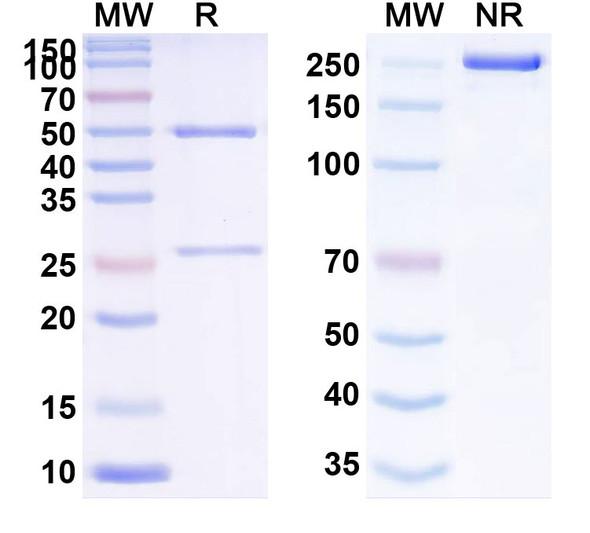
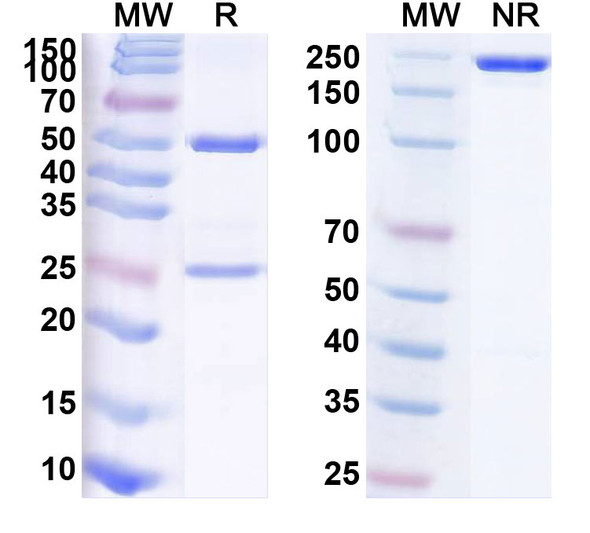
Human MAPT/Tau/PHF-tau (E2814) Antibody is a research-grade biosimilar monoclonal antibody targeting MAPTL. It is a human IgG antibody. Reactivity: Human. Supplied as a liquid in 0.01M PBS pH 7.4. Applications: ELISA, flow cytometry, functional assays and in vivo research. Endotoxin: < 10 EU/mg. Purity: >95% purity as determined by SDS-PAGE. For research use only.
Microtubule-associated protein tau (MAPT) is a ~78 kDa protein. Promotes microtubule assembly and stability, and might be involved in the establishment and maintenance of neuronal polarity. The C-terminus binds axonal microtubules while the N-terminus binds neural plasma membrane components, suggesting that tau functions as a linker protein between both. Axonal polarity is predetermined by TAU/MAPT localization (in the neuronal cell) in the domain of the cell body defined by the centrosome. The short isoforms allow plasticity of the cytoskeleton whereas the longer isoforms may preferentially play a role in its stabilization.
Product Name:
Human MAPT/Tau/PHF-tau (E2814) Antibody
SKU:
GXBS01865
Size:
100 µg, 1 mg
Antibody Type:
Monoclonal Antibody
Clone:
E2814
Target:
MAPT
Isotype:
IgG
Host Species:
Human
Reactivity:
Human
Applications:
ELISA, FCM, Functional assay, Research in vivo
Synonyms:
E2814
Purity:
>95% as determined by SDS-PAGE.
Endotoxin Level:
< 10 EU/mg
Formulation:
0.01M PBS pH 7.4.
State of Matter:
Liquid
Regulatory Status:
For research use only. Not suitable for clinical or therapeutic use.
Product Preparation:
Protein A/G purified from cell culture supernatant.
Storage and Handling:
Store at 2 to 8°C for frequent use. Store at -20 to -80°C for twelve months from the date of receipt.