

Description
Long-arm Biotin Labeling Kit
The Long-arm Biotin Labeling Kit (AKES127) provides the reagents needed to biotinylate antibodies and other proteins that carry primary amino groups (N-terminal amines and lysine side chains). The kit supplies a pre-activated NHS-LC-LC-Biotin ester with a long fat-soluble spacer arm. Researchers use it to prepare biotinylated proteins for streptavidin-based detection and capture workflows.
The Long-arm Biotin Labeling Kit (AKES127) provides the reagents needed to attach biotin to proteins that carry primary amino groups (-NH2), including antibodies. The active labeling reagent is NHS-LC-LC-Biotin, an N-hydroxysuccinimide (NHS) ester supplied ready to use. Biotin binds streptavidin with high affinity, so a biotinylated protein can serve as a detection or capture reagent in streptavidin-based workflows. The kit is intended for research use only.
Researchers use this kit to biotinylate antibodies and other proteins for downstream streptavidin-based applications. The long-arm design is a defining feature. The fat-soluble linker increases the spatial distance between the biotin group and the protein, which reduces steric hindrance and may improve binding to streptavidin. The manual cites successful labeling of several proteins, including Annexin V, protein A/G, 2019-nCov spike, NGAL, and recombinant protein fragments. Labeling outcomes vary between proteins, so the manual recommends testing a small amount first with unknown proteins.
NHS-LC-LC-Biotin reacts with primary amino groups, specifically the N-terminal amine and lysine side-chain amines, within a defined pH range. The reaction forms a stable amide bond that couples biotin to the protein. The protein is first concentrated and exchanged into Labeling Buffer I using a 10 kDa filtration device. The NHS ester is dissolved in DMF to 10 mM and added to the protein, which is then incubated at 37 °C for 30 min in the dark. Excess reagent is quenched with 1 M Tris (pH 8.7) for 10 min at room temperature, and unreacted material is removed by ultrafiltration with 1×PBS. The full process takes about 90 min.
Suitable samples are purified proteins containing free primary amino groups. Samples containing Tris, amino acids, or other free amino-group interferents must be ultrafiltered with Labeling Buffer I before labeling. The maximum input per reaction is 0.1 to 1 mg of protein, and the manual advises against loading more than 1 mg into a filter device. Handle NHS-LC-LC-Biotin carefully because it is susceptible to moisture hydrolysis. Equilibrate it to room temperature before opening to prevent condensation. Once dissolved, the reagent can be stored at -20 °C or -80 °C for 1 week. Labeled protein can be kept at 2 to 8 °C in the dark for 6 months with a preservative and stabilizer, or at -20 °C for 6 months with an equal volume of glycerol.
The recommended molar ratio of NHS-LC-LC-Biotin to protein is 4:1 to 13.5:1 for proteins of 30 to 100 kDa, and it can be adjusted for molecular weight or determined experimentally. The manual's worked example uses a 6.65:1 ratio for 1 mg of a 50 kDa protein at about 2 mg/mL. Protein concentration can be checked by absorbance at 280 nm. The manual's reference data show A280 = 1.454 for a 1 mg/mL mouse IgG1 antibody in PBS, measured on a Nano100 spectrophotometer. This value is for reference only.
| Product name: | Long-arm Biotin Labeling Kit |
| SKU: | AKES127 |
| Application: | Protein and antibody labeling |
| Labeling chemistry: | NHS ester reacting with primary amines |
| Biotin reagent: | NHS-LC-LC-Biotin |
| Filtration device: | 10 kDa filtration tube (0.5 mL) |
| Protein input per reaction: | 0.1-1 mg |
- Pre-activated NHS-LC-LC-Biotin ester with a long-arm spacer between biotin and the protein
- Labels primary amines (N-terminal and lysine side chains) to form stable amide bonds
- Complete workflow in about 90 min
- 10 kDa filtration tube performs buffer exchange and cleanup without dialysis
- Suitable for 0.1-1 mg of protein per labeling reaction

Within a defined pH range, the NHS ester of NHS-LC-LC-Biotin reacts specifically with primary amino groups on the N-terminus and lysine side chains. This forms a stable amide bond that couples biotin to the protein. Excess reagent is quenched with Tris, and the labeled protein is separated from free biotin by ultrafiltration.
- Biotinylation of antibodies for streptavidin-based detection
- Biotinylation of recombinant proteins for capture or pull-down assays
- Preparation of biotinylated protein probes for research workflows
- Labeling of other proteins containing free primary amino groups, with the molar ratio optimized for each protein
| Component | Storage |
| Long-arm Biotin (NHS ester) | -20°C, protect from light |
| Labeling Buffer I | 2-8°C |
| DMF | 2-8°C, protect from light |
| 1×PBS (pH 7.4) | 2-8°C |
| 1 M Tris (pH 8.7) | 2-8°C |
| 10 kDa filtration tube | Room temperature |
- Pipettor and tips (0.5-10 µL, 2-20 µL, 20-200 µL, 200-1000 µL)
- 37°C incubator
- Centrifuge with rotor capable of 12,000×g
- Purified protein to be labeled (free of Tris, amino acids, and other free amine-containing interferents)
Protein to be labeled (antibodies and other proteins with primary amino groups)
- Read the instructions carefully and bring all reagents to room temperature for 20 min before use. Reagents that were not used remain refrigerated.
- Pre-wet the 10 kDa filtration device: add 500 µL Labeling Buffer I to the dry filter device, stand at room temperature for 10 min, and discard the buffer before adding protein. The filter must remain moist throughout labeling.
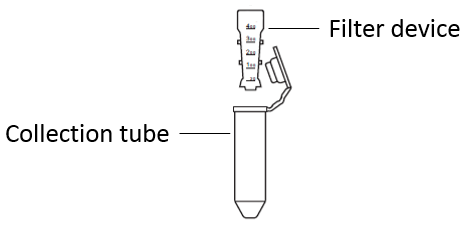
- Place the filter device in a collection tube and add 1 mg of protein. Bring the volume to 0.5 mL with Labeling Buffer I. Cover and centrifuge at 12,000 × g for 10 min, then discard the liquid in the collection tube.
- If the protein volume exceeds 0.5 mL, add it in several portions and concentrate by centrifugal ultrafiltration after each addition.
- If the protein contains free amino groups (Tris, amino acids, or other interferents), repeat ultrafiltration with Labeling Buffer I until these are fully removed.
- Recover the concentrated protein: invert the filter device into a clean collection tube and centrifuge at 1,000 × g for 2 min. Adjust the protein concentration to about 2 mg/mL with Labeling Buffer I. Add 0.5 mL Labeling Buffer I to the filter device and keep it on a pipette rack for later use.
- Do not load more than 1 mg of protein per filter device to avoid leakage and low recovery.
Preparation
- Read the manual before use.
- Bring all reagents to room temperature for 20 min before use. Keep unused components refrigerated until needed.
- Pre-wet the filter device: add 500 µL Labeling Buffer I to the dry filter device, stand at room temperature for 10 min, and discard the buffer. Keep the filter device moist throughout labeling.
- Dissolve 0.17 mg NHS-LC-LC-Biotin in 30 µL DMF and stand for 10 min until fully dissolved. The resulting concentration is 10 mM. Cover the tube until use.
Labeling
- Concentration and buffer exchange: place the filter device in a collection tube, add 1 mg of protein and Labeling Buffer I to a final volume of 0.5 mL, cover, and centrifuge at 12,000×g for 10 min. Discard the liquid in the collection tube. For volumes above 0.5 mL, add the sample in several rounds. If the protein contains free amines (Tris, amino acids, or other interferents), repeat ultrafiltration with Labeling Buffer I until removed.
- Recovery and quantification: invert the filter device into a clean collection tube and centrifuge at 1000×g for 2 min to collect the protein. Add Labeling Buffer I to adjust the protein concentration to about 2 mg/mL. Add 0.5 mL Labeling Buffer I to the filter device and set it aside.
- Labeling reaction: immediately add 13.3 µL of 10 mM NHS-LC-LC-Biotin to the protein solution. Mix gently and thoroughly, cap, and incubate at 37°C for 30 min in the dark.
- Blocking: add 1 M Tris (pH 8.7) at 10 µL per 100 µg protein to stop the reaction. Mix and incubate at room temperature for 10 min.
- Ultrafiltration and purification: add 1×PBS to the reaction solution to a final volume of 0.5 mL and mix gently. Transfer to the filter device after discarding the Labeling Buffer I. If the volume exceeds 0.5 mL, transfer in portions, centrifuging between additions. Centrifuge at 12,000×g for 10-30 min. Discard the collection tube liquid, bring the filter device to 500 µL with 1×PBS, and repeat the centrifugal ultrafiltration 2-3 times.
- Collect labeled product: add 0.2 mL 1×PBS to the filter device and pipet gently. Invert the filter device into a new collection tube and centrifuge at 1000×g for 2 min. The solution in the collection tube is the biotin-labeled protein.
Storage of labeled protein
- Add 0.05-0.2% ProClin 300 or 0.05% sodium azide, plus a stabilizer protein such as 0.1% BSA. Store at 2-8°C in the dark for up to 6 months.
- Alternatively, add an equal volume of glycerol and store at -20°C for up to 6 months.
n(NHS-LC-LC-Biotin) = n(protein) × 6.65 = (1 mg ÷ 50000 g/mol) × 6.65 = 0.000133 mmol V(NHS-LC-LC-Biotin, 10 mM) = 0.000133 mmol ÷ 10 mM = 13.3 µL
- n(protein) is the amount of protein in moles, calculated from the mass of protein (1 mg) divided by its molecular weight (50,000 g/mol for the 50 kDa example).
- 6.65 is the chosen molar ratio of NHS-LC-LC-Biotin to protein. The manual's recommended range for 30 to 100 kDa proteins is 4:1 to 13.5:1, and the ratio can be adjusted for molecular weight or determined experimentally.
- n(NHS-LC-LC-Biotin) is expressed in mmol, and V is calculated from the 10 mM stock concentration, giving a volume in liters that the manual reports as 13.3 µL.
- The reagent is prepared by dissolving 0.17 mg NHS-LC-LC-Biotin in 30 µL DMF to a concentration of 10 mM. Use the calculated volume of this solution for each labeling reaction.
What sample types can be labeled with this kit?
The kit labels antibodies and other proteins that contain primary amino groups (-NH2). Its use has been reported for proteins such as Annexin V, protein A/G, 2019-nCov spike, and NGAL, and it can label other proteins containing free amino groups.
How should the kit and reagents be stored?
The unopened kit can be stored at 2 to 8 °C for 1 year. The dissolved NHS-LC-LC-Biotin can be stored at -20 °C or -80 °C for 1 week. The reagent is moisture-sensitive, so equilibrate it to room temperature before opening, and keep it with desiccant.
What is the labeling range, and what should I do if my protein exceeds it?
Each reaction labels 0.1 to 1 mg of protein. Do not load more than 1 mg of protein per filter device, and add protein in several portions if the volume exceeds 0.5 mL. If labeling fails or recovery is low, the manual suggests setting a positive control and choosing another labeling kit.
What can interfere with labeling?
Free amino groups from Tris, amino acids, or other interferents compete with the protein for the NHS ester, so remove them by repeated ultrafiltration with Labeling Buffer I. Incomplete mixing, excess ammonium ions, and proteins that are not fully dissolved in Labeling Buffer I can also cause labeling failure.
Which centrifuge settings and incubation conditions are used?
Use a centrifuge capable of 12,000 × g for concentration and buffer exchange, and 1,000 × g for 2 min to recover the sample. Incubate the labeling reaction at 37 °C for 30 min in the dark, and run ultrafiltration spins of 10 to 30 min at 12,000 × g.
How long does the procedure take?
The complete labeling process takes about 90 min. This includes the 30 min labeling reaction at 37 °C, the 10 min Tris quench at room temperature, and the ultrafiltration steps.
| Kit storage: | 2-8°C, shading light; unopened kit stable for 1 year |
| NHS-LC-LC-Biotin storage: | -20°C with desiccant, shading light |
| Reconstituted NHS-LC-LC-Biotin (in DMF): | -20°C or -80°C for up to 1 week |
| Shelf life: | 12 months |
| Shipping: | Ice bag |
Cautions
- For research use only. Not for use in diagnostic or therapeutic procedures.
- NHS-LC-LC-Biotin is sensitive to moisture. Equilibrate the vial to room temperature before opening to prevent condensation. Do not mix the reagent with water before labeling.
- Do not use buffers containing free primary amines (for example Tris or amino acids) in the protein sample. Remove them by repeated ultrafiltration with Labeling Buffer I.
- Do not load more than 1 mg of protein into one filter device. Overloading can cause leakage and low recovery.
- Labeling may not succeed for every protein and may affect protein biological function. For unknown proteins, test labeling feasibility with a small amount first.
- Protein solubility, pH stability, purity, and accessibility of the labeling sites can all affect labeling efficiency.


