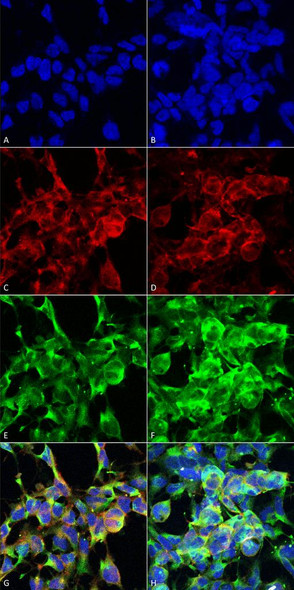
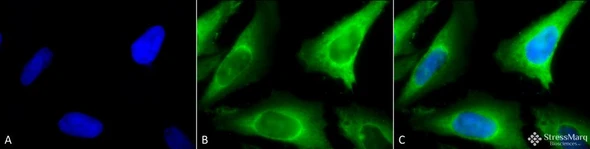
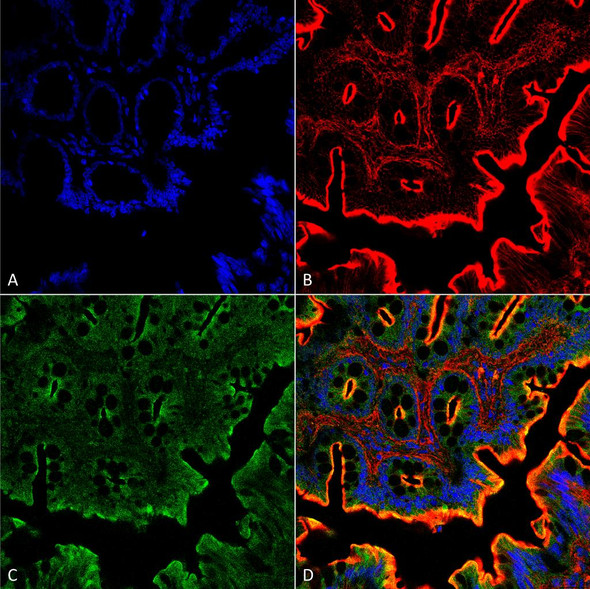
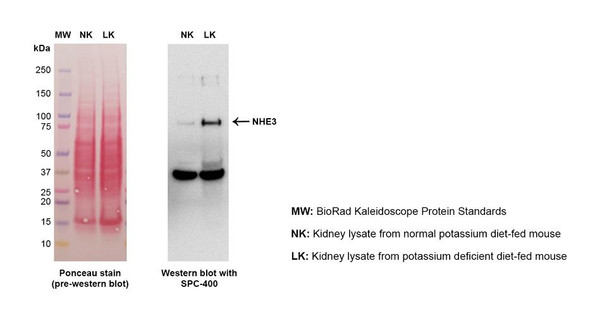
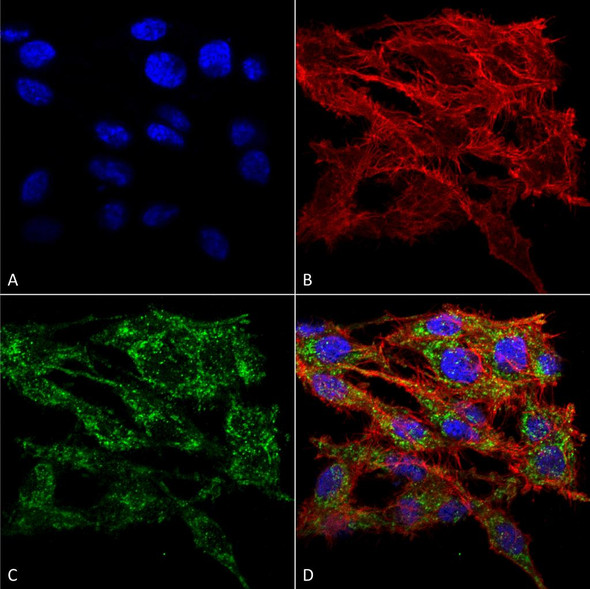
Immunocytochemistry/Immunofluorescence analysis using Mouse Anti-Methylglyoxal Monoclonal Antibody, Clone 9F11 (STMA00187). Tissue: Embryonic kidney epithelial cell line (HEK293). Species: Human. Fixation: 5% Formaldehyde for 5 min. Primary Antibody: Mouse Anti-Methylglyoxal Monoclonal Antibody (STMA00187) at 1:50 for 30-60 min at RT. Secondary Antibody: Goat Anti-Mouse Alexa Fluor 488 at 1:1500 for 30-60 min at RT.
Methylglyoxal Antibody [9F11] is a mouse monoclonal antibody directed against Methylglyoxal, offered by Assay Genie for research applications. Reported applications include WB, ICC/IF, FACS, FCM and ELISA. Reactivity is species independent. Supplied as IgG1, purified by Protein G.
Methylglyoxal (MG) is a reactive dicarbonyl compound formed during lipid peroxidation and glycolytic metabolism. It readily reacts with proteins, nucleic acids, and lipids to form advanced glycation end products (AGEs), which accumulate in the brain during aging and neurodegeneration. These AGEs disrupt cellular homeostasis, impair mitochondrial function, and trigger inflammatory responses. MG-induced DNA crosslinking and protein modification contribute to neuronal dysfunction and apoptosis. Elevated MG levels have been detected in Alzheimer’s disease, Parkinson’s disease, and diabetic neuropathy, linking metabolic stress to neurodegenerative pathology. MG also interferes with synaptic signaling and plasticity, further compromising cognitive function. Quantification of MG and AGEs in cerebrospinal fluid and plasma serves as a diagnostic tool and a measure of oxidative burden. Targeting MG detoxification pathways, such as the glyoxalase system, holds therapeutic potential for mitigating oxidative stress and preserving neuronal integrity in neurodegenerative diseases. This antibody is also available conjugated to ATTO 390, ATTO 488, ATTO 594, APC, Biotin, FITC, HRP, PerCP and RPE. Supplied in 100 µg. For research use only; not for diagnostic or therapeutic procedures.
Product Name:
Methylglyoxal Antibody [9F11]
Product SKU:
STMA00187
Size:
100 µg
Target:
Methylglyoxal
Host Species:
Mouse
Antibody Type:
Monoclonal
Clone ID:
9F11
Research Areas:
Cancer, Oxidative Stress, Lipid peroxidation
Buffer:
PBS pH7.4, 50% glycerol, 0.09% sodium azide
Storage & Shipping:
Store at -20°C. Shipped on Blue Ice or 4°C. Conjugated variants should be stored according to the product label.
Format:
Liquid
Applications:
WB, ICC/IF, FACS, FCM, ELISA
Antibody Isotype:
IgG1
Purification:
Protein G Purified
Concentration:
1 mg/ml
Reactivity:
Species Independent
Recommended Dilution:
WB (1:1000); ICC/IF (1:50); FACS (1:50); FCM (1:50); ELISA (1:1000); optimal dilutions for assays should be determined by the user.
Specificity:
Specific for Methylglyoxal modified proteins. Does not detect free Methylglyoxal. Does not cross-react with Acrolein, Hexanoyl Lysine, Malondialdeyhde, 4-Hydroxy-2-hexenal, 4-Hydroxy nonenal, or Crotonaldehyde modified proteins.