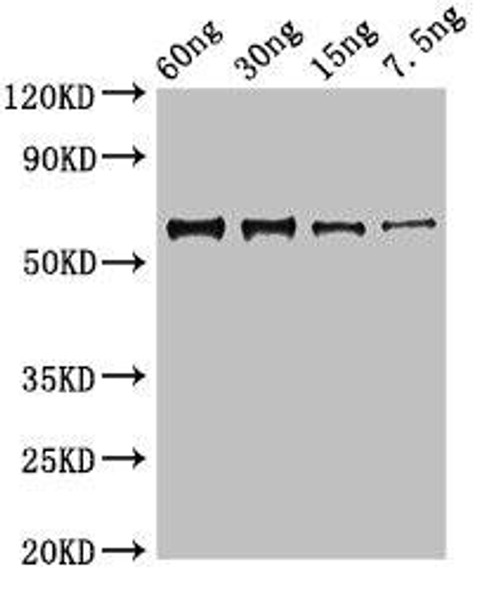
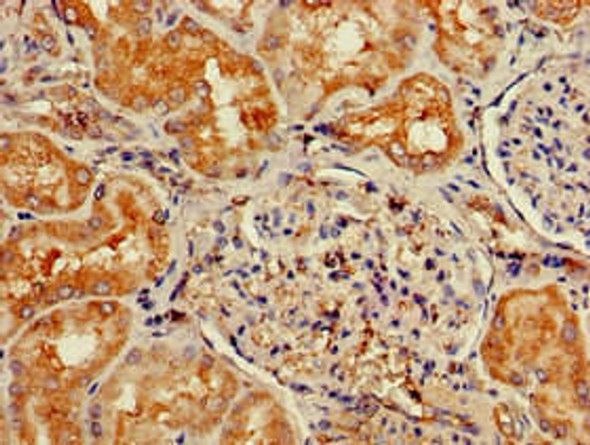
MOR102 Antibody is a research-grade biosimilar monoclonal antibody. Format: Fab-G4-nd (human host). Reactivity: Human. Supplied as a liquid in 0.01M PBS pH 7.4. Applications: ELISA, flow cytometry, functional assays and in vivo research. Endotoxin: < 10 EU/mg. Purity: >95% purity as determined by SDS-PAGE. For research use only.
Intercellular adhesion molecule 1 (CD54/ICAM1) is a ~57 kDa protein. Cell adhesion molecule that functions as a receptor ligand of the signaling receptor ITGAL:ITGB2/LFA-1 (lymphocyte-function associated (LFA) molecule 1) ensuring leukocyte cell-cell adhesion, by providing a calibrated system to namely adjust T-cell killing to the antigen stimulation strength. Also functions as a ligand receptor of the signaling receptor ITGAM:ITGB2/MAC-1 ensuring adhesion between stimulated neutrophils and stimulated endothelial cells. During leukocyte trans-endothelial migration, ICAM1 engagement promotes the assembly of endothelial apical cups through ARHGEF26/SGEF and RHOG activation. Promotes cell aggregation in epithelial cells through interaction with MUC1.
Product Name:
MOR102 Antibody
SKU:
GXBS00537
Size:
100 µg, 1 mg
Antibody Type:
Monoclonal Antibody
Target:
ICAM1
Isotype:
Fab-G4-nd
Host Species:
Human
Reactivity:
Human
Applications:
ELISA, FACS, Functional assay, Research in vivo
Expression Host:
Mammalian cells
Synonyms:
MOR102
Biological Activity:
MOR102 (0.04-10 ug/mL; 30 min) potently inhibits adhesion of human SKW-3 T-cell leukaemia cells to immobilized recombinant ICAM-1 with an IC 50 of 3 nM [1]. MOR102 (0.5-50 ug/mL; 4 days) reduces proliferation of human peripheral blood mononuclear cells in mixed lymphocyte cultures [1]. MOR102 (10 ug/mL; overnight) binds to human HaCaT keratinocytes, with increased binding observed on IFN-γ-stimulated HaCaT cells [1]. MOR102 (10 mg/kg; i.p.; every alternate day; 4 weeks from day 22-50 after transplantation) significantly reduces epidermal thickness and inflammatory infiltrate in a psoriasis- SCID mouse model [1]. MOR102 (10 mg/kg; i.p.; every other day; 4 weeks) induces orthokeratotic differentiation, reduces epidermal thickness, and decreases inflammatory infiltrate in human chronic plaque-stage psoriasis skin grafts on SCID mice [2].
Purity:
>95% purity as determined by SDS-PAGE.
Endotoxin Level:
< 10 EU/mg
Formulation:
0.01M PBS pH 7.4
State of Matter:
Liquid
Regulatory Status:
For research use only. Not suitable for clinical or therapeutic use.
Product Preparation:
Protein A/G purified from cell culture supernatant.
Storage and Handling:
Store at 2 to 8°C for frequent use. Store at -20 to -80°C for twelve months from the date of receipt.