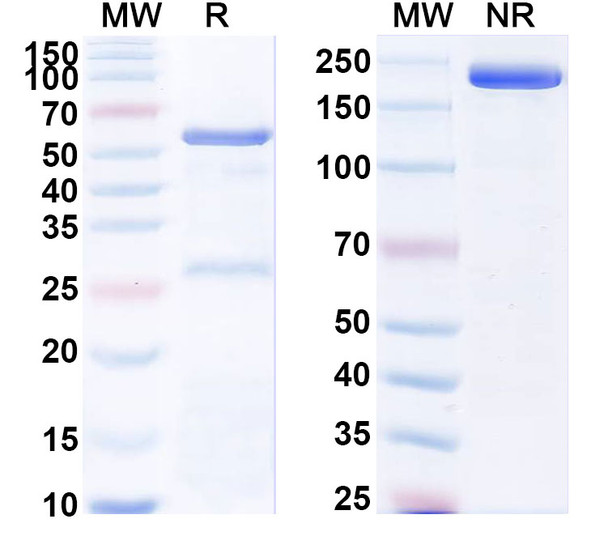
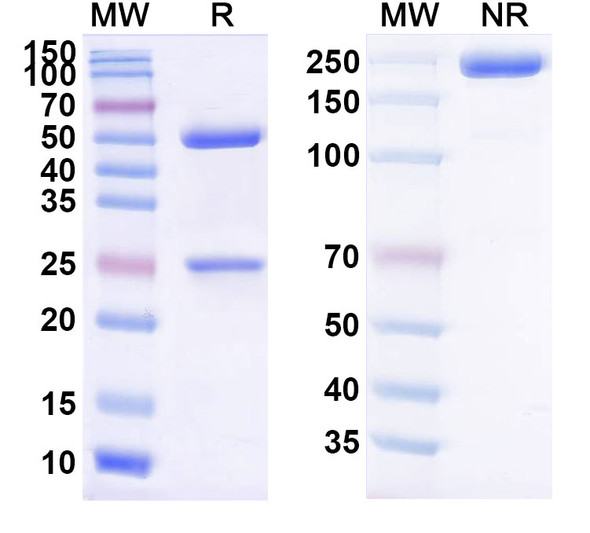
MOR106 Antibody is a research-grade biosimilar monoclonal antibody targeting Cytokine CX2. It is a human IgG1, kappa antibody. Reactivity: Human. Supplied as a liquid in 0.01M PBS pH 7.4. Applications: ELISA, flow cytometry and functional assays. Endotoxin: < 10 EU/mg. Purity: >95% as determined by SDS-PAGE. For research use only.
Interleukin-17C (IL17C) is a ~21 kDa protein. Cytokine that plays a crucial role in innate immunity of the epithelium, including to intestinal bacterial pathogens, in an autocrine manner. Stimulates the production of antibacterial peptides and pro-inflammatory molecules for host defense by signaling through the NF-kappa-B and MAPK pathways. Acts synergically with IL22 in inducing the expression of antibacterial peptides, including S100A8, S100A9, REG3A and REG3G. Synergy is also observed with TNF and IL1B in inducing DEFB2 from keratinocytes. Depending on the type of insult, may have both protective and pathogenic properties, either by maintaining epithelial homeostasis after an inflammatory challenge or by promoting inflammatory phenotype.
Product Name:
MOR106 Antibody
SKU:
GXBS02713
Size:
100 µg, 1 mg
Antibody Type:
Monoclonal Antibody
Target:
Cytokine CX2
Isotype:
IgG1, kappa
Host Species:
Human
Reactivity:
Human
Applications:
ELISA, FCM, Functional assay
Synonyms:
Cytokine CX2, IL-17C, IL17C, Interleukin-17C
Recommended Dilutions:
ELISA: 1:2000-1:20000
Purity:
>95% as determined by SDS-PAGE.
Endotoxin Level:
< 10 EU/mg
Formulation:
0.01M PBS pH 7.4.
State of Matter:
Liquid
Regulatory Status:
For research use only.
Product Preparation:
Protein A/G purified from cell culture supernatant.
Storage and Handling:
Store at 2 to 8°C for frequent use. Store at -20 to -80°C for twelve months from the date of receipt.