Description
Mouse CD107a/LAMP1 Recombinant Protein (C-His)
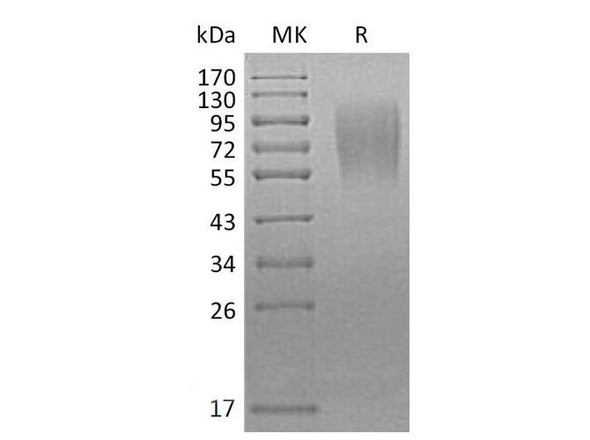
Mouse CD107a/LAMP1 Recombinant Protein (C-His) is a recombinant protein expressed in mammalian cells, spanning Ala22-Met371, with a C-terminal His tag. Predicted molecular weight: 41.06 kDa. Purity: >90% as determined by SDS-PAGE. Supplied lyophilized from a solution in PBS pH 7.4, 1 mM EDTA, 4% Trehalose, 1% Mannitol. Applications: ELISA, immunogen, SDS-PAGE and Western blot. Lysosome-associated membrane glycoprotein 1 is a ~43 kDa protein. Lysosomal membrane glycoprotein which plays an important role in lysosome biogenesis, lysosomal pH regulation, autophagy and cholesterol homeostasis. For research use only.
Acts as an important regulator of lysosomal lumen pH regulation by acting as a direct inhibitor of the proton channel TMEM175, facilitating lysosomal acidification for optimal hydrolase activity. Also plays an important role in NK-cells cytotoxicity. Mechanistically, participates in cytotoxic granule movement to the cell surface and perforin trafficking to the lytic granule. In addition, protects NK-cells from degranulation-associated damage induced by their own cytotoxic granule content.
| Product Name: | Mouse CD107a/LAMP1 Recombinant Protein (C-His) |
| SKU: | GXRP12706 |
| Size: | 50 µg, 100 µg, 1 mg |
| Species: | Mouse |
| Synonyms: | CD107 antigen-like family member A, CD107a, LAMP-1, LAMP1, Lysosome-associated membrane glycoprotein 1, Lysosome-associated membrane protein 1 |
| Tag: | C-His |
| Expression Host: | Mammalian cells |
| Protein Length: | Ala22-Met371 |
| Calculated MW: | 41.06 kDa |
| UniProt: | P11438 |
| Applications: | ELISA, Immunogen, SDS-PAGE, WB |
| Purity: | >90% as determined by SDS-PAGE. |
| Form: | Lyophilized |
| Formulation: | Lyophilized from a solution in PBS pH 7.4, 1 mM EDTA, 4% Trehalose, 1% Mannitol. |
| Reconstitution: | Reconstitute in sterile water for a stock solution. A copy of datasheet will be provided with the products, please refer to it for details. |
| Storage: | Store at 2 to 8°C for frequent use. Store at -20 to -80°C for twelve months from the date of receipt. |
| Shipping: | In general, proteins are provided as lyophilized powder/frozen liquid. They are shipped out with dry ice/blue ice unless customers require otherwise. |
| Note: | For research use only |