Description
Mouse TRPM4/LTRPC4 Recombinant Protein (N-His)
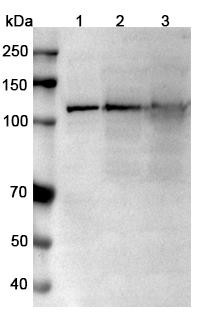
Mouse TRPM4/LTRPC4 Recombinant Protein (N-His) is a recombinant protein expressed in E. coli, spanning Thr73-Ile270, with an N-terminal His tag. Predicted molecular weight: 23.92 kDa. Purity: >90% as determined by SDS-PAGE. Supplied lyophilized from a solution in PBS pH 7.4, 1 mM EDTA, 4% Trehalose, 1% Mannitol. Applications: ELISA, immunogen, SDS-PAGE and Western blot. Transient receptor potential cation channel subfamily M member 4 is a ~135 kDa protein. Calcium-activated selective cation channel that mediates membrane depolarization. For research use only.
While it is activated by increase in intracellular Ca(2+), it is impermeable to it. Mediates transport of monovalent cations (Na(+) > K(+) > Cs(+) > Li(+)), leading to depolarize the membrane. It thereby plays a central role in cadiomyocytes, neurons from entorhinal cortex, dorsal root and vomeronasal neurons, endocrine pancreas cells, kidney epithelial cells, cochlea hair cells etc. Participates in T-cell activation by modulating Ca(2+) oscillations after T lymphocyte activation, which is required for NFAT-dependent IL2 production.
| Product Name: | Mouse TRPM4/LTRPC4 Recombinant Protein (N-His) |
| SKU: | GXRP12038 |
| Size: | 50 µg, 100 µg, 1 mg |
| Species: | Mouse |
| Synonyms: | Calcium-activated non-selective cation channel 1, LTRPC4, LTrpC-4, LTrpC4, Long transient receptor potential channel 4, Melastatin-4, TRPM4, Transient receptor potential cation channel subfamily M member 4, hTRPM4 |
| Tag: | N-His |
| Expression Host: | E. coli |
| Protein Length: | Thr73-Ile270 |
| Calculated MW: | 23.92 kDa |
| UniProt: | Q7TN37 |
| Applications: | ELISA, Immunogen, SDS-PAGE, WB |
| Purity: | >90% as determined by SDS-PAGE. |
| Form: | Lyophilized |
| Formulation: | Lyophilized from a solution in PBS pH 7.4, 1 mM EDTA, 4% Trehalose, 1% Mannitol. |
| Reconstitution: | Reconstitute in sterile water for a stock solution. A copy of datasheet will be provided with the products, please refer to it for details. |
| Storage: | Store at 2 to 8°C for frequent use. Store at -20 to -80°C for twelve months from the date of receipt. |
| Shipping: | In general, proteins are provided as lyophilized powder/frozen liquid. They are shipped out with dry ice/blue ice unless customers require otherwise. |
| Note: | For research use only |