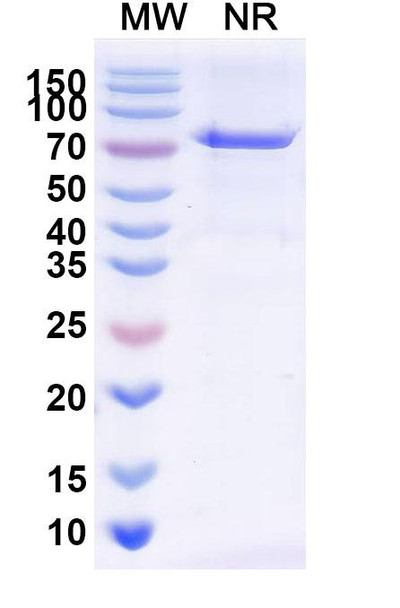
Radretumab Antibody is a research-grade biosimilar monoclonal antibody targeting Cold-insoluble globulin. Format: [(scFv-heavy-kappa)-IGHE-CH4]2 (human host). Reactivity: Human. Supplied as a liquid in 0.01M PBS pH 7.4. Applications: ELISA, flow cytometry, functional assays and in vivo research. Endotoxin: < 10 EU/mg. Purity: >95% purity as determined by SDS-PAGE. For research use only.
Fibronectin (EDB) is a ~272 kDa protein. Fibronectins bind cell surfaces and various compounds including collagen, fibrin, heparin, DNA, and actin. Fibronectins are involved in cell adhesion, cell motility, opsonization, wound healing, and maintenance of cell shape. Involved in osteoblast compaction through the fibronectin fibrillogenesis cell-mediated matrix assembly process, essential for osteoblast mineralization. Participates in the regulation of type I collagen deposition by osteoblasts. Acts as a ligand for the LILRB4 receptor, inhibiting FCGR1A/CD64-mediated monocyte activation.
Product Name:
Radretumab Antibody
SKU:
GXBS00428
Size:
100 µg, 1 mg
Antibody Type:
Monoclonal Antibody
Target:
Cold-insoluble globulin
Isotype:
[(scFv-heavy-kappa)-IGHE-CH4]2
Host Species:
Human
Reactivity:
Human
Applications:
ELISA, FACS, Functional assay, Research in vivo
Expression Host:
Mammalian cells
Synonyms:
L19-131I, L19-SIP, 1253180-81-2
Purity:
>95% purity as determined by SDS-PAGE.
Endotoxin Level:
< 10 EU/mg
Formulation:
0.01M PBS pH 7.4
State of Matter:
Liquid
Regulatory Status:
For research use only. Not suitable for clinical or therapeutic use.
Product Preparation:
Purified by Nickel column.
Storage and Handling:
Store at 2 to 8°C for frequent use. Store at -20 to -80°C for twelve months from the date of receipt.