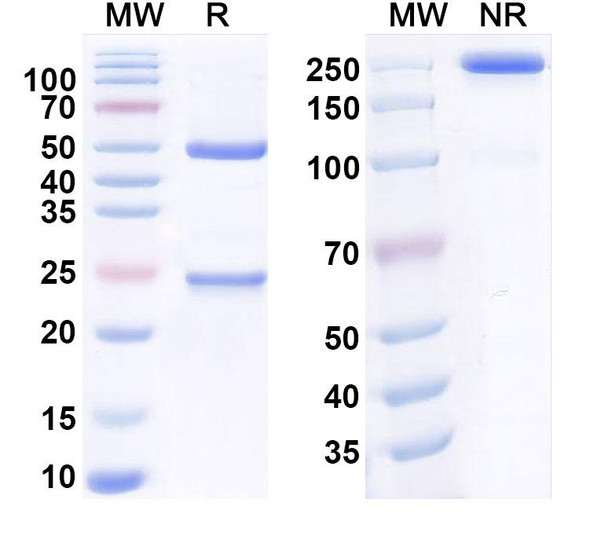
The Recombinant APC Monoclonal Antibody is a recombinant rabbit monoclonal antibody (clone C333315) against APC. This gene encodes a tumor suppressor protein that acts as an antagonist of the Wnt signaling pathway. It is also involved in other processes including cell migration and adhesion, transcriptional activation, and apoptosis. Defects in this gene cause familial adenomatous polyposis (FAP), an autosomal dominant pre-malignant disease that usually progresses to malignancy. Produced by recombinant technology in Rabbit hosts and purified by affinity chromatography, this Rabbit IgG antibody is reactive against Human samples.
This antibody is suitable for WB applications. It has been validated by WB analysis of Hela, A549, HL-60, U2OS. The target is localized to the Cell junction>adherens junction. Cytoplasm>cytoskeleton. Cell projection>lamellipodium. Cell projection>ruffle membrane. Cytoplasm. Cell membrane. Associated with the microtubule network at the growing distal tip of microtubules. Accumulates in the lamellipodium and ruffle membrane in response to hepatocyte growth factor (HGF) treatment. The MEMO1-RHOA-DIAPH1 signaling pathway controls localization of the phosophorylated form to the cell membrane.