Description
Recombinant Galectin-3 Monoclonal Antibody
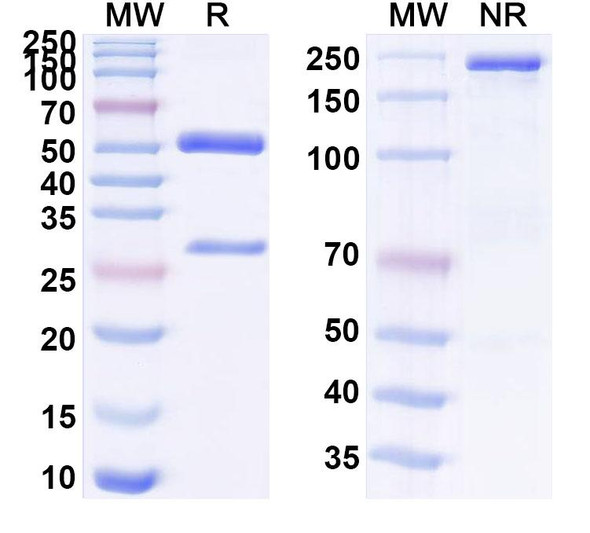
The Recombinant Galectin-3 Monoclonal Antibody is a recombinant rabbit monoclonal antibody (clone C110814) against Galectin-3. This gene encodes a member of the galectin family of carbohydrate binding proteins. Members of this protein family have an affinity for beta-galactosides. The encoded protein is characterized by an N-terminal proline-rich tandem repeat domain and a single C-terminal carbohydrate recognition domain. Produced by recombinant technology in Rabbit hosts and purified by Protein A affinity chromatography, this Rabbit IgG antibody is reactive against Human, Mouse and Rat samples.
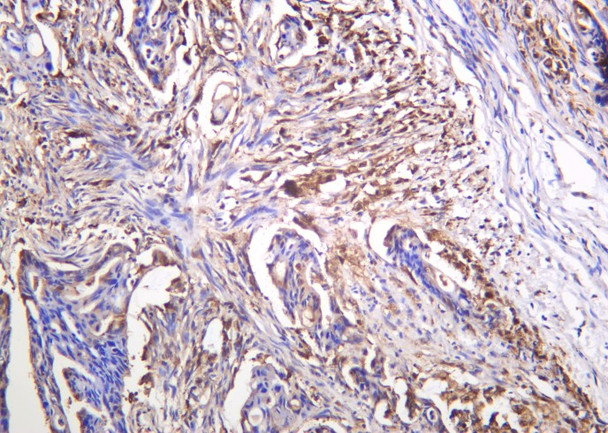
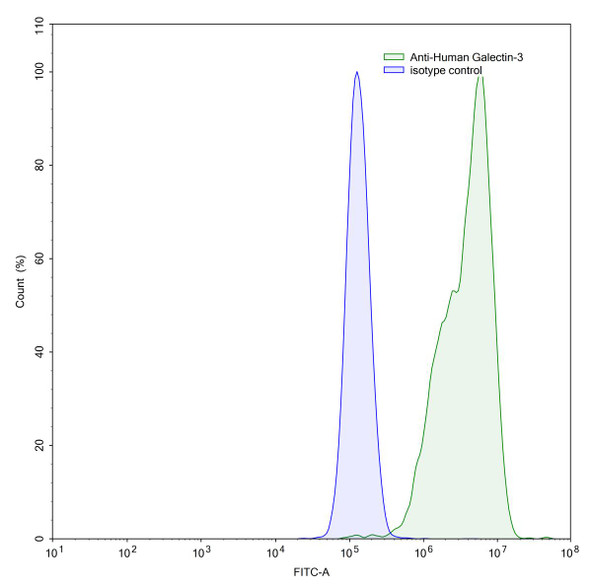
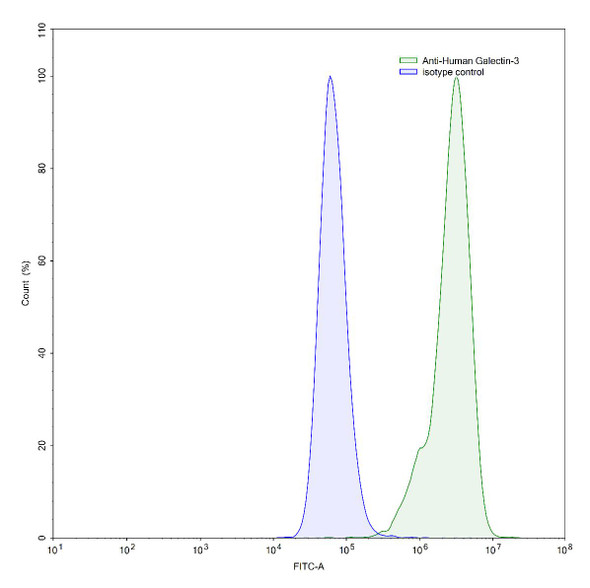
This antibody is suitable for WB, IHC, IF and ELISA applications. It has been validated by IHC analysis of Human colon carcinoma. The target is localized to the cytoplasm, Nucleus. Secreted, Secreted by a non-classical secretory pathway and associates with the cell surface. Can be secreted; the secretion is dependent on protein unfolding and facilitated by the cargo receptor TMED10; it results in protein translocation from the cytoplasm into the ERGIC (endoplasmic reticulum-Golgi intermediate compartment) followed by vesicle entry and secretion (PubMed:32272059).
| Product Name: | Recombinant Galectin-3 Monoclonal Antibody |
| SKU: | AGEL6120 |
| Size: | 50 µL, 100 µL |
| Antibody Type: | Recombinant Monoclonal Antibody |
| Synonyms: | 35 kDa lectin, Carbohydrate binding protein 35, Carbohydrate-binding protein 35, CBP, CBP 35, CBP35, GAL, Gal-3, GAL3, galactose binding, Galactose-specific lectin, Galactose-specific lectin 3, galactoside binding soluble 3, Galactoside-binding protein, Galactoside-Binding Soluble, Galactoside-Binding Soluble 3, GALBP, Galectin, galectin 3, Galectin 3 internal gene, Galectin-3, Galectin3, GALIG, GBP, IgE binding protein, IgE-binding protein, included, L 31, L 34, L-31, L-34 galactoside-binding lectin, L31, Laminin-binding protein, Lectin, Lectin L, Lectin L-29, LEG3, LGALS2, LGALS3, MAC, MAC 2 antigen, Mac-2, Mac-2 antigen, MAC2, Macrophage galactose-specific lectin, MGC105387, P35, soluble 3 |
| Reactivity: | Human, Mouse, Rat |
| Immunogen: | Recombinant Human Galectin-3 protein |
| Applications: | WBIHCIFELISA |
| Clonality: | Recombinant Monoclonal |
| Clone No: | C110814 |
| Host: | Rabbit |
| Isotype: | Rabbit IgG |
| Target: | Galectin-3 |
| Conjugation: | Unconjugated |
| Recommended Dilution: | IHC 1:2000-6000; WB 1:2000-10000; IF 1:200-1000; ELISA 1:5000-20000 |
| UniProt: | P17931 |
| Purification: | Protein A |
| Concentration: | 0.2 mg/mL |
| Buffer: | PBS, 50% glycerol, 0.05% Proclin 300, 0.05% protein protectant. |
| Storage: | Store at -20°C valid for 12 months. Avoid freeze / thaw cycles. |