T-cell surface glycoprotein CD3 delta chain, also known as CD3D, is a single-pass type I membrane protein. CD3D, together with CD3-gamma, CD3-epsilon and CD3-zeta, and the T-cell receptor alpha/beta and gamma/delta heterodimers, forms the T cell receptor-CD3 complex. The majority of T cell receptor (TCR) complexes in mice and humans consist of a heterodimer of polymorphic TCRalpha and beta chains along with invariant CD3gamma, delta, epsilon, and zeta chains. CD3 chains are present as CD3gammaepsilon, deltaepsilon, and zetazeta dimers in the receptor complex and play critical roles in the antigen receptor assembly, transport to the cell surface, and the receptor-mediated signal transduction. T cell receptor-CD3 complex plays an important role in coupling antigen recognition to several intracellular signal-transduction pathways. This complex is critical for T-cell development and function, and represents one of the most complex transmembrane receptors. The T cell receptor-CD3 complex is unique in having ten cytoplasmic immunoreceptor tyrosine-based activation motifs (ITAMs). CD3D contains 1 ITAM domain and has been shown to interact with CD8A. In the mouse, knockout of CD3delta allows some degree of T lymphocyte differentiation since mature CD4 and CD8 as well as TCRgammadelta T lymphocytes are observed in the periphery. In contrast, deleterious mutation of the CD3delta encoding gene in the human leads to a severe combined immunodeficiency characterised by the complete absence of mature T cell subpopulations including TCRalpha/beta and TCRgamma/delta. Defects in CD3D cause severe combined immunodeficiency autosomal recessive T-cell-negative/B-cell-positive/NK-cell-positive (T-/B+/NK+ SCID) which is a genetically and clinically heterogeneous group of rare congenital disorders characterized by impairment of both humoral and cell-mediated immunity, leukopenia, and low or absent antibody levels. In humans the absence of CD3 delta results in a complete arrest in thymocyte development at the stage of double negative to double positive transition and the development of gamma delta T-cell receptor-positive T cells is also impaired.Immune Checkpoint Immunotherapy Cancer Immunotherapy Targeted Therapy
Product Name:
Human CD3d/CD3 delta Recombinant Protein (RPES4627)
Product Code:
RPES4627
Size:
20µg
Species:
Human
Expressed Host:
HEK293 Cells
Synonyms:
CD3 delta,CD3-DELTA,IMD19,T3D
Accession:
NP_000723.1
Sequence:
Met 1-Ala 105
Fusion tag:
C-His
Endotoxin:
<1.0 EU per µg as determined by the LAL method.
Protein Construction:
A DNA sequence encoding the human CD3D extracellular domain (NP_000723.1) (Met 1-Ala 105) with a C-terminal polyhistidine tag was expressed.
Purity:
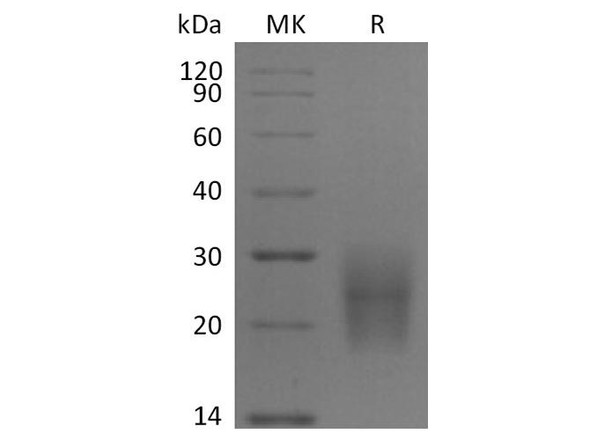
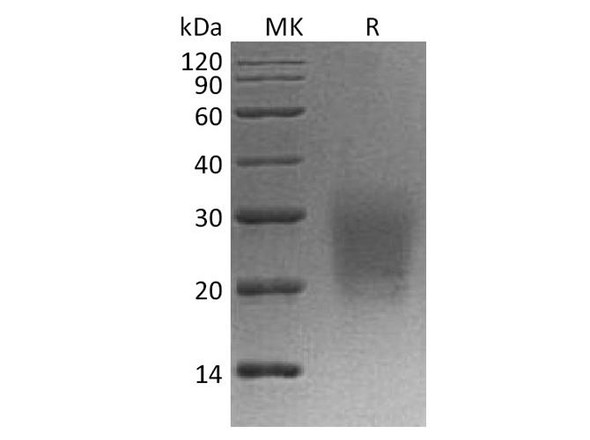
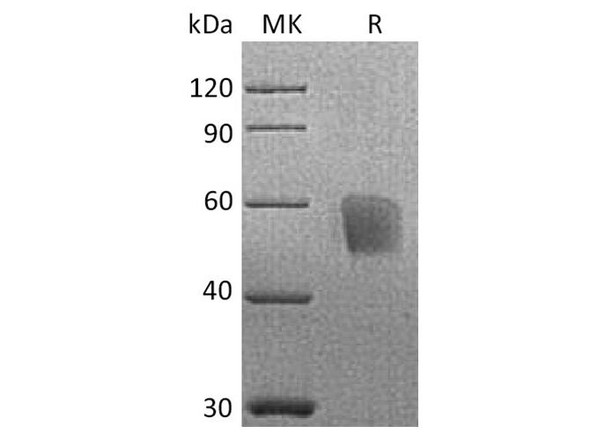
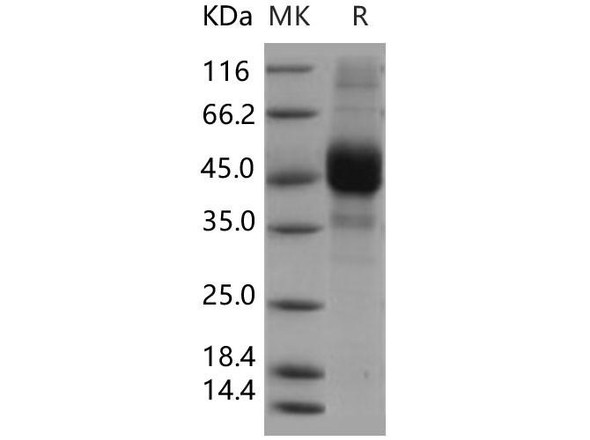
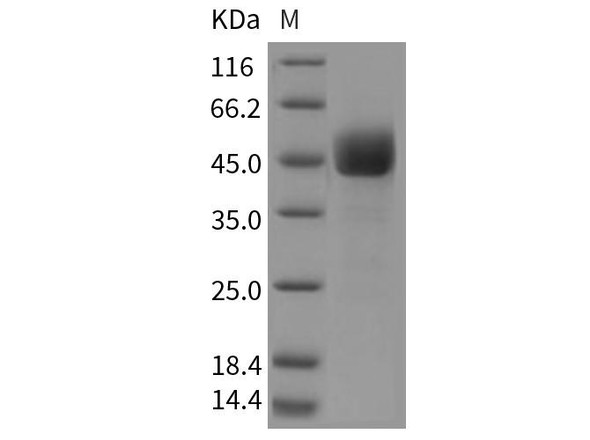
> 92 % as determined by reducing SDS-PAGE.
Mol Mass:
11 kDa
AP Mol Mass:
20-23 kDa
Formulation:
Lyophilized from sterile PBS, pH 7.4
Shipping:
This product is provided as lyophilized powder which is shipped with ice packs.
Stability and Storage:
Lyophilized proteins are stable for up to 12 months when stored at -20 to -80°C. Reconstituted protein solution can be stored at 4-8°C for 2-7 days. Aliquots of reconstituted samples are stable at < -20°C for 3 months.