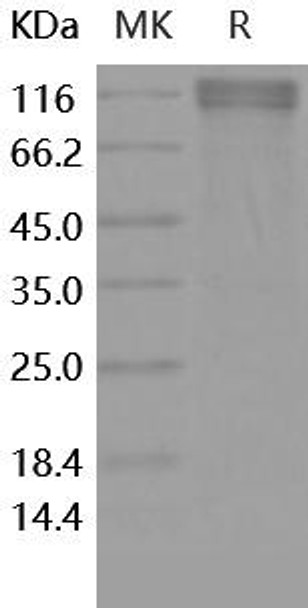
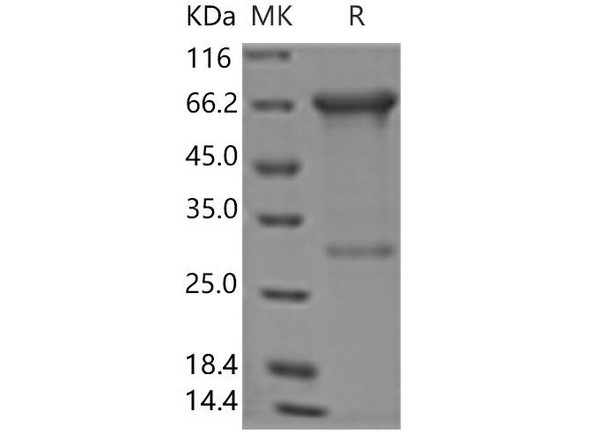
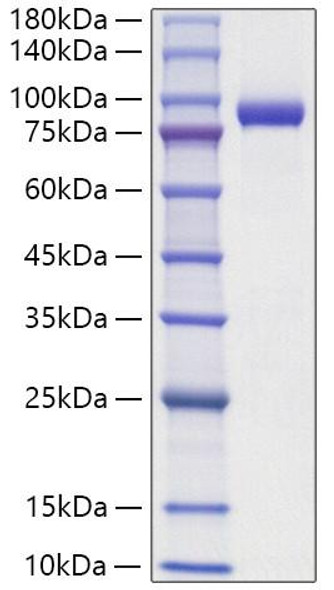
Endothelin-converting enzyme 2; also known as ECE-2; is a metalloprotease that possesses many properties consistent with it being a neuropeptide-processing enzyme. Endothelin-converting enzymes (ECEs) are the key enzymes in the endothelin (ET) biosynthesis that catalyze the conversion of big ET; the biologically inactive precursor of mature ET. Two enzymes; termed ECE-1 and ECE-2; have been molecularly identified. ECE-2 is found primarily in neural tissues; with high levels of expression in midbrain; cerebellum; hypothalamus; frontal cortex and spinal cord and moderate levels in hippocampus and striatum. ECE-2 is strongly down-regulated in inferior parietal lobe from Alzheimer disease patients (at protein level). ECE-2 converts big endothelin-1 to endothelin-1. It is involved in the processing of various neuroendocrine peptides; including neurotensin; angiotensin I; substance P; proenkephalin-derived peptides; and prodynorphin-derived peptides. ECE-2 may limit beta-amyloid peptide accumulation in brain. It may also have methyltransferase activity. A comparison of residues around the cleavage site revealed that ECE-2 exhibits a unique cleavage site selectivity that is related to but distinct from that of ECE-1.
A DNA sequence encoding the ectodomain of human endothelin converting enzyme 2 isoform A (NP_055508.3) (Gly 199-Trp 883) was fused with the Fc region of human IgG1 at the N-terminus.
This product is provided as lyophilized powder which is shipped with ice packs.
Stability and Storage:
Lyophilized proteins are stable for up to 12 months when stored at -20 to -80°C. Reconstituted protein solution can be stored at 4-8°C for 2-7 days. Aliquots of reconstituted samples are stable at < -20°C for 3 months.