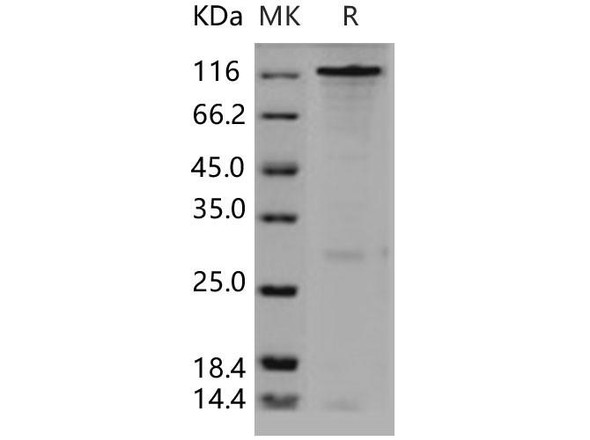
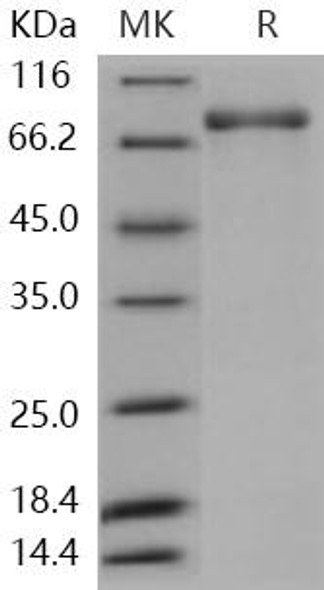
G-protein coupled receptor kinase 2 (GRK2), also referred as Adrenergic, beta, receptor kinase 1 (ADRBK1), is a ubiquitous member of the G protein-coupled receptor kinase (GRK) family that appears to play a central, integrative role in signal transduction cascades. GRK2 can phosphorylate a growing number of non-GPCR substrates and associate with a variety of proteins related to signal transduction, thus suggesting that this kinase could also have diverse 'effector' functions. GRK2 has been reported to interact with a variety of signal transduction proteins related to cell migration such as MEK, Akt, PI3Kgamma or GIT. Interestingly, the levels of expression and activity of this kinase are altered in a number of inflammatory disorders (as rheumatoid arthritis or multiple sclerosis), thus suggesting that GRK2 may play an important role in the onset or development of these pathologies. The important physiological function of GRK2 as a modulator of the efficacy of GPCR signal transduction systems is exemplified by its relevance in cardiovascular physiopathology as well as by its emerging role in the regulation of chemokine receptors. Besides its canonical role in the modulation of the signalling mediated by many G protein-coupled receptors (GPCR), this protein can display a very complex network of functional interactions with a variety of signal transduction partners, in a stimulus, cell type, or context-specific way.
Product Name:
Human GRK2/ADRBK1 Recombinant Protein (RPES0131)
Product Code:
RPES0131
Size:
50 µg
Species:
Human
Expressed Host:
Baculovirus-Insect Cells
Synonyms:
BARK1,BETA-ARK1,GRK2
Accession:
NP_001610.2
Sequence:
Met 1-Leu 689
Fusion tag:
N-His & GST
Endotoxin:
<1.0 EU per µg as determined by the LAL method.
Protein Construction:
A DNA sequence encoding the human ADRBK1 (NP_001610.2) (Met 1-Leu 689) was fused with the N-terminal polyhistidine-tagged GST tag at the N-terminus.
This product is provided as lyophilized powder which is shipped with ice packs.
Stability and Storage:
Lyophilized proteins are stable for up to 12 months when stored at -20 to -80°C. Reconstituted protein solution can be stored at 4-8°C for 2-7 days. Aliquots of reconstituted samples are stable at < -20°C for 3 months.