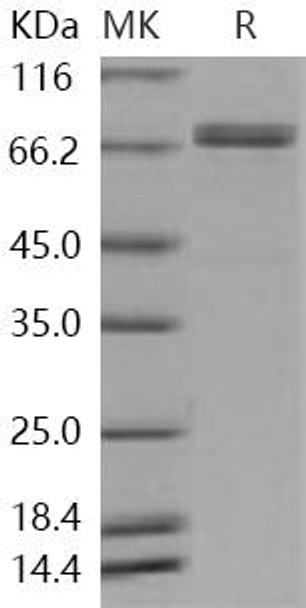
Leucine-rich repeat neuronal protein 3, also known as neuronal leucine-rich repeat protein 3 (NLRR-3), is a member of leucine-rich (LRR) family whose members have significant functions in neural development. Leucine-rich repeats are short sequence motifs present in a number of proteins with diverse functions and cellular locations. All proteins containing these repeats are thought to be involved in protein-protein interactions. The crystal structure of ribonuclease inhibitor protein has revealed that leucine-rich repeats correspond to β-α structural units. These units are arranged so that they form a parallel β-sheet with one surface exposed to solvent, so that the protein acquires an unusual, non-globular shape. These two features may be responsible for the protein-binding functions of proteins containing leucine-rich repeats. LRRN3 plays an important role in cerebellum postnatal development. In a unilateral cortical injury cerebral cortex, NLRR-3 mRNA increased in layers 2-3 which suggests that NLRR-3 may be an important component of the pathophysiological response to brain injury.
Product Name:
Human LRRN3 Recombinant Protein (RPES0744)
Product Code:
RPES0744
Size:
100 µg
Species:
Human
Expressed Host:
Baculovirus-Insect Cells
Synonyms:
FIGLER5,NLRR-3,NLRR3
Accession:
AAH35133.1
Sequence:
Met 1-Thr 628
Fusion tag:
C-His
Endotoxin:
<1.0 EU per µg as determined by the LAL method.
Protein Construction:
A DNA sequence encoding the human LRRN3 (AAH35133.1) extracellular domain (Met 1-Thr 628) was fused with a polyhistidine tag at the C-terminus.
This product is provided as lyophilized powder which is shipped with ice packs.
Stability and Storage:
Lyophilized proteins are stable for up to 12 months when stored at -20 to -80°C. Reconstituted protein solution can be stored at 4-8°C for 2-7 days. Aliquots of reconstituted samples are stable at < -20°C for 3 months.