Proto-oncogene tyrosine-protein kinase MER (MERTK) is a member of the MER/AXL/TYRO3 receptor kinase family and encodes a transmembrane protein with two fibronectin type-III domains; two Ig-like C2-type (immunoglobulin-like) domains; and one tyrosine kinase domain. MERTK is localized in membrane and is no expressed in normal B- and T-lymphocytes but is expressed in numerous neoplastic B- and T-cell lines. This protein is highly expressed in testis; ovary; prostate; lung; and kidney; with lower expression in spleen; small intestine; colon; and liver. MERTK regulates many physiological processes including cell survival; migration; differentiation; and phagocytosis of apoptotic cells (efferocytosis). Ligand binding at the cell surface induces autophosphorylation of MERTK on its intracellular domain that provides docking sites for downstream signaling molecules. MERTK signaling plays a role in various processes such as macrophage clearance of apoptotic cells; platelet aggregation; cytoskeleton reorganization and engulfment. MERTK plays also an important role in inhibition of Toll-like receptors (TLRs)-mediated innate immune response by activating STAT1; which selectively induces production of suppressors of cytokine signaling SOCS1 and SOCS3. Defects in MERTK are the cause of retinitis pigmentosa type 38.
A DNA sequence encoding the extracellular domain (Met 1-Ala 499) of human Mer precursor (NP_006334.2) was fused with the polyhistidine-tagged Fc region of human IgG1 at the C-terminus.
Purity:
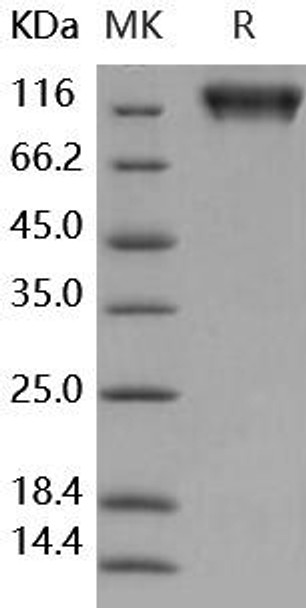
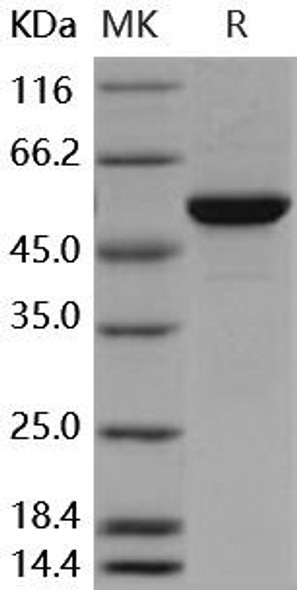
> 97 % as determined by reducing SDS-PAGE.
Mol Mass:
80 kDa
AP Mol Mass:
140-150 kDa
Formulation:
Lyophilized from sterile PBS; pH 7.4
Shipping:
This product is provided as lyophilized powder which is shipped with ice packs.
Stability and Storage:
Lyophilized proteins are stable for up to 12 months when stored at -20 to -80°C. Reconstituted protein solution can be stored at 4-8°C for 2-7 days. Aliquots of reconstituted samples are stable at < -20°C for 3 months.