PAK3 is a member of PAK proteins, a family of serine/threonine p21-activating kinases, serve as effectors of small Rho GTPases Cdc42 and RAC and have been implicated in a wide range of biological activities. There are six mammalian PAKs which can be divided into two groups: group I PAKs (PAK1-3) and group II PAKs (PAK4-6). Although the two PAK groups are architecturally similar there are differences in their mode of regulation suggesting their cellular functions are likely to be different. Group I p21-activated kinases (PAK1/2/3) is demonstrated as ERK3/ERK4 activation loop kinases. It has been shown that group I PAKs phosphorylate ERK3 and ERK4 on Ser-189 and Ser-186, respectively, both in vitro and in vivo, and that expression of activated Rac1 augments this response. Besides regulation enzymatic activation of ERK3/ERK4, PAKs can also play roles in downstream activation of MAP kinase-activated protein kinase 5 (MK5) in vivo. Thus, the group I PAKs act as upstream activators of ERK3 and ERK4 and unravel a novel PAK-ERK3/ERK4-MK5 signaling pathway. In clinical, PAK has been proposed as a potential therapeutic target in schwannomas.
Product Name:
Human PAK3 Recombinant Protein (RPES2725)
Product Code:
RPES2725
Size:
50 µg
Species:
Human
Expressed Host:
Baculovirus-Insect Cells
Synonyms:
bPAK,CDKN1A,hPAK3,MRX30,MRX47,OPHN3,PAK3beta
Accession:
O75914-2
Sequence:
Met 1-Arg 544
Fusion tag:
C-His
Activity:
The specific activity was determined to be 98 nmol/min/mg using MBP as substrate.
Endotoxin:
<1.0 EU per µg as determined by the LAL method.
Protein Construction:
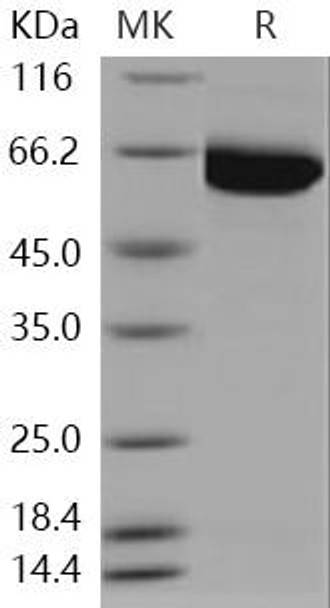
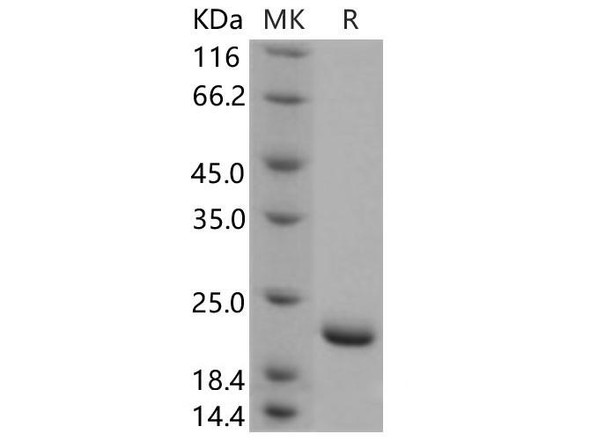
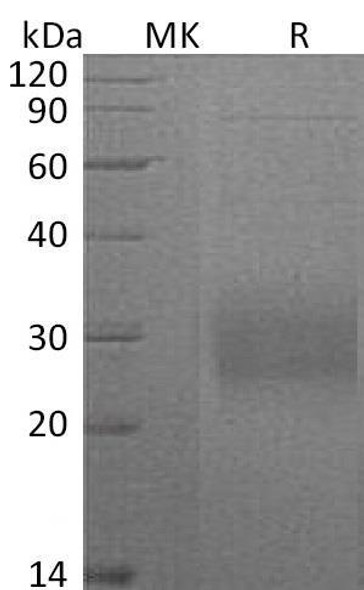
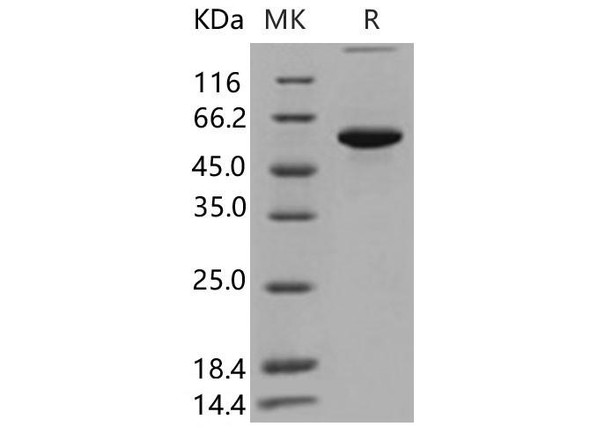
A DNA sequence encoding the human PAK3 isoform 2 (O75914-2) (Met 1-Arg 544) was fused with a polyhistidine tag at the C-terminus.