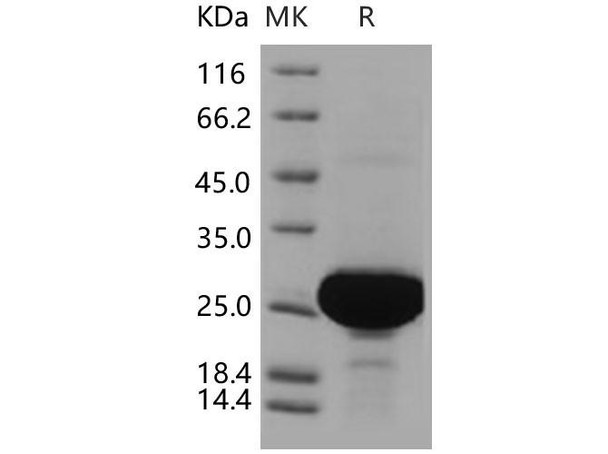
Parkinson's disease locus DJ-1 (PARK7) is a differentially expressed transcript. DJ-1 plays a physiologic role in protection of erythroid cells from oxidant damage, a function unmasked in the context of oxidative stress. PARK7 belongs to the peptidase C56 family of proteins. It acts as a positive regulator of androgen receptor-dependent transcription. It may also function as a redox-sensitive chaperone, as a sensor for oxidative stress, and it apparently protects neurons against oxidative stress and cell death. Mutations in the DJ-1 gene are associated with rare forms of autosomal recessive early-onset Parkinson's disease (PD). DJ-1/p53 interactions contribute to apoptosis resistance in clonal myeloid cells and may serve as a prognostic marker in patients with myelodysplastic syndromes (MDS). DJ-1 regulates redox signaling kinase pathways and acts as a transcriptional regulator of antioxidative gene batteries. Therefore, DJ-1 is an important redox-reactive signaling intermediate controlling oxidative stress after ischemia, upon neuroinflammation, and during age-related neurodegenerative processes. Augmenting DJ-1 activity might provide novel approaches to treating chronic neurodegenerative illnesses such as Parkinson's disease and acute damage such as stroke.
Product Name:
Human PARK7/DJ Recombinant Protein (RPES4963)
Product Code:
RPES4963
Size:
50µg
Species:
Human
Expressed Host:
E.coli
Synonyms:
DJ-1,DJ1,HEL-S-67p
Accession:
Q99497-1
Sequence:
Met 1-Asp 189
Fusion tag:
C-His
Endotoxin:
Please contact us for more information.
Protein Construction:
A DNA sequence encoding the human PARK7 (Q99497-1) (Met 1-Asp 189) was fused with a polyhistidine tag at the C-terminus.
This product is provided as lyophilized powder which is shipped with ice packs.
Stability and Storage:
Lyophilized proteins are stable for up to 12 months when stored at -20 to -80°C. Reconstituted protein solution can be stored at 4-8°C for 2-7 days. Aliquots of reconstituted samples are stable at < -20°C for 3 months.