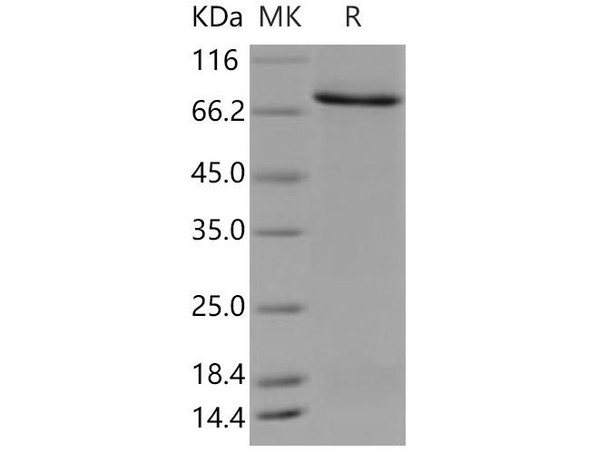
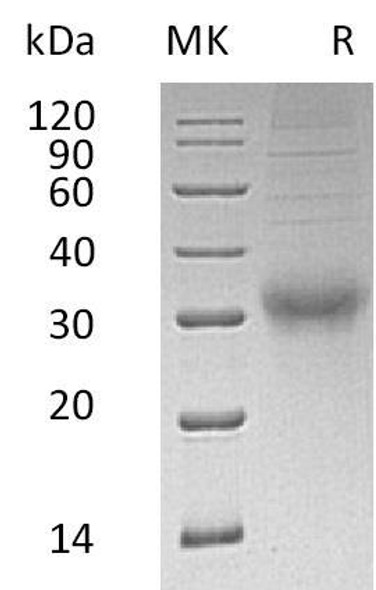
Fructose-2,6-biphosphatase 3, also known as 6-phosphofructo-2-kinase or PFK2 or PFKFB3, is a potent activator of phosphofructokinase, which is a rate-limiting enzyme of glycolysis. Highly phosphorylated PFKFB3 protein was found in human tumor cells, vascular endothelial cells, and smooth muscle cells. Fructose 2,6-bisphosphate (Fru-2,6-BP) is an allosteric activator of 6-phosphofructo-1-kinase (PFK-1), a rate-limiting enzyme and essential control point in glycolysis. The concentration of PFK2 depends on the activity of the bifunctional enzyme, 6-phosphofructo-2-kinase / fructose-2,6-bisphosphatase (PFK-2 / FBPase). PFK2 controls the glycolytic flux via the allosteric activator fructose 2,6-bisphosphate. Because of its proto-oncogenic character, the PFK-2/FBPase-2 of the PFKFB3 gene is assumed to play a critical role in tumorigenesis. The hypoxia-inducible form of 6-phosphofructo-2-kinase / fructose-2,6-bisphosphatase (PFKFB3) plays a crucial role in the progression of cancerous cells by enabling their glycolytic pathways even under severe hypoxic conditions.
Product Name:
Human PFK2/PFKFB3 Recombinant Protein (RPES0796)
Product Code:
RPES0796
Size:
50µg
Species:
Human
Expressed Host:
Baculovirus-Insect Cells
Synonyms:
IPFK2,PFK2
Accession:
Q16875-1
Sequence:
Met 1-His 520
Fusion tag:
N-His & GST
Endotoxin:
<1.0 EU per µg as determined by the LAL method.
Protein Construction:
A DNA sequence encoding the human PFKFB3 isoform 1 (Q16875-1) (Met 1-His 520) was fused with the N-terminal polyhistidine-tagged GST tag at the N-terminus.