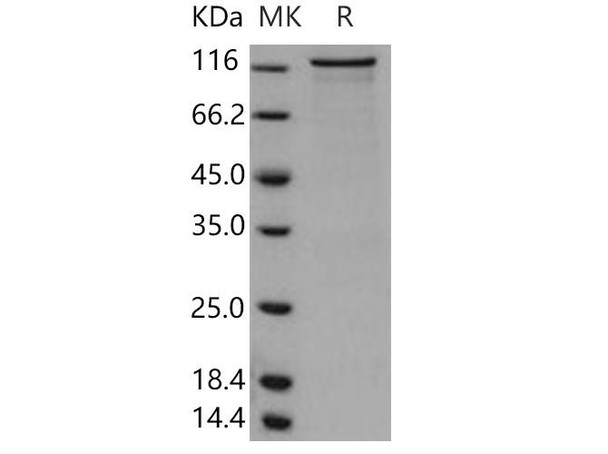
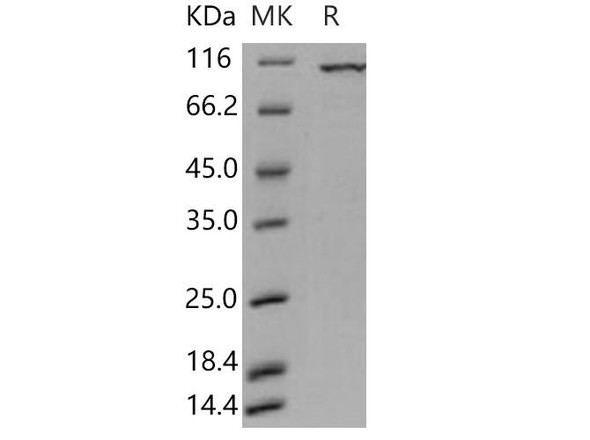
Serine/threonine-protein kinase D3, also known as Protein kinase C nu type, Protein kinase EPK2, PRKD3, EPK2 and PRKCN, is a cytoplasm and membrane protein which belongs to the protein kinase superfamily, CAMK Ser/Thr protein kinase family and PKD subfamily. PRKD3 / PRKCN contains one PH domain, two phorbol-ester/DAG-type zinc fingers and one protein kinase domain. Protein kinase C (PKC) is a family of serine- and threonine-specific protein kinases that can be activated by calcium and the second messenger diacylglycerol. PKC family members phosphorylate a wide variety of protein targets and are known to be involved in diverse cellular signaling pathways. They also serve as major receptors for phorbol esters, a class of tumor promoters. Each member of the PKC family has a specific expression profile and is believed to play a distinct role. PRKD3 / PRKCN converts transient diacylglycerol (DAG) signals into prolonged physiological effects, downstream of PKC. It is involved in resistance to oxidative stress. PRKD3 / PRKCN is activated by DAG and phorbol esters. Phorbol-ester/DAG-type domains 1 and 2 bind both DAG and phorbol ester with high affinity and mediate translocation to the cell membrane. Autophosphorylation of Ser-735 and phosphorylation of Ser-731 by PKC relieves auto-inhibition by the PH domain. PRKD3 / PRKCN can be activated rapidly by the agonists of G protein-coupled receptors. It resides in both cytoplasm and nucleus, and its nuclear accumulation is found to be dramatically enhanced in response to its activation. PRKD3 / PRKCN can also be activated after B-cell antigen receptor (BCR) engagement, which requires intact phospholipase C gamma and the involvement of other PKC family members.
Product Name:
Human PKC nu/PRKD3 Recombinant Protein (RPES1792)
Product Code:
RPES1792
Size:
50 µg
Species:
Human
Expressed Host:
Baculovirus-Insect Cells
Synonyms:
EPK2,nPKC-NU,PKC-NU,PKD3,PRKCN
Accession:
NP_005804.1
Sequence:
Met 1-Pro 890
Fusion tag:
N-GST
Endotoxin:
<1.0 EU per µg as determined by the LAL method.
Protein Construction:
A DNA sequence encoding the full length of human PRKD3 (NP_005804.1) (Met 1-Pro 890) was expressed with the GST tag at the N-terminus.