Selenoprotein M is a selenoprotein, which contains a selenocysteine (Sec) residue at its active site. The selenocysteine M is encoded by the UGA codon that normally signals translation termination. The 3' UTR of selenoprotein genes have a common stem-loop structure, the sec insertion sequence (SECIS), that is necessary for the recognition of UGA as a Sec codon rather than as a stop signal. This gene is expressed in a variety of tissues, and the protein is localized to the perinuclear structures. Selenoprotein M May function as a thiol-disulfide oxidoreductase that participates in disulfide bond formation. This protein is widely expressed and is highly expressed in brain. It is found in Cytoplasm, perinuclear region, Endoplasmic reticulum, Golgi apparatus. Localized to perinuclear structures corresponding to Golgi and endoplasmic reticulum. Experiments results have suggested that selenoprotein M may have an important role in protecting against oxidative damage in the brain and may potentially function in calcium regulation.
Product Name:
Human SELM/Selenoprotein M Recombinant Protein (RPES4794)
Product Code:
RPES4794
Size:
100 µg
Species:
Human
Expressed Host:
E.coli
Synonyms:
SEPM
Accession:
Q8WWX9
Sequence:
Ala 24-Leu 145
Fusion tag:
C-His
Endotoxin:
Please contact us for more information.
Protein Construction:
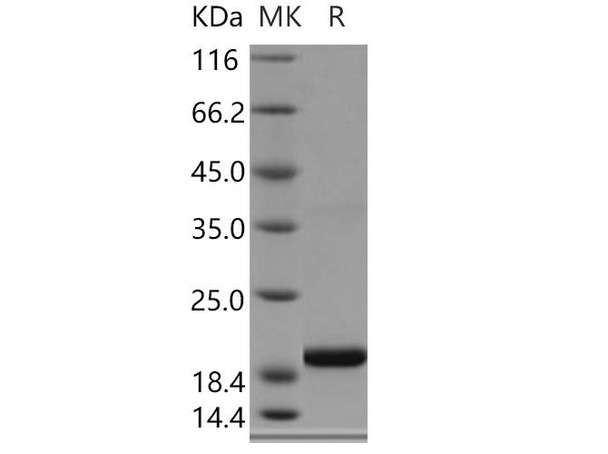
A DNA sequence encoding the mature form of human SELM (Q8WWX9) (Ala 24-Leu 145) was fused with a polyhistidine tag at the C-terminus and an initial Met at the N-terminus.
This product is provided as lyophilized powder which is shipped with ice packs.
Stability and Storage:
Lyophilized proteins are stable for up to 12 months when stored at -20 to -80°C. Reconstituted protein solution can be stored at 4-8°C for 2-7 days. Aliquots of reconstituted samples are stable at < -20°C for 3 months.