5'-nucleotidase, also known as NT5E, NTE, and CD73, is a cell membrane protein which belongs to the 5'-nucleotidase family. CD73 is a glycosyl phosphatidylinositol (GPI) anchored purine salvage enzyme expressed on the surface of human T and B lymphocytes. CD73 catalyzes the conversion of purine and pyrimidine ribo- and deoxyribonucleoside monophosphates to the corresponding nucleosides. CD73 serves as a costimulatory molecule in activating T cells. CD73 generated adenosine functions in cell signalling in many physiologic systems, including intestinal epithelium, ischemic myocardium, and cholinergic synapses. CD73 might mediate lymphocyte-stromal cell interactions or condition the local microenvironment to facilitate lymphocyte development and/or function. In CD73-depleted cells, surface levels of the leukocyte adhesion molecules ICAM-1, VCAM-1 and E-selectin increase. CD73 produces extracellular adenosine, which then acts on G protein-coupled purigenic receptors to induce cellular responses. CD73 has also been reported to regulate expression of pro-inflammatory molecules in mouse endothelium.
Product Name:
Mouse CD73/NT5E Recombinant Protein (RPES3669)
Product Code:
RPES3669
Size:
10µg
Species:
Mouse
Expressed Host:
HEK293 Cells
Synonyms:
5'-nucleotidase,Ecto-5'-nucleotidase,CD73,5'-NT,AI447961, eNT, NT, Nt5 Protein
Accession:
NP_035981.1
Sequence:
Met 1-Lys 549
Fusion tag:
C-His
Activity:
Measured by its ability to hydrolyze the 5-phosphate group from the substrate adenosine-5-monophosphate (AMP). The orthophosphate product is measured by a Malachite Green Phosphate Detection Kit (Catalog # DY996).The specific activity is >10,000 pmol/min/µg.
Endotoxin:
<1.0 EU per µg of the protein as determined by the LAL method.
Protein Construction:
A DNA sequence encoding the mouse NT5E (NP_035981.1) without the propeptide, corresponding to the amino acid (Met 1-Lys 549) was expressed, with a C-terminal polyhistidine tag.
Purity:
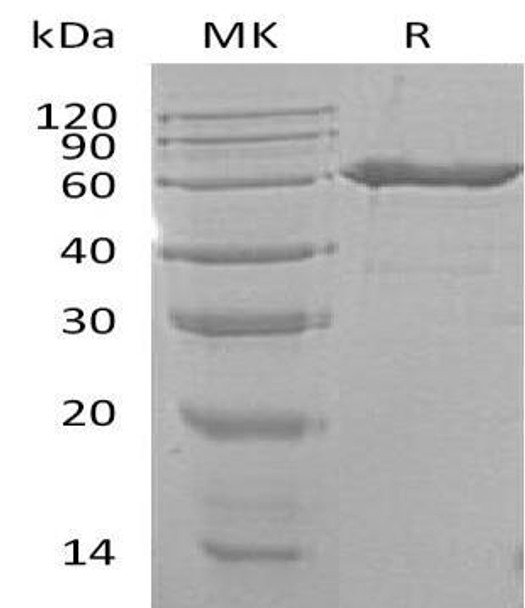
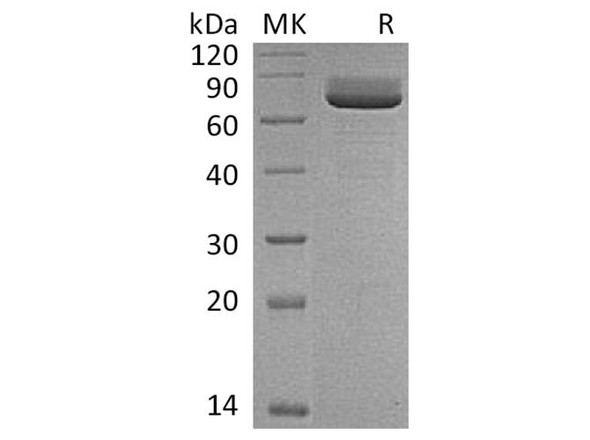
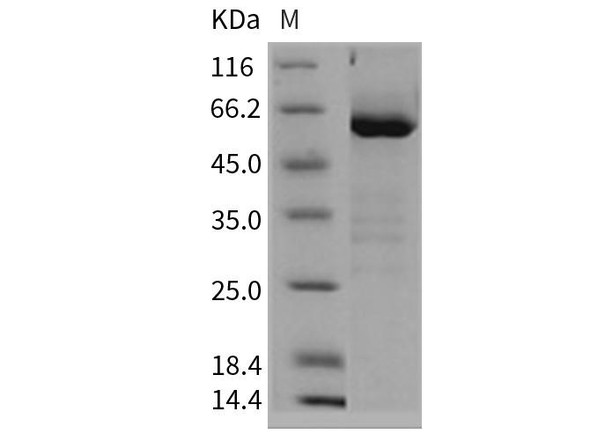
> 95 % as determined by SDS-PAGE
AP Mol Mass:
59.4 kDa
Formulation:
Lyophilized from sterile PBS, pH 7.4
Shipping:
This product is provided as lyophilized powder which is shipped with ice packs.
Stability and Storage:
Lyophilized proteins are stable for up to 12 months when stored at -20 to -80°C. Reconstituted protein solution can be stored at 4-8°C for 2-7 days. Aliquots of reconstituted samples are stable at < -20°C for 3 months.