Clusterin, also known as complement-associated protein SP-40, Complement cytolysis inhibitor, Apolipoprotein J, Testosterone-repressed prostate message 2, Aging-associated gene 4 protein, CLU and APOJ, is a secreted protein which belongs to the clusterin family. Clusterin/Apolipoprotein J/Apo-J is an enigmatic glycoprotein with a nearly ubiquitous tissue distribution and an apparent involvement in biological processes ranging from mammary gland involution to neurodegeneration in Alzheimer's disease. Its major form, a heterodimer, is secreted and present in physiological fluids, but truncated forms targeted to the nucleus have also been identified. Clusterin/Apolipoprotein J/Apo-J is a widely distributed glycoprotein with a wide range of biologic properties. A prominent and defining feature of clusterin is its marked induction in such disease states as glomerulonephritis, cystic renal disease, renal tubular injury, neurodegenerative conditions, atherosclerosis, and myocardial infarction. Upregulation of clusterin mRNA and protein levels detected in diverse disease states and in in vitro systems have led to suggestions that it functions in membrane lipid recycling, in apoptotic cell death, and as a stress-induced secreted chaperone protein, amongst others.
Product Name:
Mouse Clusterin/ApoJ Recombinant Protein (RPES1836)
<1.0 EU per µg of the protein as determined by the LAL method.
Protein Construction:
A DNA sequence encoding the mouse CLU (NP_038520.2) (Met 1-Glu 448) was expressed, with a C-terminal polyhistidine tag.
Purity:
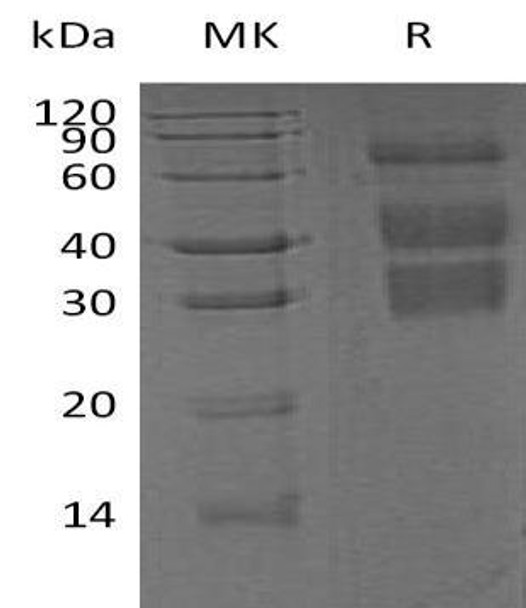
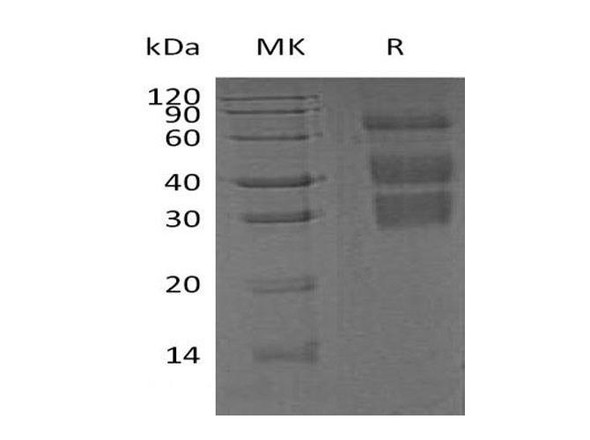
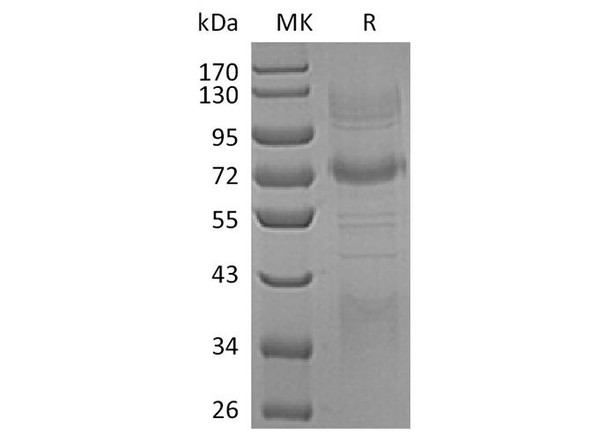
> 96 % as determined by SDS-PAGE
Mol Mass:
50.8 kDa
Formulation:
Lyophilized from sterile PBS, pH 7.4
Shipping:
This product is provided as lyophilized powder which is shipped with ice packs.
Stability and Storage:
Lyophilized proteins are stable for up to 12 months when stored at -20 to -80°C. Reconstituted protein solution can be stored at 4-8°C for 2-7 days. Aliquots of reconstituted samples are stable at < -20°C for 3 months.